The Gaza War

Don’t stand with Israel. Don’t stand with Palestine. Stand for peace.

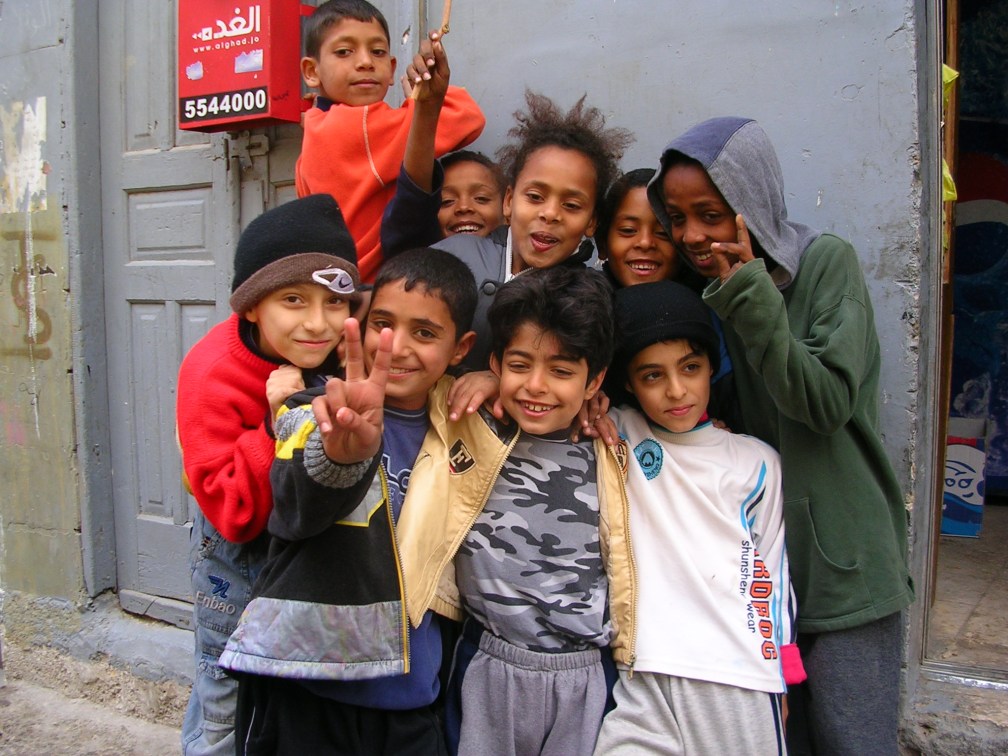
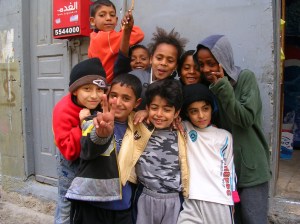
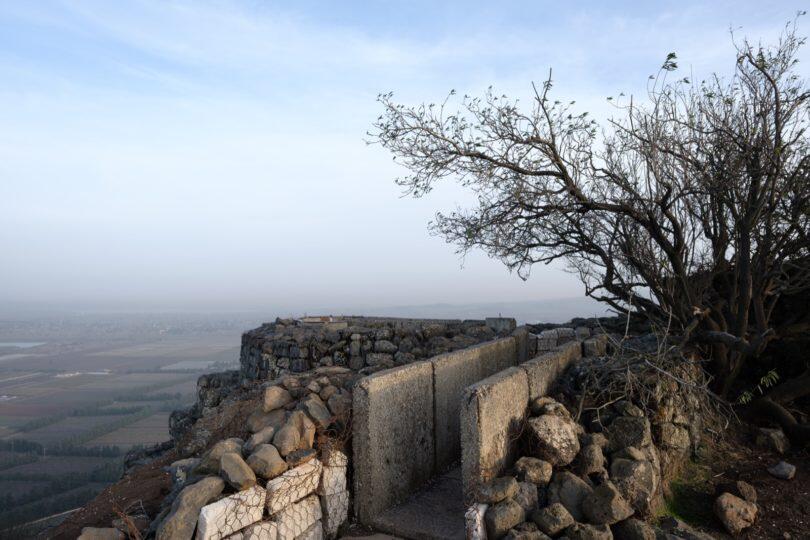
Since the inexcusable massacre of Israeli civilians by Hamas, many thousands are suffering and dying on both sides. More suffering is sure to follow. Israel has trapped more than 2 million Palestinians in the Gaza strip, where Hamas uses them as human shields. Any attack on Hamas leadership is going to kill civilians. Israel seems determined to deprive that population of food, water, and electricity. Neither Israel nor Egypt has given them a way out of the trap so far.

Both sides have terrible governments, which care only about their own power and not about their people, or justice, or democracy. Horrors have been committed by both sides for decades while the rest of the world has only added fuel to the fire. Both sides have rejected nonviolent solutions. Both sides have killed leaders who worked toward peace.

Americans must push our own far-from-adequate government to send food, water, and medicine
to Gaza; establish escape routes; and use our substantial leverage with Israel to effect a ceasefire and begin peace negotiations with Palestinians who abhor the terrorist strategy of Hamas. No lasting peace can come without justice for the dispossessed.

There is much more at stake here than the fate of the Middle East. I believe human survival depends on nonviolent resistance to war. War not only ruins lives, communities, and environments, it sucks up the attention and resources we need to curb climate change.

If the US had not set a terrible precedent by occupying Iraq in an unprovoked war, or if NATO had not been so aggressive in its recent expansion, perhaps we could have prevented the Russian invasion of Ukraine. If the world had encouraged the nonviolent Boycott, Divest, and Sanction movement protesting the Israeli theft of Palestinian land instead of dismissing it as anti-Semitism, perhaps we could have undermined the fury that supports Hamas.

Vigils, petitions, letters to Congress, and marches for peace and justice might not seem to have much effect. But they hearten participants, create alliances, educate, and with luck might change a vote or two. At the very least they serve to target our real enemy, which is the war machine that has made our country the world’s largest arms merchant, and continues to enrich a few while destroying the planet for the rest of us.

Quality of Life

We’ve been told it’s the things we have that make up our quality of life. That’s only part of the truth. We must have enough to eat and drink, and some place to get out of the weather. If we’re going to eat our food cooked, we need things to cook it in. Stuff does pile up around us; we’re messy, curious, greedy beasts like magpies or packrats, but we don’t have to make a virtue out of it.

Some things do make lives better, though they’re not usually the things advertisers are trying to sell us. Plumbing, for example, is a really good idea. Fashion is not only fun, it keeps clothing on everybody. The rich change clothes every season and their leavings filter out to everyone else.

Whatever we have, we can do without or make new, except for people. Only the people we’re close to are irreplaceable, our family and friends. We can lose a neighbor sometimes and go on all right, but it is devastating to lose a whole neighborhood.

Real quality of life depends on how we feel. If we’re healthy, and the people we love are healthy, and our household is peaceful, that’s worth any amount of money and any pile of stuff. If we’re suffering in mind or body, few things can comfort us.

Beautiful things soothe, please, and excite us, in the moments when we truly notice them. Art can improve our lives if we pay attention to it. Being in natural surroundings, where beauty continually renews and reinvents itself, comforts and sustains us. Many broken hearts have begun to heal in the woods and on rivers.

Community is precious. Fellowship is precious. That’s why a lot of people go to religious services. We get to feel kinship with the people around us. Community, fellowship, friendliness, peace: these provide real quality of life.

Networks of people are not material things. They are emotional and intellectual connections of shared experience. These invisible things, beyond what we can hold or measure, keep us alive.

The rest is landfill.

Atheist’s Bible: Apocalypse

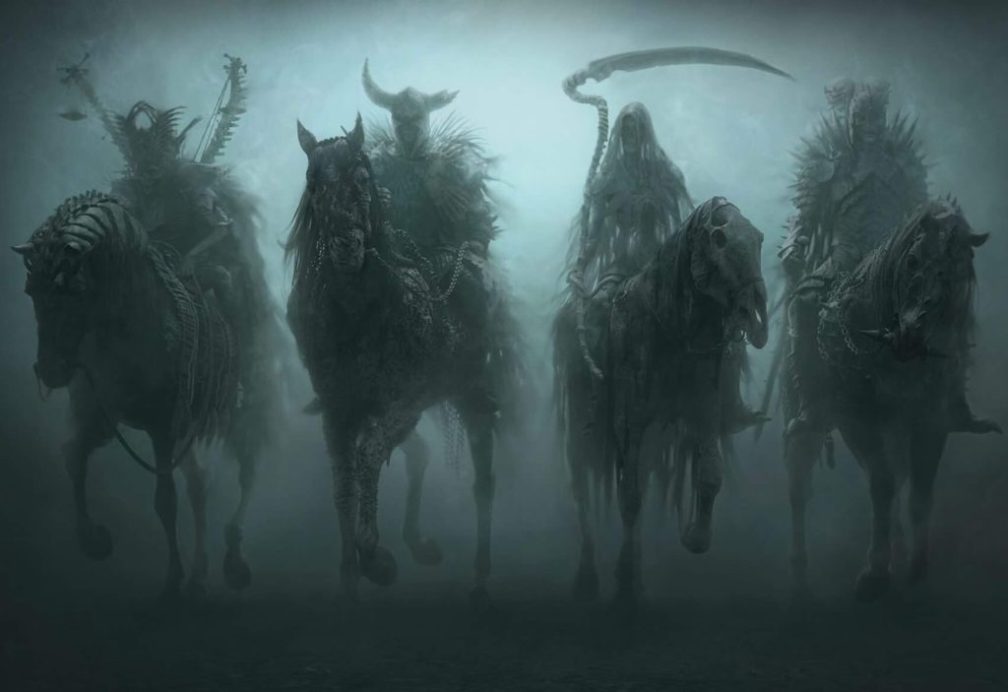
The Four Horsemen appear on the news every day: war, disease, famine, environmental catastrophe. Gee, who could have seen this coming? Whoever wrote the Book of Revelation two thousand years ago, for one. None of these things are exactly new in human experience. Since humanity decided to base our civilization on greed instead of compassion, this has been an easy prophecy to make.

The thing about prophecy is that it’s meant to scare people into changing our behavior. If it works, the direst predictions won’t come true. The prophecy makes the threat of extinction both vivid and immediate. We already know that our current path is not survivable. We just think we can keep going a little while longer, in spite of the evidence. Addicts need to “hit bottom” before they quit doing whatever is killing them. Has our society hit bottom yet?

Not the Neighborhood Watch

All our addictions – to drugs, to war, to fossil fuels, to accumulating stuff – stem from humanity’s central problem: how to keep from being ruled by the worst of us. The problem shows up in Putin’s aggression, Trump’s hatefulness, Big Oil’s continuing lies. The solution is not any single hero coming to save us. The solution is the best of us, working together.

Addicts endure going cold turkey through the love of friends and family, the encouragement of others in the same situation, and inner strength. The same things apply to all our addictions. If people can quit drinking, we can quit buying plastic junk. If one fragile, needy individual can stop smoking, this fragile, needy species can stop war.

Right now, the good guys are terribly disorganized. We’ve allowed ourselves to be separated by nationality, ethnicity, religion, gender identity. Even our do-gooder organizations are separated by the causes they support, as though peace and justice and environmental sustainability were not deeply interdependent.

National boundaries, financial wealth, and all the other barriers to our solidarity are products of human imagination. Apocalypse, on the other hand, is the furthest thing from imaginary. It will be the only reality if we remain divided behind those barriers instead of getting ourselves together.

Like it or not, this is our planet. It’s time we start owning it. Here’s another 2,000 year old prediction: the meek shall inherit the earth. If we do, it won’t be a moment too soon.

Life on the River

It’s June, so there are lots of babies. Baby rabbits, nibbling on the gardens and driving the dogs crazy. Baby ducks, gathered closely around their mothers. Baby geese, joining the honking, pooping herds in the meadows.

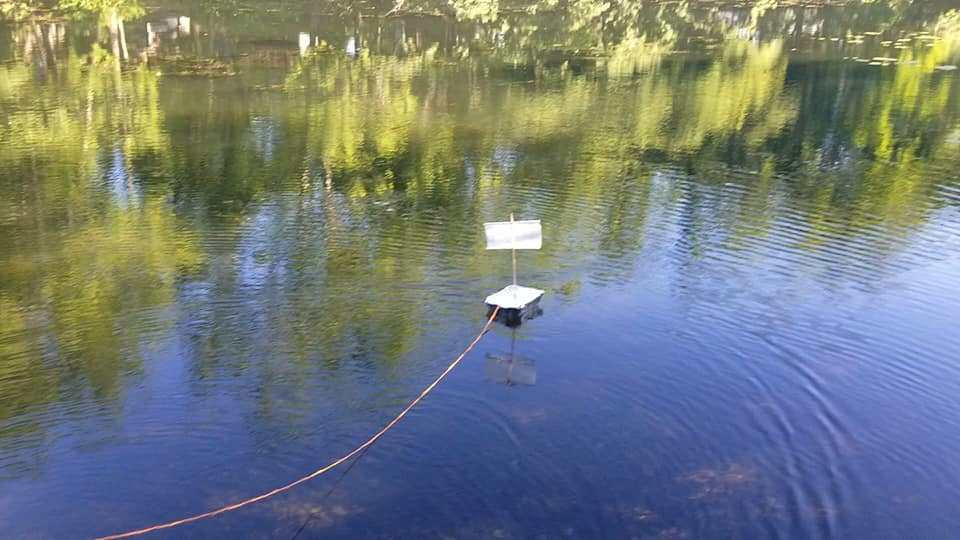
This year, a pair of swans nested at the confluence of our town’s river with a small stream. They spent weeks building up the nest, bending their long necks to scoop dead leaves and twigs into a pile that rose a couple of feet higher than the river surface. Once the eggs were laid, the pair took turns sitting on them. The one swimming around and noshing was on patrol. If a duck or goose or dog came too close to the nest, there would be a great loud flapping of wings, and the intruder would leave in a hurry.

Now there are four fluffy little baby swans, cygnets, visible on royal cruises with one parent ahead and one behind. Nobody messes with the swans. They can fly, but they don’t have to.

I watch the adults learn how to co-parent. Swan #1 swims quickly under the bridge, minus offspring, and then flaps its wings and rushes up the bank, rousts Swan #2 from its resting place in the brush, then swims back down the river in a big hurry. Swan #2 scrabbles down the bank, calling out this really loud noise that starts with a squeal and ends with a honk. It swims around a moment, stretching its wings and neck, and then follows Swan #1 under the bridge. A couple minutes later, here comes one of the swans with babies close behind it. I think that was a shift change and Swan #2 was yelling “Okay, I’ll be there in a minute, let me finish my coffee!”

Several years ago, the government rebuilt the old dam between the lakes our river flows through, complete with a modern fish ladder. Thanks to the ladder, the dwindling stock of alewife – a small herring-like fish that breeds here – has rebounded. The state estimates that their population has gone from 200,000 to more than 700,000.

Black-crowned night herons come for the spawning run of alewife every spring. At night, they pick a local tree to roost in, crowding the branches like big ripe fruit. The great blue and little green herons also enjoy the alewife. They’re so full, they often stop fishing to stand around and nap.

Since the state closed storm sewer overflow pipes, the painted turtles have also rebounded. They bask in family rows on riverside logs and driftwood every sunny morning, lined up by size from large to very little. When danger approaches, they plop into the water one by one, with the biggest the last to go and the first to re-emerge.

The other big change on the river is the traffic. We used to get motorboats and jet skis going much too fast, leaving wakes that eroded the banks. Then a canoe and kayak rental place opened up. During the pandemic, boating has been a great way to have some safe family fun, or just to get outside without a mask. The river is full of these little boats on every nice weekend. Although the herons don’t like being in the public eye, they haven’t gone far.

There are two big upsides to this new kind of traffic. One is that the motorboats have slowed way down. With so many kayaks, a speeding boat might run somebody over. I suspect that the boat club lawyer sent a memo.

The other upside is that now the river is known and loved by many more people. Some are bound to join the community that defends the river. The water and its woodsy banks are always in danger from pollution, garbage, and invasive species. Our wild, or wildish, places need all the friends they can get.

People have plied these waters in canoes for centuries or longer. Until this past century, the river ran through woods and swamps. Now there’s only a narrow green strip on either side of it, trees and shrubs growing thickly up the steep banks. Beyond that, in most places, small grassy areas lie between the river and the streets, houses, and shops of our town. Nothing much lives in the grass besides ticks and field mice.

The river shows many signs of abuse and neglect. Plastic water bottles and other trash get stuck in the driftwood. Lack of maintenance on the walking paths has exposed the roots of riverside trees that keep the paths from washing into the water. Maintenance and oversight are the easiest things to cut from state and city budgets.

But what a rich variety of life still manages to thrive in the river and those two narrow strips of green. Water lilies by the thousand open their fragrant white petals; small-mouth bass nestle in the reeds; dragonflies dart and hover. Once I saw an otter, undulating at the surface like a broad brown velvet ribbon.

Humans also thrive along this water. People walk, run, bike, watch birds, have picnics. A woman dances along to the music on her headset. Nobody can calculate the river’s physical, mental, and social benefits to our community. Recently, plastic lawn chairs have appeared in a few choice sitting spots. Some walkers bring bags with them to pick up litter.

This is a beautiful world. Maybe we’re learning to stop our trashy ways and cherish it. If so, it won’t be a moment too soon.

Atheist’s Bible: The Meek

I was raised Jewish. The New Testament was off limits. When I got old enough to question why, I read the books, and became – not a Christian – but a fan of Jesus of Nazareth. He was a radical poet, a superb teacher, a lyrical rabbi. His words, his stories, his metaphors, moved and delighted me in a way that rarely happened when I studied Jewish lore in the Talmud.

What was so dangerous in the teachings of this great rabbi that his work was forbidden to Jews? He taught that the most important thing was to be kind to one another, not to follow the rules. This threatened the fabric of Judaism, knitted from thousands of strands of legal arguments, meant to cover the actions of Jews at all times. If one could put aside these historic threads, one would be, in effect, naked in the world. One would be the agent of one’s own actions rather than limited by the prescriptions and prohibitions of generations of wise men.

If the meek are going to inherit the earth, we should get ourselves organized.

In a system, or an anti-system, like the one Jesus proposed, every individual would be a free actor. Such a person might or might not choose to remain in the community built for protection and survival over the centuries. The rabbis, those living encyclopedias of rules and regulations, would be no more and no less than any other people except as they demonstrated compassion towards others, non-Jews as well as Jews. All would be equal in the sight of God.

What Jesus represented was a threat to the powers that be. In his day, those were the Sanhedrin, the council of rabbis, as well as the occupying army of the Romans. In the centuries to come, they were the Church, and the priests who claimed its power for themselves, as well as nation-states. He taught that souls were equal, even the souls of small children, and of women. What glory they could claim belonged to themselves alone, for their acts of kindness, and not for their service to organized religion. To counter such egalitarianism, the Church turned the words of Jesus into mysteries that could only be safely plumbed by priests, intermediaries trained by the Church. Ordinary people could not be trusted with the Word.

Jesus trusted ordinary people. He could have remained among the rabbis, a precocious scholar, rising to be powerful and important among the established leaders of his faith. Instead he hung out with prostitutes, drinkers, and gamblers, not to mention fishermen. He believed in the meek, the gentle, the powerless. He threatened the idea of corporal power itself. If you knew that all you needed to satisfy the only true Power in the universe was compassion, you would be less likely to submit to those who rule through fear. You would be free.

Nobody who has risen through a hierarchy of power likes people to be free. What would happen if the masses of people, the lowly ones, the meek, began to see themselves as equal to those who rule them? Every person who has fought for and gained power in an organization would feel a disturbance, shall we say, in the force. The few who use force would have to recognize the overwhelming numbers of the gentle. Such a change in public consciousness would shake not only religions but nations.

The rabbis knew Jesus was a threat. All hierarchical organizations know that he remains a threat. He didn’t believe in top-down power. He tried to awaken power in the grassroots, from the bottom up. He believed in people; he exalted the meek. What he preached was neither obedience nor resistance, but solidarity, the most revolutionary concept in a world designed to keep the meek under the knee of the powerful.