People are all almost exactly the same. I say almost because, even though we are 99.9% alike, that one-tenth of one percent difference is very important to us. That’s how we tell one another apart. Since we’re social animals, we depend on knowing exactly who another person is, even though she is almost exactly the same as we are. So we make a big deal out of that one-tenth of one percent difference.
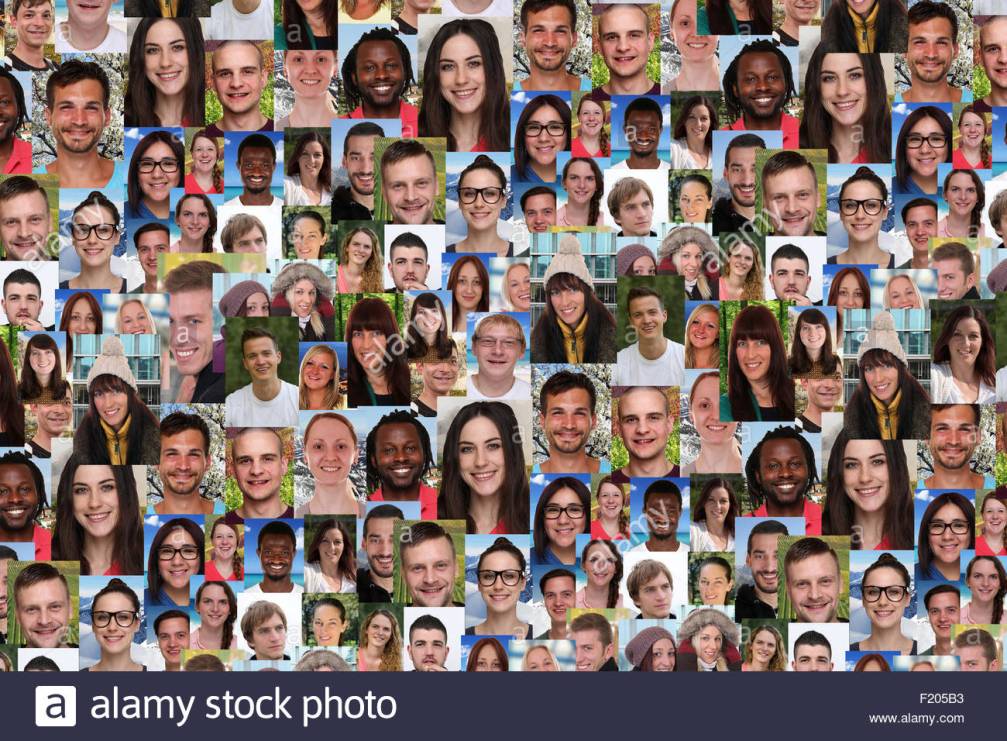
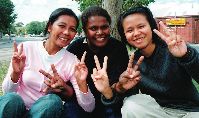
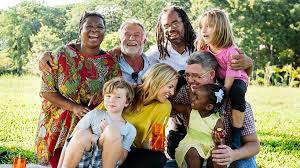
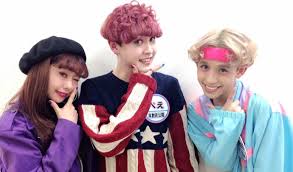
Race, gender, class: these things help us tell one from another, along with details like body shape and facial features. But the differences are tiny. If you’ve ever seen a montage of many diverse faces, you have seen what Human looks like. In the same way, if you read the literature of any language or time, you know what Human behaves like. We are fascinated by our tiny differences; we obsess about them. But they remain tiny.
If you doubt how much we are the same, remember what it’s like to see a movie in a theater. You laugh and gasp in the same places as everyone else there. You like the same characters and have no trouble identifying the bad guys. Also consider the fact that a good actor can play almost any role and make us believe it. How is that possible, unless we each contain in ourselves the whole range of human behavior?
There are other ways to tell how small our differences are. We think race, gender, and class are very important, and in some ways of course they are. Yet when you know someone’s race, gender, and class, you still know almost nothing about them that really matters. You don’t know if they’re kind, for example. You don’t know if they’re funny.
We will always be fascinated by the details of how each of us is unique and different from all the rest. We will always be interested in the soap opera of our secret, special, individual lives. But there come times when we have to look up from these details. We have to look at our civilization as a whole. We have to look not at personal behavior but at the behavior of our society.
When civilization has behaved so badly that we have begun to threaten our own survival, it’s time to think about what we can do differently.
Because each of us can be anybody. Each of us is capable, under the right circumstances, of every kind of human behavior. We contain in our own secret selves the complete spectrum of human behaviors. Which of the many possible behaviors we enact in our own lives is decided by our imagination of ourselves and of our circumstances.
Our imagination is tremendously powerful, though we often discount it, and even refuse to believe it affects anything. In our urban world where everything except the sky is a product of people’s imagination, maybe the power of imagination is so obvious that we take it for granted and so fail to see it. Yet imagination is the key to our future. How can we imagine ourselves saving the world?
Instead of thinking about how to change individuals, we should think about how to change culture so as to encourage the creation of healthy, sane, loving, humorous, careful human beings; how to change people’s environments so as to encourage healthy habits; how to create the people humanity needs to become.
How to make it easier to be creative, and not kill imagination first thing in school. How to make it easier to raise a family, to learn new things, to grow old. Movies, tv, video games: what do we need to teach, show, tell one another? What message are we broadcasting? What will it do to the people it reaches?
False optimism is not going to work. We can’t slap a happy face on things: life is too awful for too many. We can’t keep distracting ourselves from what we can see happening more and more clearly: the poisoning of the planet, the whirlwind we have reaped through our bad behavior. The longer we ignore the consequences of our greed, the harder they will be to make right.
If the species is going to survive, it’s time to get serious about it, and figure out how to save ourselves from this mess we have created. We have to look at exactly what our culture is: what we glorify, what we despise, whom we imitate, what values we adopt. This is crisis time. We need to pull an intervention on ourselves.
Anyone who has spent time with babies knows how smart we are and how much we can learn. Our bodies stop growing but our minds never stop. We can learn new ways of doing everything. That’s culture; we do it all the time. Every day we sing a new song.
Until recently, most of us have appeared to be frozen. We’re so used to watching life instead of living it, we’ve become passive. We have forgotten that everything around us has been formed from the action of human imagination upon the materials of the earth. We, ordinary humans, have invented it all. Our power is tremendous when we agree on something to do.
Some events in recent years indicate that we might be waking up to the crisis, and responding appropriately. Our most powerful moments have been singular and quite spontaneous. The Arab Spring, undermined by the usual gangs of thugs though it was; the Occupy movement; the Women’s March; the appearance at U.S. airports of tens of thousands of people to support Muslims when Trump announced his travel ban; these are symptoms of a vital resilience, a resistance to the forces of death.
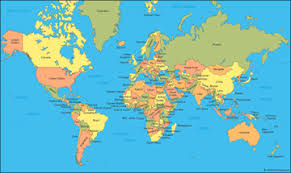
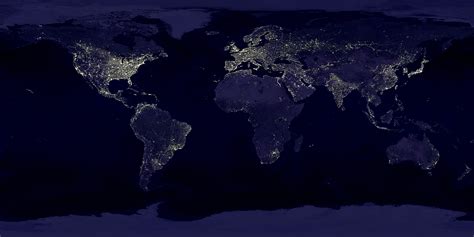
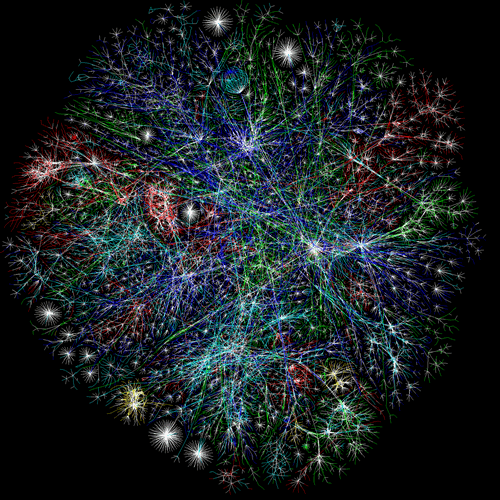
If we can ever convene the species and discuss the situation with everyone at the table, it is entirely possible that we can agree on our mission and our direction. We will understand one another. Because in spite of our splendidly elaborated cultures, our fascinating personal uniqueness, our endless variety of experience, we are all, finally, almost exactly the same.





 Alice T4