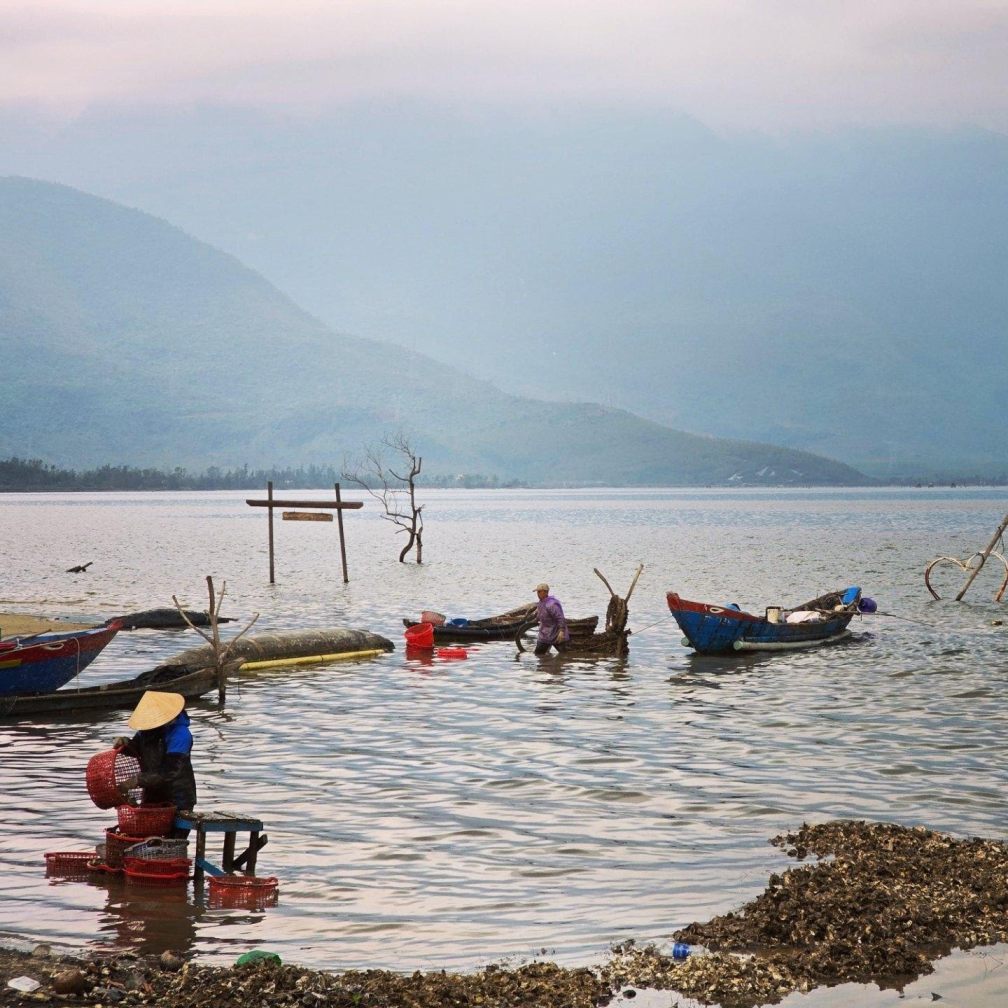
Everywhere my daughter Margaret and I went in Vietnam this January, we met lively, friendly, fearless women. Given the Vietnamese reverence for family, strong women are probably not a new thing for them. But these women were powerful personalities far outside the family sphere. Or maybe, through sheer force of character, they become the mother or big sister wherever they are.
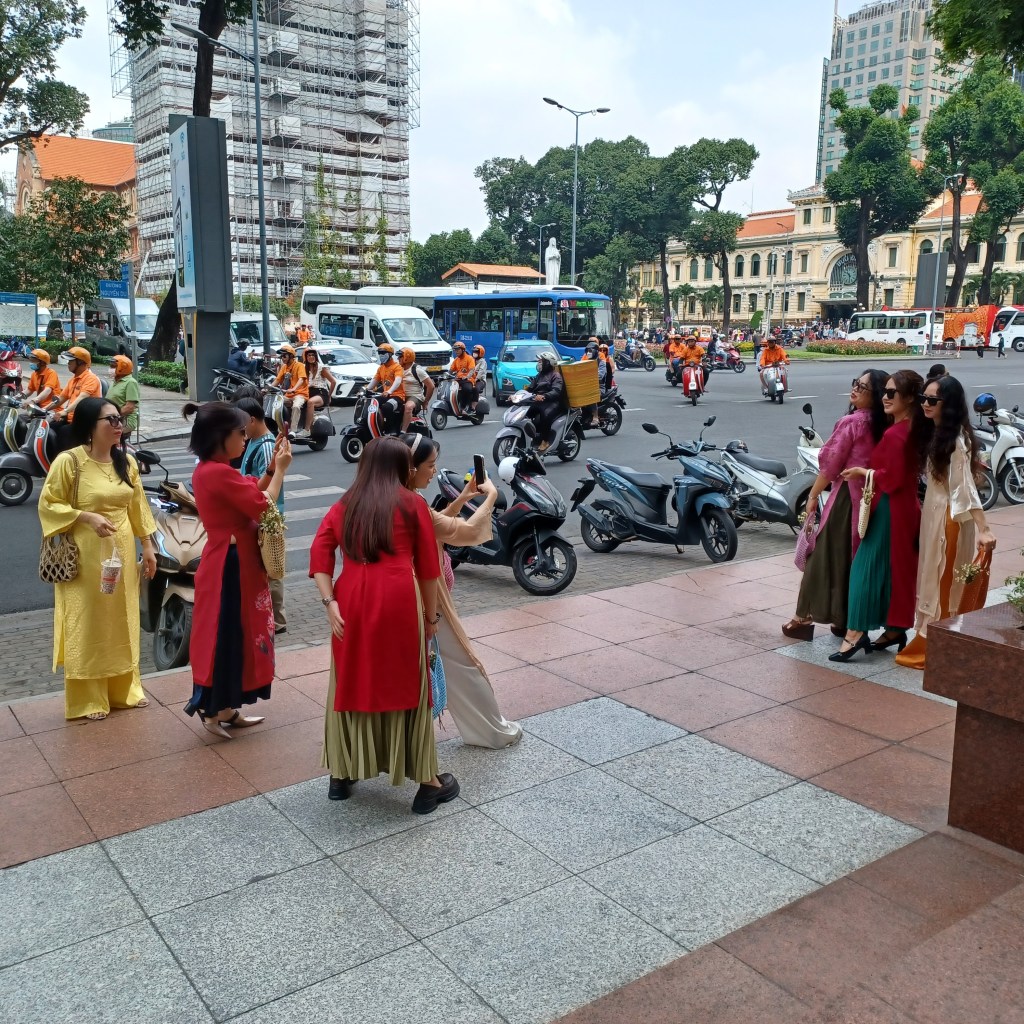
The first such woman we met didn’t even speak to us. I had contracted the norovirus on our long trip over. I was kneeling by the toilet in our hotel when the New Year’s fireworks began. Days after the worst was over, I still felt shaky and faint. We couldn’t decide whether I should go to a hospital. Margaret thought we could use a massage first.
I’m not even five feet tall, but my masseuse made me feel like a giant. Margaret suggested a Thai massage, which she said meant “they do yoga to you.” The hostess told us to say “It hurts” if the massage was too rough. I did say that a few times. My masseuse ignored me. She kept pulling, pushing, and twisting me as she thought best. After an hour of this, my dizziness was gone, and it never came back. That tiny beast of a woman had fixed me.
After the crowds, excitement, and smog of Hanoi, we went east a few hours to the fresh air and fabulous landscapes of Bai Tu Long Bay. Huge limestone karsts thrust up from the water like surreal sculptures, vertical, pocked with caves, crowned with greenery. Our guide to these wonders was a young woman named Windy. She told us her name in Vietnamese meant Number Four, so she gave herself a name she preferred.
Windy had been orphaned at age 12. She worked wherever she could, learning English by talking with tourists. She did not tell us how she lost one eye. She was neither pretty, graceful, nor ingratiating. She was just outspoken and hilarious. Her narration was full of jokes, many seemingly improvised on the spot. She treated all of her fellow crew members like younger brothers, and had several play fights with them from which she emerged grinning with victory. Among all the crews on all the boats in that popular bay, she is the only female. Windy: long may you wave.
In Hue, Margaret took a cooking class from Yong, husband of Lisa, another magnificent woman. They were among the kindest, most thoughtful people I’ve ever met. Lisa took us shopping with her after dinner, along a sidewalk market where everybody seemed to know and like her, and then to her local Buddhist temple where we could meditate for a while with the monks.
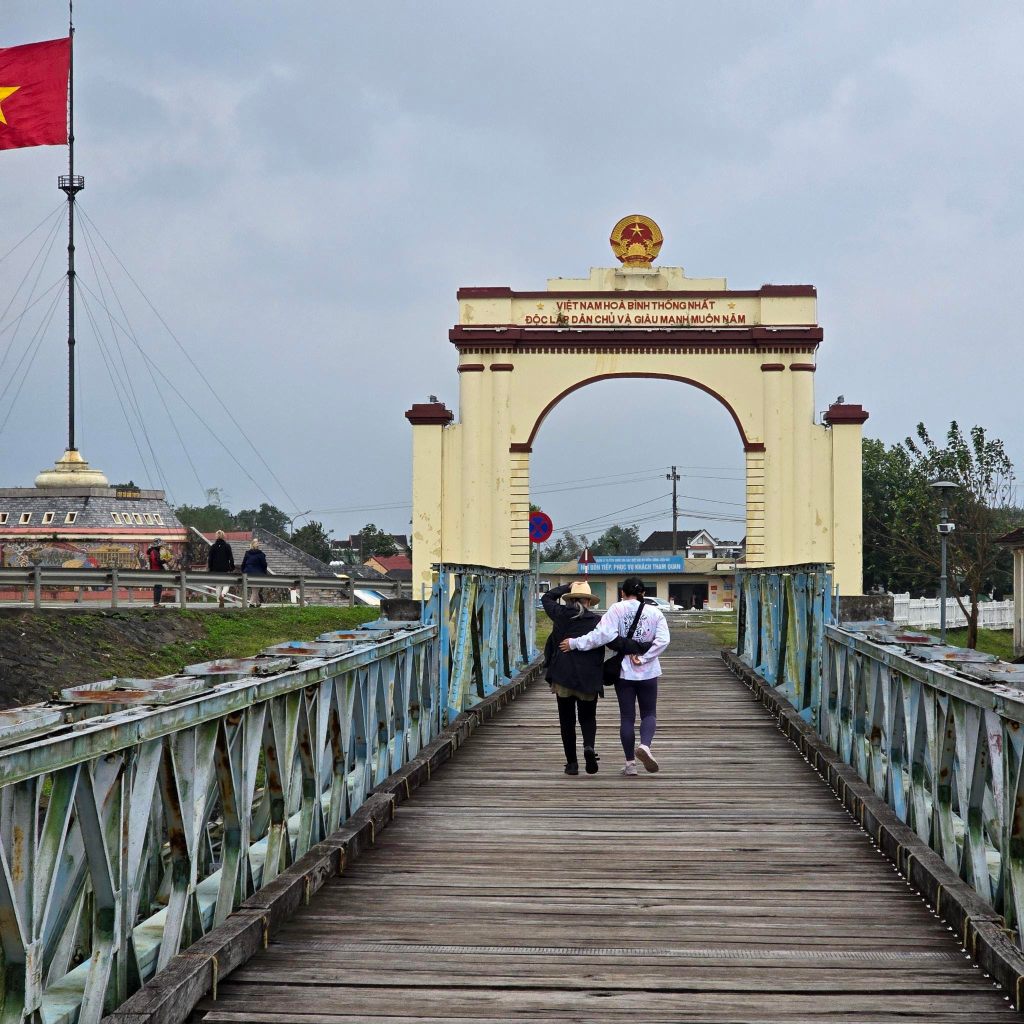
Lisa and Yong knew that visiting the war-ruined Demilitarized Zone would be a difficult emotional experience for us, so they decided to take a day off work to keep us company. It was a windy, rainy day when we went. Crossing the bridge dividing the North from the South, Lisa kept her arm around my waist. In the Vinh Moc tunnels where 600 villagers lived for six years 100 feet underground, she stayed close, along with Margaret, to keep me from slipping on the steep, mossy steps. We only spent two days with the couple, but their warmth made us feel like close friends.
I keep thinking of some people I never met or spoke with – the ones up to their knees in the rice paddies. They might find some comfort in the peaceful green landscapes around them. It’s likely, though, that the comfort doesn’t amount to much when your back aches, your feet hurt, the mosquitos swarm, in the broiling sun or driving rain. What chance do they have to escape such a life, in a country where most people’s education ends at age 11?

And I think of the people so old they couldn’t stand up, whom we saw sweep the sidewalks in front of some shops. In Vietnam, if you don’t work, you don’t eat. Their families must make sure they have some shelter, because you don’t see homeless people sleeping in doorways or on park benches. But in Vietnam, as in today’s United States, the government doesn’t do much for the oldest or poorest of its people.
In Vietnam, people are not free to demand change. In the US, we can still do that. The resilience of the Vietnamese people, after decades of horrendous bombing and poisoning by our country and others, should be an inspiration to us. All of humanity is our family, and the whole earth is our home. I hope the American people will begin to insist that our country act accordingly. The kind and hardworking women of the world, and the men and children they cherish, deserve better.










 Alice T4