Intersectionality

Sometimes, in our culture, it seems the individual is all that matters. Life is about me: my career, my wealth and status, my history. We talk about intersectionality, the many identities that make up one person. What about intersectionality among people, rather than within them? Isn’t that our most important circumstance, as a species?
Say one person is gay, male, white, urban, and Jewish. Another is straight, female, Asian, suburban, and Buddhist. According to what is usually meant by intersectionality, one might expect them to have little in common. But they both love dogs; they’re both poets; and they’re both passionate gardeners, though the guy’s plants are all in pots on his balcony. How different are they?

Ethnicity, gender, religion – these are aspects of the self that help us feel part of groups larger than our immediate friends and family. These aspects are endlessly fascinating. They take up most of our public discussion. Yet they represent a fraction of what a person actually is. More of our couple’s thoughts and daily activities are likely to concern their dogs, their poems, and their plants than any of the supposedly more significant aspects of their identities.

Ethnicity, gender, and religion are stories we tell ourselves. These histories are important and yet, to a degree, imaginary. They help make individuals what we are. But how have they come to outweigh other aspects so much that we sort ourselves into such narrow categories?

This sorting is far from accidental. A very few people have accumulated most of the economic and political power on this planet. So long as Black and white, male and female, Hindu and Muslim, are convinced we are significantly different, we can’t get ourselves together to challenge that power. One only has to look at Trump, Xi, Putin, Modi, or any other authoritarian to see that they deliberately foment enmity among ordinary people.

Imaginary boundaries keep us fighting one another, instead of taking charge of the planet, which the current culture is ruining for everybody. Preventing ordinary people from organizing is a short-sighted strategy on the part of elites, since their grandchildren as well as ours will have to inhabit this poisoned planet. But the elites, being human, are not good at taking the long view.
The internet gives us new opportunities to take down the walls we have built. Rapid and radical climate change gives this project new urgency. Online, people can identify with other dog lovers, poets, or gardeners. One’s ethnicity, gender, and religion can begin to appear less relevant in these circles. Old associations give way to new. Meanwhile, racist, ethnic, and anti-LGBTQ violence reinforces the old boundaries. Hate crimes are committed by people who depend on those boundaries for their whole identities. The increasing violence points to the degree that such people feel threatened. Whenever there is peace, the old boundaries erode.

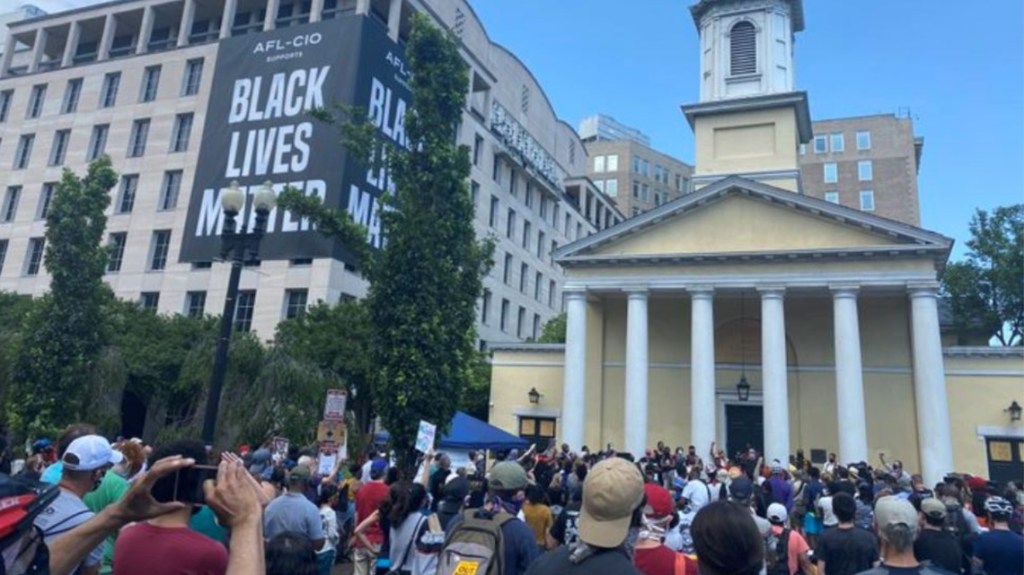
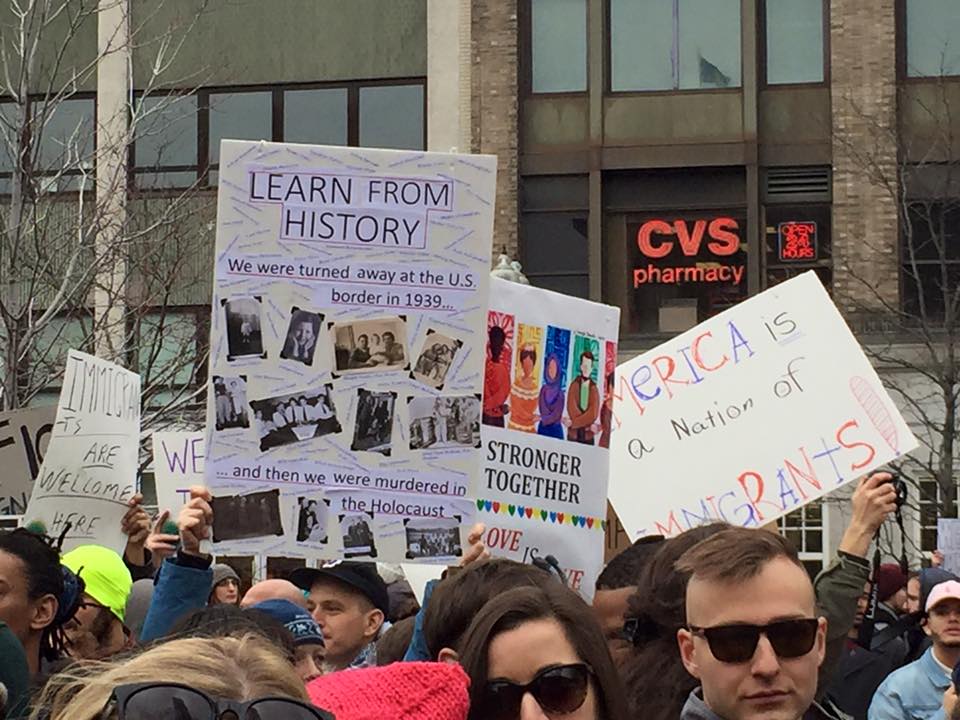
The Black Lives Matter movement drew in white as well as Black people, not just in the US but globally. The (nearly all peaceful) demonstrations centered on the suffering experienced by Black people for no reason except that their skin color put them on the wrong side of an imaginary wall. Earlier, the Occupy movement also spread around the world. Wealth is another imaginary wall that causes great suffering to people on the wrong side of it. In addition, the environmental movement and the #MeToo movement are global or in the process of becoming so. All these movements indicate that at least some people are beginning to see ourselves as human first, with every other aspect of ourselves being less significant than that primary, leveling, identity.

Every human is clearly a unique world unto themselves. Every human is also 99.9% exactly like every other human. If we focus only on the individual, we just see the actions of one person, subject to chance, a sort of Brownian motion, like the movements of a particular molecule. If we’re interested in the larger movements of our species, we have to consider that most obvious and invisible thing: our culture.

The paradox of being human is that the essence of our personality provides a through-line in our lives; we carry that essence with us, like a smell or a sound that only we can produce. Yet we change constantly. Every day brings us new experiences, and every experience changes us, becomes part of who we are, whether or not we think about it or remember it.

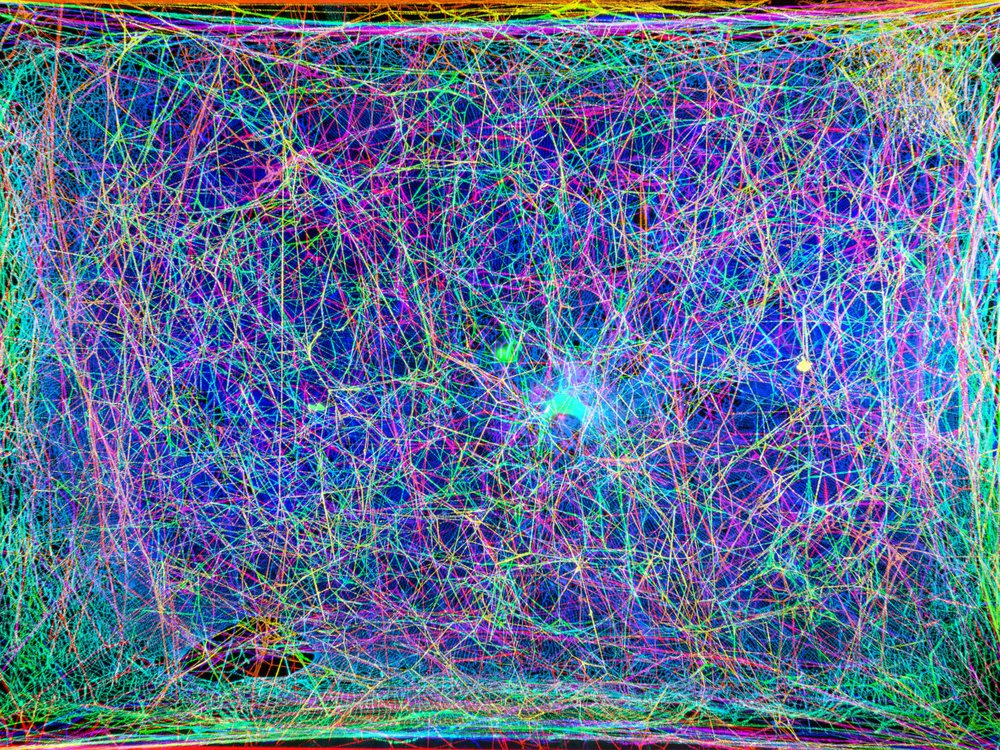
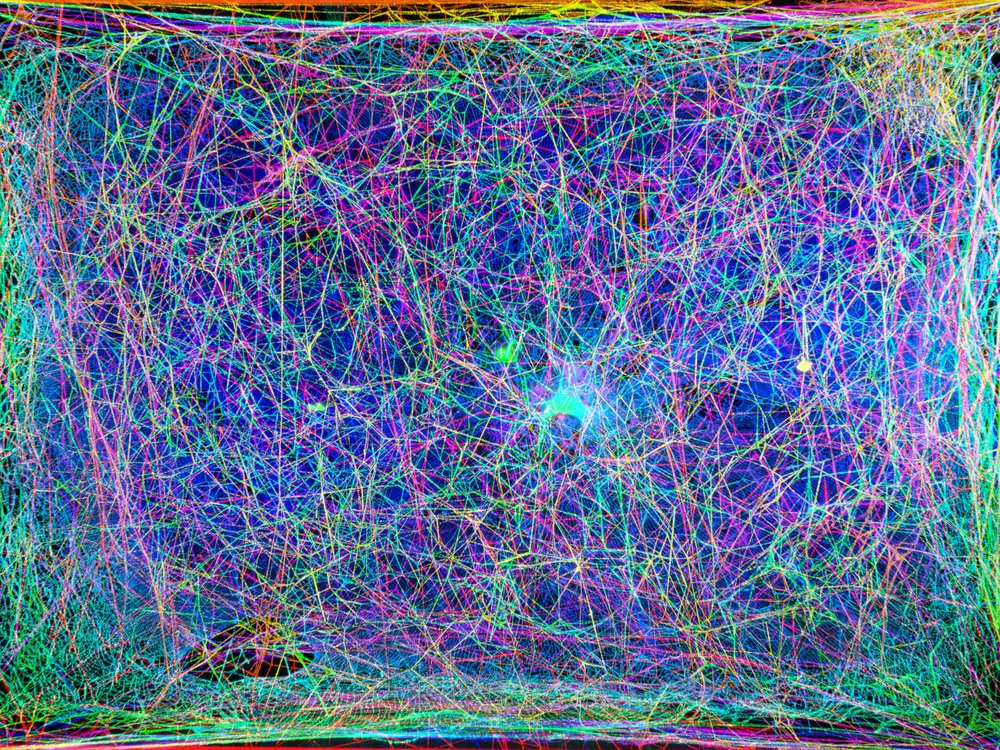
Imagine if we could see the connections between us. Every meeting would form a line. More meetings would make a stronger line. There would be lines between clerk and customer, police and criminal, writer and reader. Instead of a universe of separate points, we would see a dense network in which no point existed in isolation. The loneliest individual, after all, would not have survived infancy if someone had not fed them and wiped their bottom.

This dense network of connection, though impalpable, is who we are. This is the reality of our species. Like the individual, humanity has through-lines. The constant is human nature. The flux is culture, which never stays the same, one day to the next.

We can’t change human nature. We can, however, change culture. Everything we say or do changes the culture, as well as everything we buy, or boycott, everything we listen to, argue with, dismiss or support. In such small increments, the body of humanity moves. In what direction are we moving? Tiny cells in the body of our species, we can hardly tell. All any of us can do is move in any way we are able toward peace, sustainability, and justice. And hope.
Magical thinking

I believe in magic. I’ve seen it happen. Arthur C. Clarke, who wrote 2001: A Space Odyssey, said: “Magic’s just science that we don’t understand yet.” In this case, the science is mob psychology. I’ve seen ugly crowds turn beautiful.

Once, long ago, I was at a huge outdoor rock concert. It was a hot day. Then it rained and the wind came up. People got cold. Some started to tear down the arena’s concession stands so they could make bonfires of the wood. The most aggressive vandals surrounded the fires. The mood was violent and mean.

Then a friend of mine stepped up to a fire, warmed his hands, and loudly praised the people who had built it. “This is so great, thank you! We’re all freezing and this feels wonderful! What a terrific idea!” He kept shouting this sort of thing while more people crowded around the fire. Now the original vandals began to feel like heroes. Others helped them take the stands apart and build more fires. Tension evaporated. Once again we were brothers and sisters enjoying the music together.

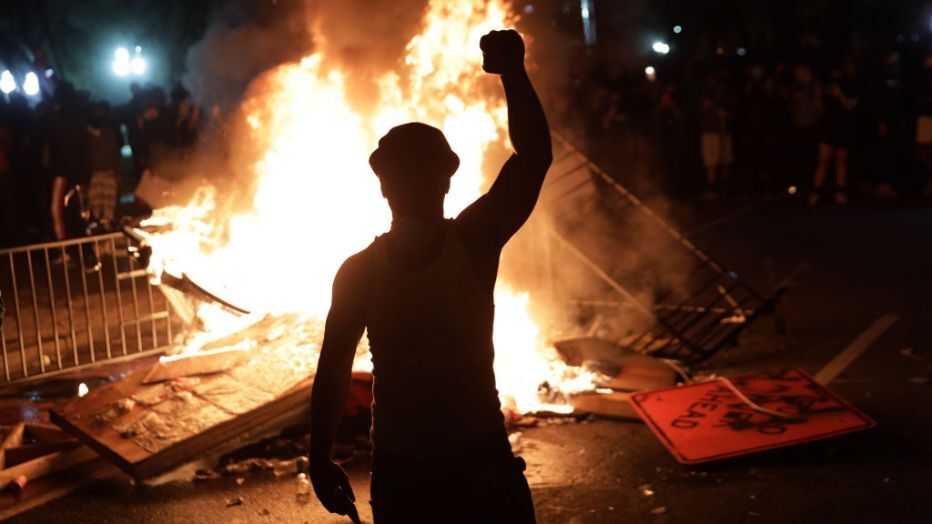
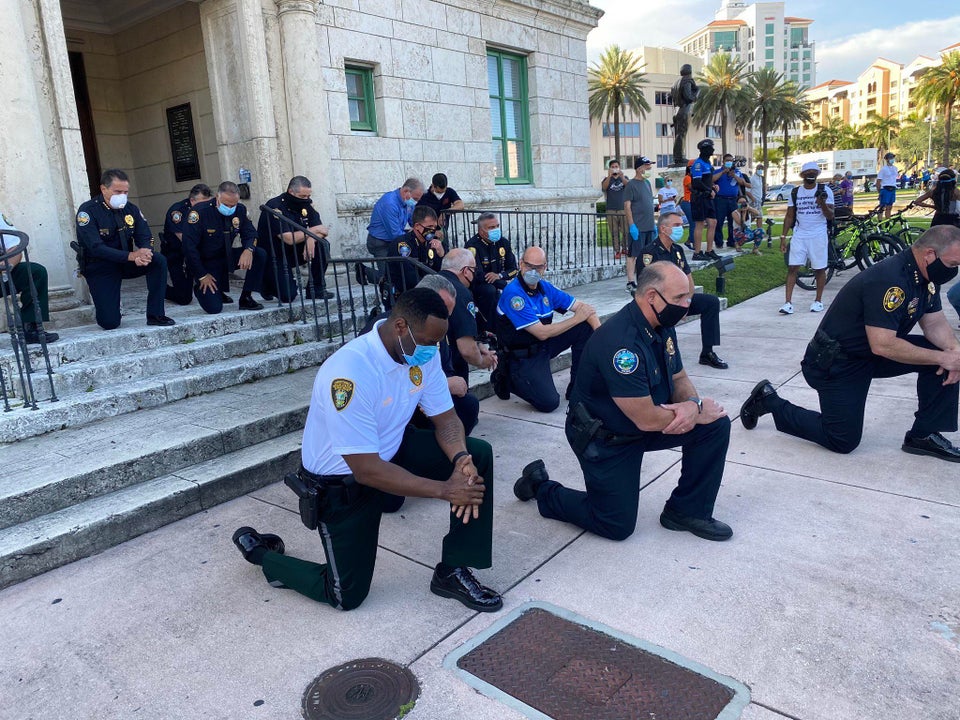
Late this spring, after a Minneapolis policeman murdered George Floyd by kneeling on his neck for 8 minutes and 46 seconds, the black community erupted in protest, releasing tension that had built up over lifetimes of racist abuse. As crowds demonstrated against police brutality, the police demonstrated their brutality. Some people at the fringes of the protests broke into stores; some set fire to police cars and a station where police had fled the scene.

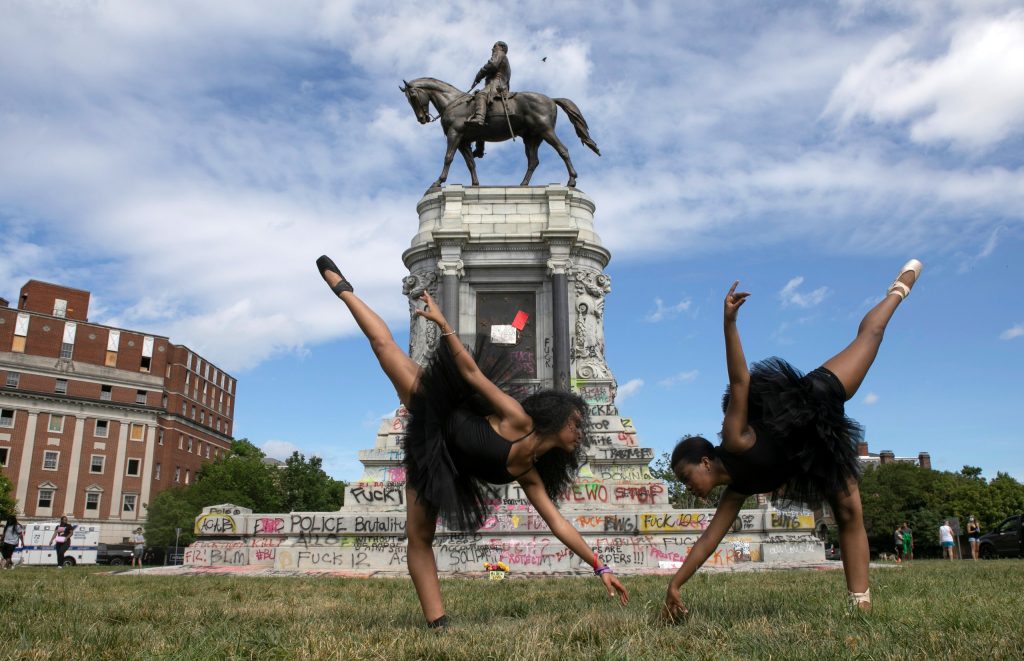
Newscasters predicted riots. Trump clearly hoped for the start of a race war. But over the next few days and weeks, some kind of magic happened. In spite of, or maybe because of, the protesters’ justified rage and the horrific over-reaction by most police, the protests became not wilder but calmer. They grew. They focused. They spread worldwide.

These big, diverse, articulate crowds cannot stay in the streets forever. They have, however, inspired shifts in public awareness, media coverage, and even state budgets and laws that should, that must, result in deep and permanent change. Fighting racism is a battle with many fronts: jails and prisons, schools and workplaces, neighborhoods and legislatures. The work ahead of us is enormous. But our society seems to be ready to take it on, at last.

“Magical thinking” is defined as the belief that our thoughts can cause changes in the real world. When our thoughts have no actual consequences, such a belief is delusional. Yet I have seen people’s thoughts change the world, not just once but many times.

There is such a thing as magic. There is evil magic, like the spell the fascist far right has cast over too many people in too many countries. The worst kind of magic has convinced many people that we have no power to make a difference, that only the very rich or famous can affect our culture. But there is also good magic, the magic of our shared ideals. Let us never give up hope of changing the world together. Magic is in the hearts of the people.

Gold chains & high heels

Going crazy, but comfy

One very small positive aspect of the COVID-19 crisis is that we don’t have to dress up while we’re stuck at home. Everything we wear still makes a statement, although what it states might not be what we had in mind. Sweatpants say, “I believe science and I’m home until the infection rate drops.” Outside the house, an unmasked face like Trump’s says “I’m fine, screw the rest of you.”

Praying GOP will lose

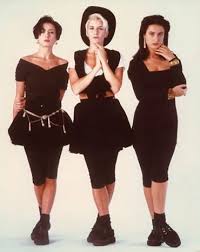
When Reagan established that “Greed is Good” in 1980, fashion, which had been full of wild colors in the ’60s and ’70s, turned black. It stayed black for more than a decade. The Reagan era was when all the wealth Americans created began to go to the richest, and working people started sliding backwards into poverty. Fashion went into mourning.

Take me seriously. Seriously, take me.

Women have spent a century fighting for equal rights, equal pay, and equal respect. Women’s fashions have not always cooperated. Wearing pants: a big win. Skirts so short you should sit on a towel; heels so high you can hardly walk; necklines so low you can’t pick up a pen you dropped or your boobs might pop out: not helpful. Unless we’re actually hoping to pick somebody up before the bar closes, let’s try not to send that message.

I’m free. Sort of.

Some fashions worn by people of color stem from irony, bitterness, and anger. Small wonder. Pants falling off a man’s butt threaten to moon a world that has disrespected him. Iron chains used to mean black people were slaves of white people. Gold chains don’t mean slavery is over. They only say that the new master is Money. They might be costly; the wearer might be rich; but he is still wearing chains.

Story-Boarding

Sometimes imagination is not so much fun. As part of my new anti-terror routine, I’m trying to notice when my own thoughts make my heart race and my mood drop. It’s kind of amazing how much fantasy my stupid imagination can come up with, and how quickly. Of course, these days, it’s always a Stephen King-type fantasy. I guess evolution prods us to imagine the worst. Not helpful in the current situation though.

I think of this tendency as story-boarding, what you do when you’re writing a movie: no dialogue, just images and general plot. The plot is always X (myself or loved one) gets sick or dies, unless it’s X, Y, and Z getting sick and dying. Such vivid scenes! So much emotional response, in the space of a few breaths! At times like this I totally hate having an imagination. These are movies I don’t want to watch.

We’re all missing friends and family, we’re all scared of this huge change in our lives. Story-boarding can make a difficult situation much worse. I’m learning to put the brakes on as soon as I realize I’m scaring myself. When I manage to be fully conscious of them, these ugly fantasies evaporate.

Evolution, schmevolution. If I need to be scared to survive, I can always watch the news.

An Atheist’s Prayer

God of Cosmos, we who are less than intestinal flora

            in a flea on the arm of a Superbowl fan who is

                        leaving the Big Game forever

salute you; we whom the merest

            breath of the idea of the largeness and smallness

                        and intricacy of things

                                    stuns, like rabbits in a headlight,

beseech you, in the name of all creatures drunk with

            the beauty of their nearest fraction,

to be: that in the minute, crawling, massive, whirling,

            spacious, flashing whole

                        which is beyond our reach forever

Something exults.

Star Scum

Who’s that surfin’ out in space?
Star scum
Must be that damn human race –
Star scum
Warp nine racing round the suns
With their hot rods and their guns
Careless of their neighbors’ curse
Terrors of the universe
Star scum

It was quieter before
Hearing waves break on the shore
Now the skies are full of noise
Rowdy gangs of girls and boys
Watch out
Here they come
Star scum!

Cosmic wind that blew no good
Brought them to our neighborhood
Spewing gases, strewing junk,
Pretty trinkets in their trunk
Punk planet!

Lock your door and hide your brew
Pull your black hole after you
They will ruin your son and daughter,
“Ugly bags of mostly water”
Star scum!

What a frightening thing to see
Outlaw species on a spree
Livin’ fast and livin’ high
Leaving skid marks on the sky
Star scum

Where’d they come from? On the farm
Way out on the spiral arm
Gettin’ by on luck and charm
Star scum

Blooming like some toxic flower
Since the Union came to power
They’re a race that feels no shame
Now we all know who to blame
Star scum

Nuke pollution – bad tv –
Spread ‘em through the galaxy
Star scum

Techno – disco – pizza pies –
How’d we live without you guys?
Solar slimeballs, cosmic crud
Balls of fire and minds of mud
Put some rubbers in your pants
Grab a humanoid and dance
Who you gonna call?
Star scum!

I believe in creativity.

I believe in the human imagination.

I believe in working together. I believe we’re in crisis and we need to save ourselves. I believe we have to save ourselves together.

I believe I mess up all the time and so do you. I believe we’re not so different. I believe if we took the time we would understand each other. I believe we never completely understand ourselves.

I believe we’re in too much of a hurry. I believe the situation is urgent and we must act. If we stop doing some things, I believe that is doing something.

I believe that what each of us does is very important. I believe it is more important to be good to other people than to be beautiful or rich or famous. I believe in loving-kindness.

I believe we are just learning to become human. We’re like bees just figuring out how to build a hive.

I believe in the beauty of all that is, the far-flung stars and all the life that ever was or will be.

I hope we can figure out how to be human in time to survive.

I believe we already know what we have to do. I believe we are doing it.

The Trouble with Skittles

Remember when Donald Trump Jr. compared Syrian refugees to Skittles? He asked if you would eat a handful of the candies if you knew a few among them would kill you. He considered this a good reason for the US to refuse to admit any of those desperate people.

I thought that was disgusting. Then I saw some Skittles commercials. Looks like disgusting is just how they play the game.

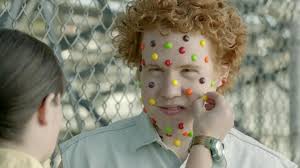
In one ad, a boy seems to have broken out in zits; only the pimples are Skittles. A girl demonstrates her affection by picking Skittles off his face and eating them. She in turn breaks out in Skittles, smiling fondly.

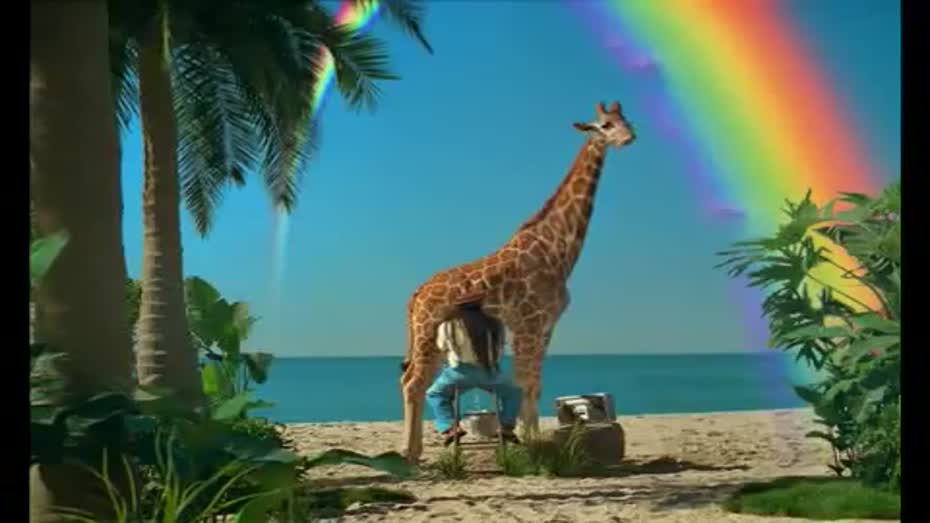
In another ad, a dread-locked Black man in a Rasta cap milks a giraffe, which is nibbling on a rainbow. The “milk” streams down between his legs, turning into Skittles. You see him from the back. It looks like he’s pissing. Meanwhile, he laughs a big deep phony laugh, like this is the most fun thing ever.

I can’t even list the ways I find this offensive. But whoever designed these ads made them disgusting on purpose. After all, they want us to buy a product that is nearly all sugar. It rots our teeth, makes us fat, and increases our risk of diabetes. The whole enterprise is disgusting.

I wish the US would welcome people who are fleeing war, poverty, or gang violence. We could absorb them into the body politic with few if any bad side effects. In other words, in every possible way, they are not like Skittles.