1 people, 1 world

We’ve had record-breaking wildfires, hurricanes, and floods, but never before in our lifetimes has there been a catastrophe that hits the whole world at once.

We’re watching one another’s states and nations to see what works. So far, the US is coping worst of all. Led by our Denier-in-Chief, too many people refuse to protect themselves through social distancing or protective gear. But Americans seem to be learning – just the hard way, unfortunately.

This is not a fun way to find out that we really are all connected.

We’re seeing celebrities in sweatpants, not glammed up on the red carpet. We’re seeing which corporations care about their workers, and which just want to seem like they do. We’re finding out how much our casual contacts with neighbors and friends mean to us, now that we can’t have them.

Americans are also finding out why we need a federal government. We’re discovering this the hard way, too, since our current government is trying to shift all its responsibilities to states.

Individual responsibilities have never been so clear. We have to be kind, and we have to be careful. Every day, people we never heard of are showing us how to behave. Not only disease is contagious. Good cheer, courage, and helpfulness are also possible to catch from other people.

Climate change has already made us aware that we have to build a new world. We are starting to build a new civilization, from useful parts of the old one, with our amazing and under-rated imaginations.

The old culture was based on greed and violence. The new one is based on community and compassion. One of my friends calls this change “the warm shift.” Another points out that when a big ship makes a small course correction, it will lead to a whole new destination.  Humanity is a damn big ship. And we might now be making the small but vitally necessary course correction that will lead us to a survivable future.

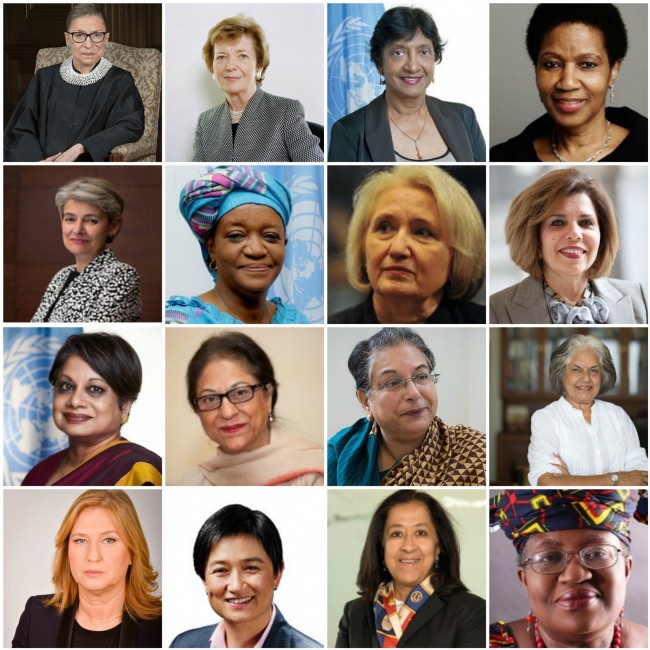
Put Women in Charge

We’re in an early stage of civilization, if we survive it. We’re going through a dramatic adolescence, as a species learning how to organize itself. We’re like bees before hives, or ants before hills. We’re hormonal, lust-driven, reckless, grabbing what we want without regard for consequences, taking chances with our lives as though we were immortal, invulnerable. These are our crazy teenage years. Clearly this is no way to run a planet.

We’ve been ruled by testosterone – that surge and scourge of teenage boys, our culture’s ideal essence, source of so much activity and trouble. Male aggression has been our operating force. It’s a great force – it gets things done – but it needs to be balanced. Estrogen provides the balance.

Without female nurturing, there’s too much aggression and the fear and hatred it can engender for society to function. We fall apart from our unrestrained aggression. Caring is the side of our humanity that has been suppressed, discouraged, discounted, disrespected. We have mocked loving as weakness. So we become, as a society, sicker, more poisoned by the imbalance in our natures. Women are the cure, or part of the cure, for what ails us – not the gender so much as the repository of ideas and values we store under the rubric “woman.”

So just as the voices of young and old, white and black, all genders, all classes, are required in order for our species to understand our situation, so the presence of women in our politics is a sign of improving health. Balance, which is peace, which is harmony, health, and wellbeing, must be restored, or maybe, as a new era dawns, achieved.

It has always seemed to me that women are going to have to lead the way toward real revolution. Not the violent kind, which is just more of the same damn thing, but true revolution – big change in the right direction.

I don’t think women are naturally better than men. It’s just that for centuries, women have been the custodians of the values our culture now desperately needs. It is mostly women who take care of children, the sick, and the elderly. It is mostly women who teach. It is mostly women who clean up men’s messes. Not being allowed to speak, we have been forced to learn how to listen. Not having access to power, we have learned what it feels like to be powerless. Women have learned to have compassion the hard way.  Now we need to show the world how it’s done.

There’s a flip side to compassion, though. If we really want to alleviate suffering, we have to find ways to stop people from needlessly and cruelly making others suffer. When the struggle is nonviolent, and we’d better hope it is, humor is one of the best weapons we have against the oppressors. Let’s be funny when we can, and make it sting.

The Bible says the last shall be first. That sounds like women to me, especially poor women, and most especially women of color. Just because it’s in the Bible, doesn’t mean it’s not true.

Story-Boarding

Sometimes imagination is not so much fun. As part of my new anti-terror routine, I’m trying to notice when my own thoughts make my heart race and my mood drop. It’s kind of amazing how much fantasy my stupid imagination can come up with, and how quickly. Of course, these days, it’s always a Stephen King-type fantasy. I guess evolution prods us to imagine the worst. Not helpful in the current situation though.

I think of this tendency as story-boarding, what you do when you’re writing a movie: no dialogue, just images and general plot. The plot is always X (myself or loved one) gets sick or dies, unless it’s X, Y, and Z getting sick and dying. Such vivid scenes! So much emotional response, in the space of a few breaths! At times like this I totally hate having an imagination. These are movies I don’t want to watch.

We’re all missing friends and family, we’re all scared of this huge change in our lives. Story-boarding can make a difficult situation much worse. I’m learning to put the brakes on as soon as I realize I’m scaring myself. When I manage to be fully conscious of them, these ugly fantasies evaporate.

Evolution, schmevolution. If I need to be scared to survive, I can always watch the news.

If Icarus Did Not Fall

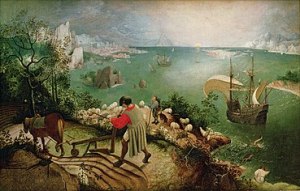
Imagine Icarus in reverse: instead of an innocent horse
scratching its behind against a tree
while the hero flies too high
and goes down in flames into the sea

What if Icarus succeeds in his flight
and as he coasts to triumph,
behind him the farmer’s barn is burning

So Elon Musk is playing with space flight
using the money he took from the rest of us,
at this time when we the people
need every resource if we are to survive…

Such contempt for our little lives!

It Says Meek, Not Stupid

The gentle have begun among us
working slow magic like the growing of roots,
deep magic like the flowing of blood or traffic.
The only thing that stands between them
and complete world domination
is the illusion that there is something
going on here besides naked apes and stuff.
It’s the dazzling varieties of stuff,
the infinite kinds of stuff everywhere on display
though mostly out of reach, that makes
the apes in charge seem invincible.
They have nearly everything, and the meek
believe that that makes a difference.
Surrounded by rooms of furniture,
by exquisite clothing, jewels, flowers,
by underlings to satisfy any whim,
with powers of life and death over other people,
the rulers are well defended.
But the meek have numbers. One day the meek will notice.
And then it will all be over in the twinkling of an eye.
They are meek, not stupid.
And they have already begun.

Sacrament

This is my body. Bread. Break it together.
When you feed yourselves, when you feed one another,
I become part of you, you are nourished by me.
This is my blood. Not water, but wine. Drink
Deep and laugh. I am Joy in Life. All you take in
Is me. When you eat, the universe is
Feeding you, tenderly delivering the food to your mouth.
When you drink, God moves the cup to your hand.
What does God become in you?
What face of God shines from your face upon the world?
By which of the billion names of God
Shall we call one another?

Star Scum

Who’s that surfin’ out in space?
Star scum
Must be that damn human race –
Star scum
Warp nine racing round the suns
With their hot rods and their guns
Careless of their neighbors’ curse
Terrors of the universe
Star scum

It was quieter before
Hearing waves break on the shore
Now the skies are full of noise
Rowdy gangs of girls and boys
Watch out
Here they come
Star scum!

Cosmic wind that blew no good
Brought them to our neighborhood
Spewing gases, strewing junk,
Pretty trinkets in their trunk
Punk planet!

Lock your door and hide your brew
Pull your black hole after you
They will ruin your son and daughter,
“Ugly bags of mostly water”
Star scum!

What a frightening thing to see
Outlaw species on a spree
Livin’ fast and livin’ high
Leaving skid marks on the sky
Star scum

Where’d they come from? On the farm
Way out on the spiral arm
Gettin’ by on luck and charm
Star scum

Blooming like some toxic flower
Since the Union came to power
They’re a race that feels no shame
Now we all know who to blame
Star scum

Nuke pollution – bad tv –
Spread ‘em through the galaxy
Star scum

Techno – disco – pizza pies –
How’d we live without you guys?
Solar slimeballs, cosmic crud
Balls of fire and minds of mud
Put some rubbers in your pants
Grab a humanoid and dance
Who you gonna call?
Star scum!

The Doldrums

Becalmed for so long, we forget
the journey. We play games

of chance, succumb to trivial
pursuits, speak only gossip.

Supplies are dwindling. We can’t stay here
and we can’t leave.

Never mind. Glitter on the water and rum,
threat of the brig, chess, flying fish,

somebody always humping somebody.
We turn our thoughts from what we cannot do.

It’s been so long, we would welcome
even a storm, waves bigger than the ship,

terror. Instead we must wait, it seems,
endlessly. The dolphins pity us.

They’re free to go, and we envy them,
looking back at us with their great grave eyes.

From time to time one of us joins them,
diving ecstatically. Death is a place to go.

Lately though, something is different.
Thunder rumbling. Puffs of hot breeze,

ominous. Useless sails above us,
we wager blackly, couple without passion.

Late at night we toss and turn,
anxious, desperate for distraction,

hearing the dark sea slap at the ship.
Oh take us, move us, God of the deep!

We must have change, but we fear it.
Could life be worse than this? Much worse?

The wind of the future approaches.
It will blow away foolishness like foam.

We still might get to where we need to go,
or all dive with the dolphins, but we will move.

Trim the sails, shipmates.
The wind is rising.

Walls

We built these walls around us out of brick
to keep us safe, protect us from the gale.
It’s ill outside. But inside we are sick.
The winds within the walls are small and stale.

Mud, dung, and clay, tree branches wrapped in leather
let too much outside in. We found the trick
of keeping out the bugs, and beasts, and weather:
we built these walls around us out of brick.

They worked so well, we thought to use those arts
to guard our spirits, more than bodies frail.
We built new walls of hardness ‘round our hearts
to keep us safe, protect us from the gale.

For why should strangers ask what we can’t give?
The poor are used to want – their skins are thick –
Still, they increase. It is so hard to live.
It’s ill outside. But inside we are sick.

Cut off from storm, we strain to take full breath.
The winds within the walls are small and stale.
We hear no moans, the walls have made us deaf.
Our outer walls are strong. Inside, we fail.

Smothering and safe, we wonder if we dare
knock out a brick to get a little air.
Our hearts feel small and trapped inside our skin.
When is it safe to let the outside in?

You Believe that Nothing You Do Matters

You believe that nothing you do matters.
Everything you do matters.
You think destruction is certain.
Nothing is certain.
Apocalypse
rides on a butterfly’s wing.

You know how to be a hero.
You have seen enough movies.
You are waiting for the moment to act.
What you own is already crumbling.
Nothing will endure but your spirit.
It is enough.

There’s something you might do someday
to be an agent of magic.
There is something in your heart
you are guarding like a precious fire.

Magic is not an illusion.
History has not stopped happening.
Most of what you have been told is a lie.

When it’s late at night, and you are full of despair
like a well full of poisoned water
you know that you have been lied to.
You know that we are at war
and our side’s been losing.

You know that the peace and plenty
around you are a lie
built on the misery of others.
We have traded away things of great value
for a pile of glittering toys.

But this is no time for despair.
We are just now beginning
to learn how to think as a species.
And love has not forsaken us.

Love is not dead, not damaged,
not irrelevant, not out of the question,
not defeated or lost or in the hands of the enemy
but alive within us
like the cells of our bodies
around us like our families and friends.

In this war, loving must guide us.
There’s a way for the heart to follow.
No one can tell you the special thing
you alone must do.

You wait for a hero.
It is yourself you wait for.

When you wake up
you will get to work.

Almost Exactly the Same

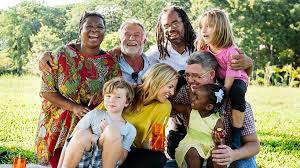
People are all almost exactly the same. I say almost because, even though we are 99.9% alike, that one-tenth of one percent difference is very important to us. That’s how we tell one another apart. Since we’re social animals, we depend on knowing exactly who another person is, even though she is almost exactly the same as we are. So we make a big deal out of that one-tenth of one percent difference.

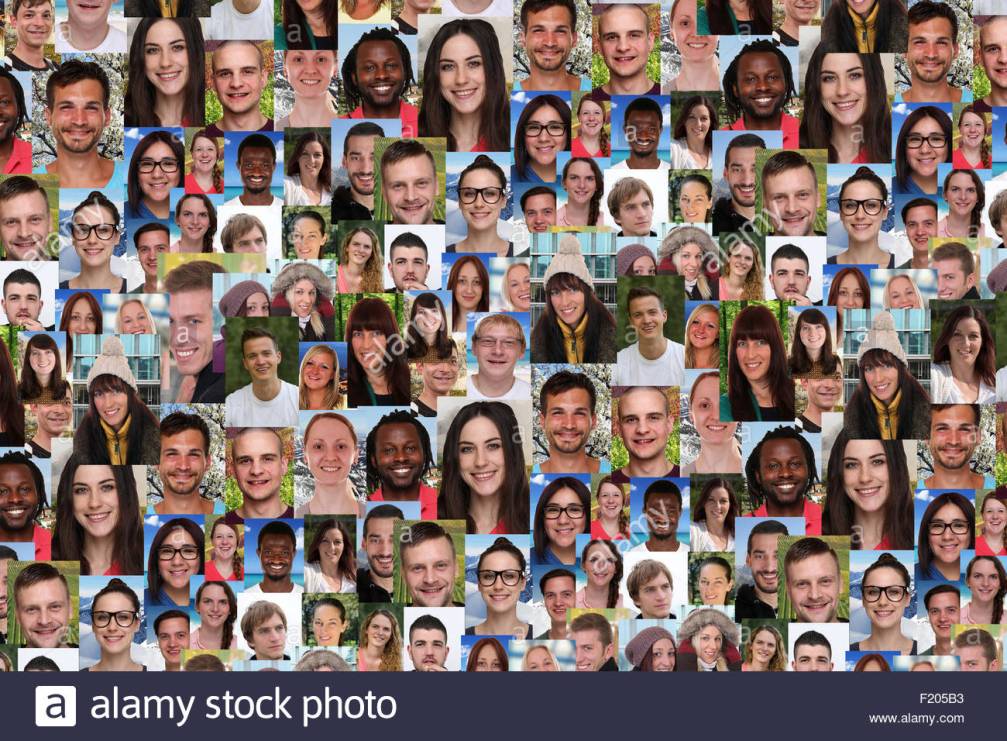
Race, gender, class: these things help us tell one from another, along with details like body shape and facial features. But the differences are tiny. If you’ve ever seen a montage of many diverse faces, you have seen what Human looks like. In the same way, if you read the literature of any language or time, you know what Human behaves like. We are fascinated by our tiny differences; we obsess about them. But they remain tiny.

If you doubt how much we are the same, remember what it’s like to see a movie in a theater. You laugh and gasp in the same places as everyone else there. You like the same characters and have no trouble identifying the bad guys. Also consider the fact that a good actor can play almost any role and make us believe it. How is that possible, unless we each contain in ourselves the whole range of human behavior?

There are other ways to tell how small our differences are. We think race, gender, and class are very important, and in some ways of course they are. Yet when you know someone’s race, gender, and class, you still know almost nothing about them that really matters. You don’t know if they’re kind, for example. You don’t know if they’re funny.

We will always be fascinated by the details of how each of us is unique and different from all the rest. We will always be interested in the soap opera of our secret, special, individual lives. But there come times when we have to look up from these details. We have to look at our civilization as a whole. We have to look not at personal behavior but at the behavior of our society.

When civilization has behaved so badly that we have begun to threaten our own survival, it’s time to think about what we can do differently.

Because each of us can be anybody. Each of us is capable, under the right circumstances, of every kind of human behavior. We contain in our own secret selves the complete spectrum of human behaviors. Which of the many possible behaviors we enact in our own lives is decided by our imagination of ourselves and of our circumstances.

Our imagination is tremendously powerful, though we often discount it, and even refuse to believe it affects anything. In our urban world where everything except the sky is a product of people’s imagination, maybe the power of imagination is so obvious that we take it for granted and so fail to see it. Yet imagination is the key to our future. How can we imagine ourselves saving the world?

Instead of thinking about how to change individuals, we should think about how to change culture so as to encourage the creation of healthy, sane, loving, humorous, careful human beings; how to change people’s environments so as to encourage healthy habits; how to create the people humanity needs to become.

How to make it easier to be creative, and not kill imagination first thing in school. How to make it easier to raise a family, to learn new things, to grow old. Movies, tv, video games: what do we need to teach, show, tell one another? What message are we broadcasting? What will it do to the people it reaches?

False optimism is not going to work. We can’t slap a happy face on things: life is too awful for too many. We can’t keep distracting ourselves from what we can see happening more and more clearly: the poisoning of the planet, the whirlwind we have reaped through our bad behavior. The longer we ignore the consequences of our greed, the harder they will be to make right.

If the species is going to survive, it’s time to get serious about it, and figure out how to save ourselves from this mess we have created. We have to look at exactly what our culture is: what we glorify, what we despise, whom we imitate, what values we adopt. This is crisis time. We need to pull an intervention on ourselves.

Anyone who has spent time with babies knows how smart we are and how much we can learn. Our bodies stop growing but our minds never stop. We can learn new ways of doing everything. That’s culture; we do it all the time. Every day we sing a new song.

Until recently, most of us have appeared to be frozen. We’re so used to watching life instead of living it, we’ve become passive. We have forgotten that everything around us has been formed from the action of human imagination upon the materials of the earth. We, ordinary humans, have invented it all. Our power is tremendous when we agree on something to do.

Some events in recent years indicate that we might be waking up to the crisis, and responding appropriately. Our most powerful moments have been singular and quite spontaneous. The Arab Spring, undermined by the usual gangs of thugs though it was; the Occupy movement; the Women’s March; the appearance at U.S. airports of tens of thousands of people to support Muslims when Trump announced his travel ban; these are symptoms of a vital resilience, a resistance to the forces of death.

If we can ever convene the species and discuss the situation with everyone at the table, it is entirely possible that we can agree on our mission and our direction. We will understand one another. Because in spite of our splendidly elaborated cultures, our fascinating personal uniqueness, our endless variety of experience, we are all, finally, almost exactly the same.
Grateful to Everybody

Civilization continues, due to the determination and courage of millions of ordinary workers. People in the background of our lives have leapt into the foreground. Suddenly we have new heroes, and they are everywhere.

Who knew how much was precious in our daily lives? Casual greetings, chats with cashiers, gossip at work, drinks with friends afterwards. Losing these things even for a few weeks or months turns out to be more painful than we could have guessed.

We used to take these face to face encounters for granted. We did not consider it rude to be on our phones with others even while a friend or family member was sitting right there. I wonder if we will still do this when we come out of quarantine. Or will we start to pay more attention to the people we’re actually with?

Rich and middle class people used to take their health care for granted. So long as it was mainly poor people who could not get help when they needed it, most of the non-poor didn’t care very much. Now we are all anxiously watching the overflow at hospitals, the lack of life-saving equipment. It turns out our health depends on other people’s health. Who knew? Will we come through this feeling like everyone has a right to care?

It used to be that nearly half the people in the US had trouble paying their rent or mortgage every month. Now many more will be falling behind. For decades, both federal and state governments have cut housing subsidies and failed to keep market housing affordable. Will we come through this feeling like everyone has a right to shelter?

Children have hated traditional schooling, having to sit in chairs and be quiet all day. Now they’re missing it. So are their parents and their teachers. When this is over, will joy return to the classroom? Will our gratitude lead to better teacher salaries, more curricular freedom, adequate materials?

Mainstream news coverage has hardly told us anything about all the goodies in the 880 page rescue scheme just passed by the federal government. All we know is most of us will get a check. Hooray for that. We’ll need another check next month. But who benefits from the biggest chunk of the $2 trillion giveaway? What good will come of rescuing the cruise ship industry? Did the top 1% really need another tax break?

We’re being reminded of how much we depend on others for food, electricity, everything we need. We remember why we have government in the first place. In the absence of sane federal leadership, governors and mayors are filling the gap. When the present crisis passes, we will compare and contrast.

In his book “Sirens of Titan,” Kurt Vonnegut invented a creature that could only say two things: “Here I am,” and “So glad you are.” When the present crisis passes, will we all be saying these things? Will we remember to be grateful for civilization?

Seeing Past the Rich

The images we see day in, day out, in most media, fall into two main categories: flattering pictures of rich people, and ugly caricatures of the lower classes.

Our reporters, our anchor-people, our directors and producers, are either upper-class or aspiring to be. Nearly all of our politicians are rich; the few exceptions stand out. Top scientists, famous artists and entertainers: they’re all rich. Our celebrities get rich as soon as we hear about them, for whatever reason. These are the people we gossip about. These are the people we watch.

These are the people who’ve been deciding what we talk about, what we care about, what’s important. But what do they know about what’s really important in the lives of the rest of us? The ones who do know something about the lives of the non-rich generally try to forget. People are afraid of poverty like it’s a contagious disease. So mostly we get to see the world outside our personal spheres through the lens of people with money.

The best people in media tell our stories, the stories of ordinary lives. But we need to speak for ourselves, tell our own stories, stop being ashamed of not being rich. Poverty is not a character flaw. Many honorable, smart, and talented people have no money.

Usually, when we see poor people on mainstream media, they seem neither honorable nor smart. They jump and shriek like small children on game shows. They spout clichés and disrespect themselves and one another on “reality” shows. They snivel and smirk in crime re-enactments. If we believe the images we see, we think poor people deserve to be poor.

The Christian Bible, often used to justify unchristian behavior these days, still contains useful and powerful ideas. It says, for example, that ordinary people are the salt of the earth, and asks, if the salt should lose its savor, how the salt shall be salted. I take this to mean that if we stop appreciating the qualities of ordinary people, we will lose our taste for people altogether. Watching the curated fakes on television, the preening “winners” and ridiculous “losers,” can have that effect.

In real life, any quality that is beautiful, humane, and noble can be found in the hearts of poor people, if it is to be found anywhere. The quality of loving-kindness has been devalued in public life: to be kind is to be a fool, a sucker, to give more than you have to, when you could keep more for yourself and be counted wise. To be kind and caring is to value other people over financial wealth. People who base their lives around caring therefore pose a deep challenge to the status quo, and threaten the status of those who benefit from our current cruel and self-centered system.

To be kind and caring is to value other people over financial wealth.

Loving-kindness is the enemy of greed. People who live according to that standard tend to have little money. The true heroes of our society are the people who teach, who take care of, who heal, in their everyday lives. They rarely make the news. But let some greed-head give a tiny fraction of his wealth to an elite institution that will put his name on a building, and he gets fawning headlines and magazine puff pieces.

I remember when American values began to shift away from consumption and accumulation, and then were deliberately wrenched back. The revolution of the ‘60s turned many young people away from materialism toward a more spiritual existence. People were beginning to re-use and recycle instead of shopping for new stuff all the time; they were beginning to share instead of accumulate. Those whose lifestyle depends on the appetite of the American consumer felt threatened by this ethos of peace and love.

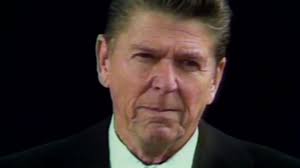
Reagan justified greed and blamed poverty on poor people.

The Reagan administration responded by redefining greed as a positive quality. Rich people were encouraged to feel comfortable flaunting their wealth. Poor people got blamed for their failure to make money. Never mind that it was possible, and is still possible, to work two full-time jobs and still not be able to feed and shelter your family. If you had no money, you must be stupid or lazy. This idea was easy for high-income people to accept. It meant they could ignore poverty without guilt; it meant they could lobby for lower taxes without worrying about the public good.

Private greed, as it turns out, does not mean that wealth trickles down to the poor. It does not serve the public good. Greed only makes the rich richer, and the rest of us poorer. This is the place where America has been stuck for 40 years. Isn’t it time we took another look at our guiding principles?

This country can be about more than the freedom to make money, even if that were possible for most Americans. This country can be about the most varied assortment of people, from everywhere, of every belief system, living together with mutual respect – living together in peace.

Seeing value and beauty in non-rich people might be a good place to start.

Race is an Illusion

Race is an illusion. Hardly anybody is as black or as white as they think they are. Of course racism is all too real. It’s just one of the many ways we have been taught to hate and fear other ordinary people, instead of our actual oppressors. But the “race” it targets is a product of the human imagination.

Gender is an illusion. Nobody is as male or as female as they think they are. Human sexuality is not specific about its targets. If something has a bump or a hole, somebody will want to make love to it. Sex is real, and we can talk about it forever. But if we’re not actually part of somebody else’s sex life, it’s none of our business and talking about it is just gossip.

As for religion, we’ve been arguing over those questions for tens of thousands of years. We have lately learned some tolerance for other people’s beliefs, but we don’t seem any closer to agreeing on answers. So, can we please take religion off the main agenda? It’s a side issue. We have to hang on to the Golden Rule, which is the foundation on which all religions are built. But the rest of every religion is testament to the fact that people will believe just about anything. Nobody knows whether there is a god or an afterlife. Everybody is guessing. Let’s move on.

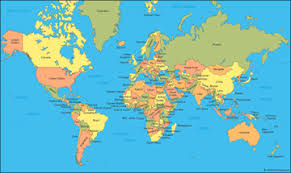
National boundaries are figments of our imagination, enforced by the nations we have imagined into being.

Nations are just as made-up as those other fantasies. We draw imaginary lines on the earth’s surface, placed according to power plays, stories, and rivalries local or distant, and behave as though they made people on one side of them different from people on the other. Languages are real. Nations are collaborative fictions.

Money is also fictional. Worldwide, if everybody at once wanted to trade their money for real things, the real things would vanish long before the numbers on the balance sheets. There is nothing real behind the numbers. They don’t add up. The global economic crisis of a decade ago should have taught us that. Rich people are rich because we choose to believe the numbers. If we ceased to believe, they would just be naked primates surrounded by a bunch of mostly useless stuff, exactly like everyone else, though perhaps lacking in some basic survival skills.

All these imaginary boundaries between people have claimed multitudes of victims. The damage is real and ongoing. It is not enough to heal wounds. More damage will be inflicted until we realize that the boundaries, the categories, the divisions, are all products of our collective imaginations and we are free to stop believing in them.

Maybe then we can begin to pay attention to the real world, and how we can survive the damage we have done to it.

Every holiday season, the New York City Macy’s department store covers its block-long front with a huge neon sign saying “Believe.” This is a good way to sell unnecessary goods. Believe you need them. Believe you can afford them. Believe other people will love you more if you buy them things.

I wish someone would put up an equally huge sign across the street. This sign would read: “Doubt.”

The Occupy movement did our culture a great favor by highlighting income inequality, an issue that illuminates the tremendous imbalances we have to resolve. Occupy did not go far enough, however. The movement we need will not be about the one percent, or the 99 percent. It will be about the 100 percent – about everybody. Because either we figure out how to live sustainably together on the only world we have, or our species goes the way of the dinosaurs, without even a comet strike for an excuse. And once we’re extinct, there won’t be anybody left to care what color or gender or religion we were. So maybe we could try caring a little less about all that before it’s too late.

Shit Piles Up

Everybody who goes through rehab knows. Everybody who has ever cleaned a toilet knows. If you don’t keep cleaning up, if you don’t deal with the ration of ugly shit we get and make every day, it piles up and gets really disgusting and harder and harder to remove. We have to keep cleaning up.
But what disappears first from government spending when people refuse to raise taxes? Maintenance. Keeping things clean and safe. So the ugly shit piles up.

Bacteria grow in uninspected food. Cars fall into sinkholes caused by ancient infrastructure. Old gas lines leak and houses explode. Lead leaches into the water and stunts the brains of thousands of children. It costs a lot to fix the damage. If we refuse to pay the price of keeping things clean and safe, eventually we will pay a much higher price. And some of the damage can never be fixed.

So let’s clean up our shit as we go. That will motivate us to create less shit to begin with. Plastic, for example: if it won’t biodegrade, we need to stop manufacturing it.

Trillions of pieces of garbage now orbit our planet, gyre on the oceans, choke the fish and poison the birds. Yet we keep making more stuff that has such a short useful life, if it gets used at all, that we might as well ship it straight from the factory to the landfill and save everybody a lot of time and trouble.

Emotional shit piles up too. Everybody who’s ever had therapy knows that. We manufacture useless crap like anger, resentment, envy, and shame, and pile it up inside. Eventually everything inside us gets disgusting and we can’t stand ourselves any more. We have to learn to clean up as we go.

Same thing with nations. We do each other dirty, and the small harms pile up. Eventually we go to war, which does more harm than anything. The residue from that damage leads to future wars. We have to clean up as we go. Notwithstanding the egos of our leaders and the pride of our ideologues, we have to apologize, make restitution, and as far as possible, repair what we have broken. Maintaining peace can be expensive, but it’s cheaper than war.

Self-Medicating

Why are so many Americans self-medicating? What kind of pain makes people do drugs?

Some people are self-medicating for a pain that is spiritual rather than physical.
Addiction crisis

There’s a hole in people’s lives that no surgery can close, the hole where meaning ought to be. We see what a mess humanity has made of the world. If we thought our actions could help, our lives might mean something. Instead, we feel useless. Worse, we feel we are part of the problem whether we want to be or not.

Our civilization is built on violence and greed. It oppresses billions so that thousands can be unimaginably wealthy. America has benefitted more from this system than any other country. Any sensitive person will feel this, and suffer for it.

There used to be a drug designed specifically to ease moral suffering; it was called religion, and it worked quite well as long as people believed in it. Once we stop believing impossible things, however, that drug stops working, and the pain returns. There is no grand plan to justify things being the way they are. There is only humanity to blame, so we hate ourselves.

Since we have ceded moral leadership to religions, it’s hard for young people who don’t believe in any religion to find spiritual guidance. The current Pope’s been pretty good. Thich Nhat Hanh died, dammit. There are probably more religious leaders out there who rise above politics, but they don’t get much media attention. What young people need to know is that humanity urgently requires each one of them to take action.

Nobody can tell anyone else exactly what they should do. All our circumstances are different, and we each have unique histories, talents, and skills. But the work that must be done is clear enough. On the environment, social and economic justice, and peace, there are groups doing effective work, and far more tasks than there are people willing to do them.

The missing piece, the piece that will connect young people to the necessary work they can do, is hope that this work will make a difference. It is the hope that humanity can save itself, and be worth the saving.

Lacking hope, lacking meaning, lacking connection, people do drugs. Drugs make the pain bearable. But only hope for the future can make the pain go away.

Tomorrow

We’re not flying? Good.
We’re working from home? Good.
Soon money will run low and we’ll stop shopping. Good. As long as we can get enough to eat.

There are so many not-good, very bad, seriously horrible things about this pandemic. And not much of an up-side; but it does exist, and maybe it helps a little to think about that.

We’re depending on neighbors.
We’re helping the sick. We’re sacrificing to protect others. We understand that people matter more than anything. Good.

We’re staying home, keeping physical distance, trying to save lives. We’re letting nonviolent offenders out of prison. The unsustainable economy of limitless growth is stalling. Good. Limitless growth is not health; it’s cancer.

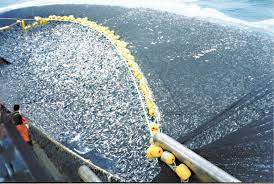
We might even stop over-fishing and let the ocean repopulate.

We’re using less fossil fuels. Pollution is dropping. We knew we had to reduce our carbon footprint to be able to moderate and survive climate change. We did not imagine this would be the way to achieve it. Maybe, though, knowing it was necessary might have prepared us to take the steps we have recently taken to moderate and survive COVID-19.

We will need to rebuild when the worse of this crisis is over. With luck and sufficient global consciousness, we will build a greener, more equitable, kinder world.

Now is the time to rethink everything.

I believe in creativity.

I believe in the human imagination.

I believe in working together. I believe we’re in crisis and we need to save ourselves. I believe we have to save ourselves together.

I believe I mess up all the time and so do you. I believe we’re not so different. I believe if we took the time we would understand each other. I believe we never completely understand ourselves.

I believe we’re in too much of a hurry. I believe the situation is urgent and we must act. If we stop doing some things, I believe that is doing something.

I believe that what each of us does is very important. I believe it is more important to be good to other people than to be beautiful or rich or famous. I believe in loving-kindness.

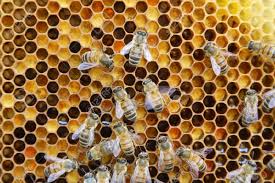
I believe we are just learning to become human. We’re like bees just figuring out how to build a hive.

I believe in the beauty of all that is, the far-flung stars and all the life that ever was or will be.

I hope we can figure out how to be human in time to survive.

I believe we already know what we have to do. I believe we are doing it.

Questions for a Dark Time

What if you wake up one morning
and peace is outside your window
walking, speaking, running
like a river,
what will you do?
Will you go out and kiss its feet,
which are working feet,
will you stand and watch
or will you join it
in your own time, like a duck
meeting other ducks in a river

What if you wake up one morning
and peace is inside your heart
Will you call the papers
Will you have a cigarette
How will you say hello to
the first person you see

What if you wake up one morning
and war is outside your window
hurting and killing the way it does,
racing like a forest fire,
what will you do?
Will you join it like
a stick of kindling
Will you watch
like the eye of a potato
Will you get dressed and
go to work with
peace in your heart
like a duck
meeting other ducks in the river

Gentle Spirits

Gentle spirits, sisters and brothers of the dream,
keepers of the light of loving-kindness, you who are
soft-hearted, open-minded, amazed to be here,
whom this world fills with delight and horror,
living hearts, tender spirits
I conjure thee, I seek thee, I implore thee
Arise, awake, shake off despair, remember
how many times has the Mysterious entered our lives,
how many times have we felt and seen the rush of great
winds around and through us
Remember how little we know ourselves, and take comfort
Remember from what vast sources loving springs,
and seek ye one another.

More is happening than we see on the six o’clock news.
They haven’t pinned it down, this slippery Tao. No one
owns it, no one controls it, but something big is
happening and it happens in small ways
(every wall you break) (every mind you shake)
Come out, come out, wherever you are
Remember the waves of hope that lifted our hearts above the
bloody tides of other days, remember when you think that
evil has won, how many hearts refuse it
Or will you believe those who say we do not exist?
Be of good courage, rejoice, lift up your voices, call out
in the darkness, we are here, we live, we believe in
the power of loving
Speak, shine, arise and listen
In many voices, hearts are crying to one another.

Gentle spirits, have you noticed
how zoos are different now? And safaris, and whaling?
Some old hard things are dying; and how new things are
tender, how when a seed sprouts it’s awhile before
coming to light
There are cracks in this concrete civilization, there is
full sunlight before us, though we are yet in the dark,
there is a path for the heart to follow
Arise, awake, when we have grown big enough we shall find one another,
We are scattered by God’s hand, we are watered by the
tears of all who suffer, we take strength from Earth our mother
Though you no longer believe in the possibility of humans
learning to care for one another, when you care you move
closer to the light
In the dark, alone, growing,
Speak
I can feel the earth tremble around the seeking crown of your head

The love we depend on is common as air, mysterious as light
Brothers and sisters
I look forward to seeing you again.