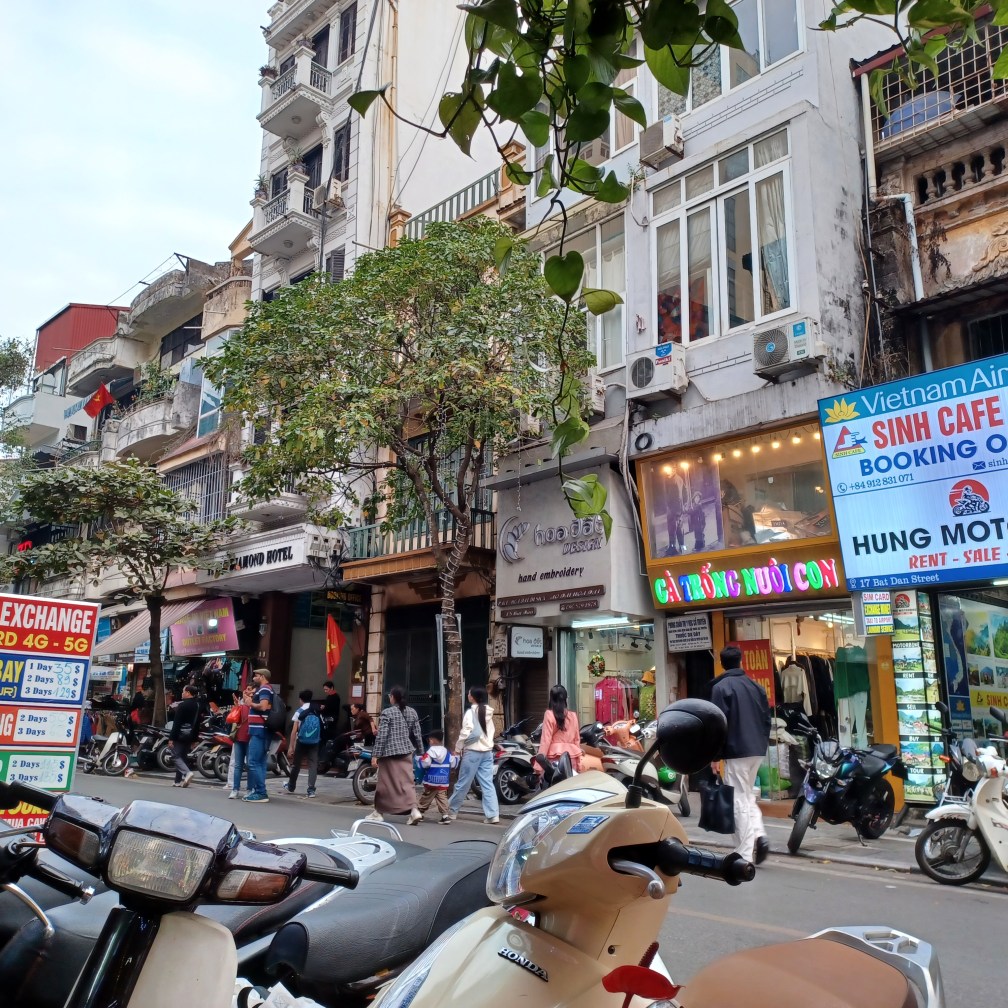
Everywhere my daughter Margaret and I went in Vietnam this January, we met lively, friendly, fearless women. Given the Vietnamese reverence for family, strong women are probably not a new thing for them. But these women were powerful personalities far outside the family sphere. Or maybe, through sheer force of character, they become the mother or big sister wherever they are.
The first such woman we met didn’t even speak to us. I had contracted the norovirus on our long trip over. I was kneeling by the toilet in our hotel when the New Year’s fireworks began. Days after the worst was over, I still felt shaky and faint. We couldn’t decide whether I should go to a hospital. Margaret thought we could use a massage first.
I’m not even five feet tall, but my masseuse made me feel like a giant. Margaret suggested a Thai massage, which she said meant “they do yoga to you.” The hostess told us to say “It hurts” if the massage was too rough. I did say that a few times. My masseuse ignored me. She kept pulling, pushing, and twisting me as she thought best. After an hour of this, my dizziness was gone, and it never came back. That tiny beast of a woman had fixed me.
After the crowds, excitement, and smog of Hanoi, we went east a few hours to the fresh air and fabulous landscapes of Bai Tu Long Bay. Huge limestone karsts thrust up from the water like surreal sculptures, vertical, pocked with caves, crowned with greenery. Our guide to these wonders was a young woman named Windy. She told us her name in Vietnamese meant Number Four, so she gave herself a name she preferred.
Windy had been orphaned at age 12. She worked wherever she could, learning English by talking with tourists. She did not tell us how she lost one eye. She was neither pretty, graceful, nor ingratiating. She was just outspoken and hilarious. Her narration was full of jokes, many seemingly improvised on the spot. She treated all of her fellow crew members like younger brothers, and had several play fights with them from which she emerged grinning with victory. Among all the crews on all the boats in that popular bay, she is the only female. Windy: long may you wave.
In Hue, Margaret took a cooking class from Yong, husband of Lisa, another magnificent woman. They were among the kindest, most thoughtful people I’ve ever met. Lisa took us shopping with her after dinner, along a sidewalk market where everybody seemed to know and like her, and then to her local Buddhist temple where we could meditate for a while with the monks.
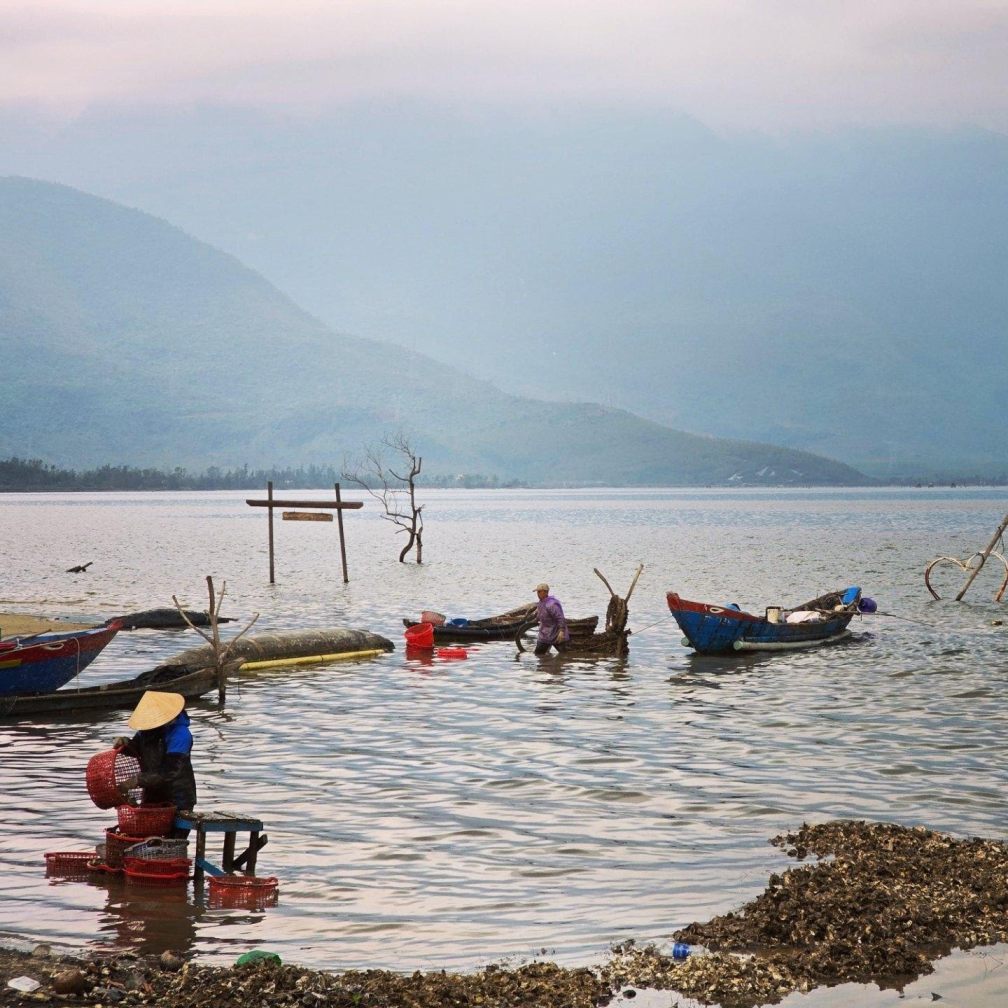
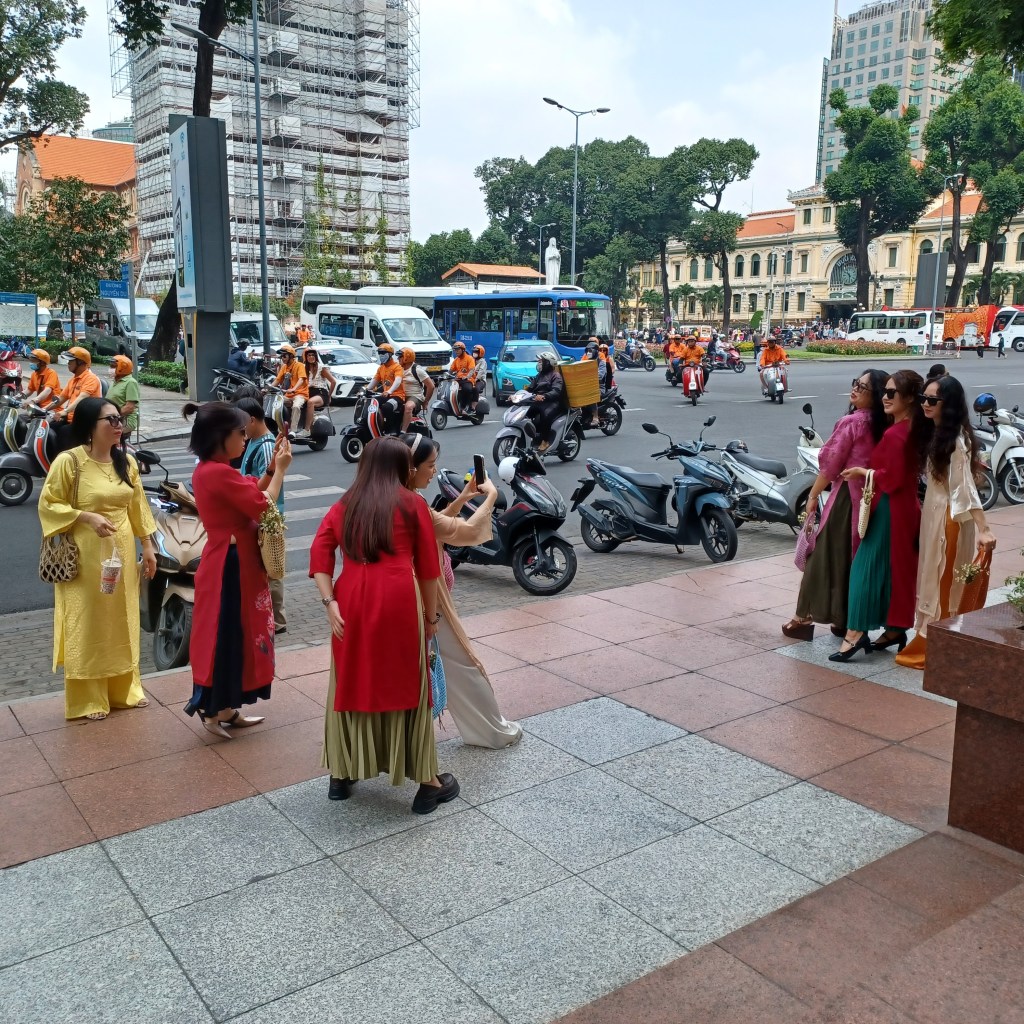
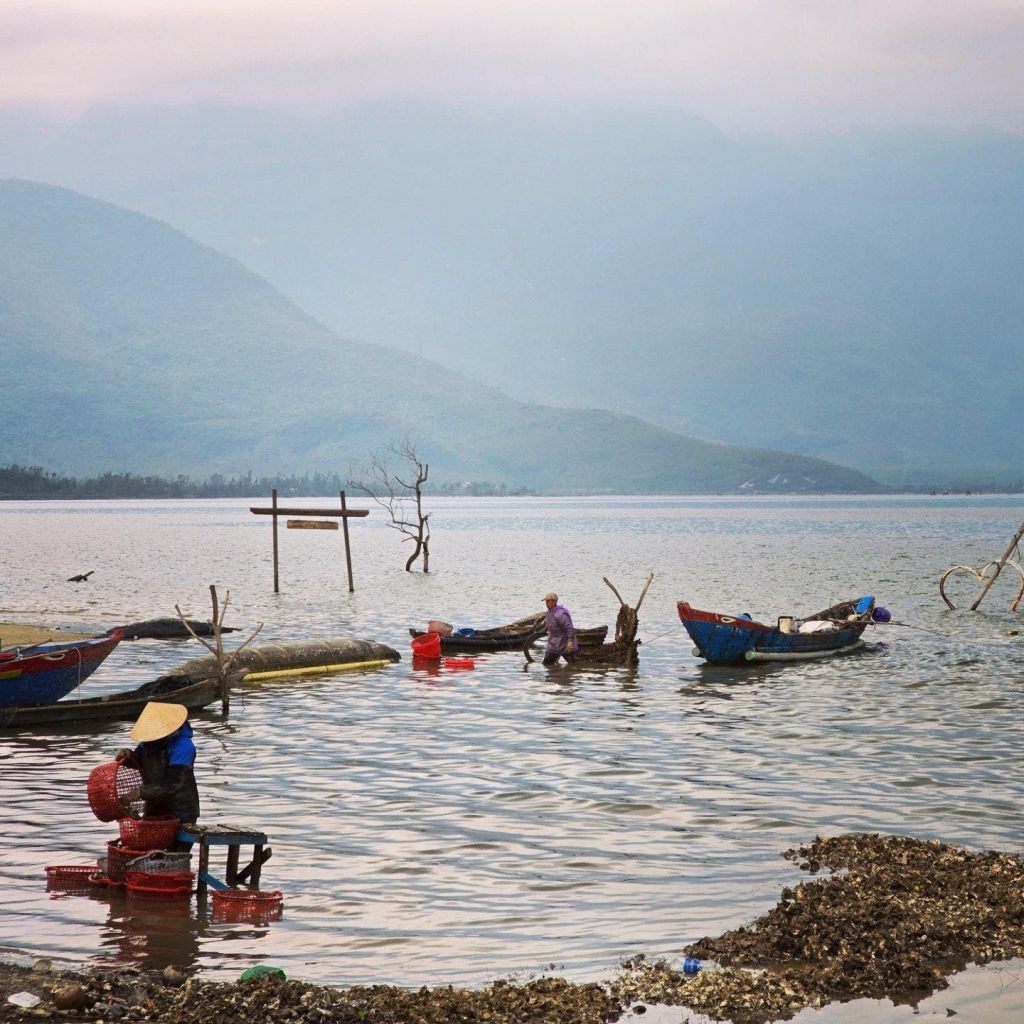
photographs by Margaret Collins
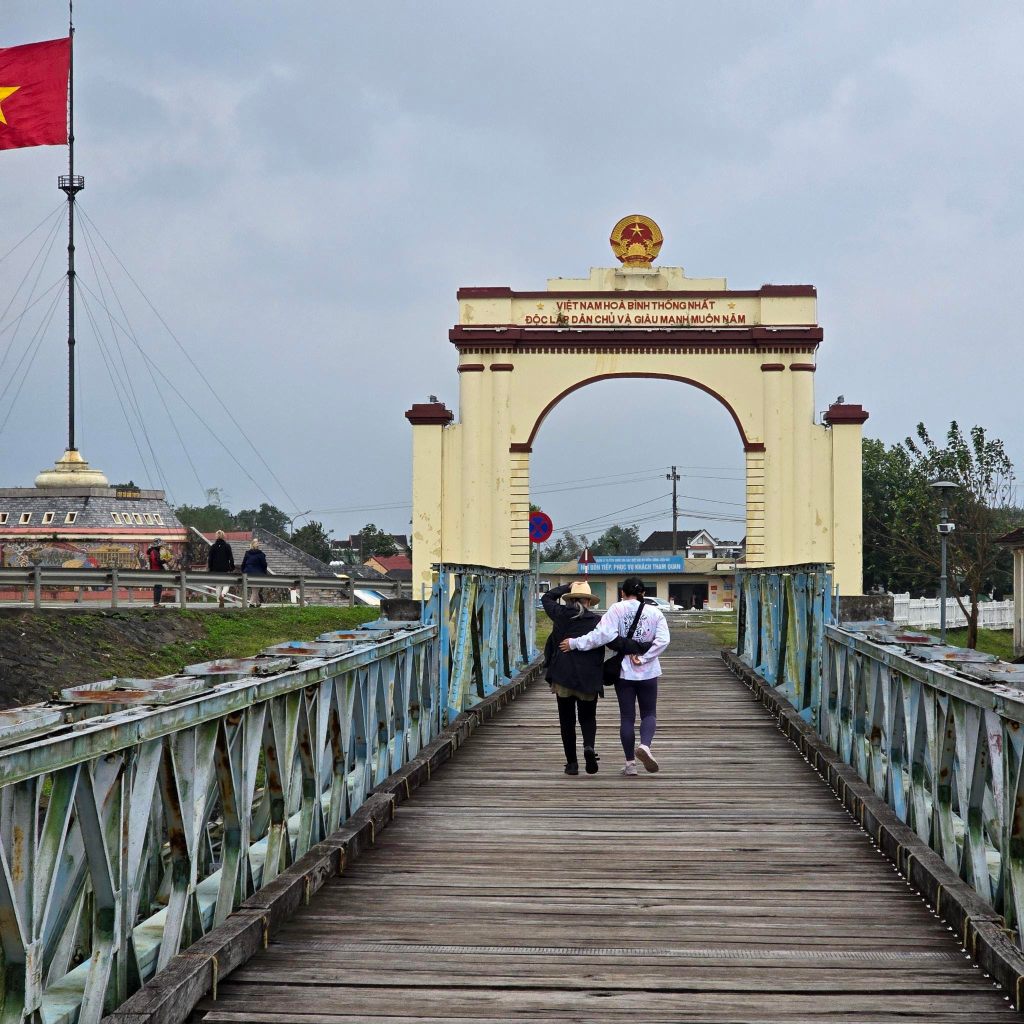
Lisa and Yong knew that visiting the war-ruined Demilitarized Zone would be a difficult emotional experience for us, so they decided to take a day off work to keep us company. It was a windy, rainy day when we went. Crossing the bridge dividing the North from the South, Lisa kept her arm around my waist. In the Vinh Moc tunnels where 600 villagers lived for six years 100 feet underground, she stayed close, along with Margaret, to keep me from slipping on the steep, mossy steps. We only spent two days with the couple, but their warmth made us feel like close friends.
I keep thinking of some people I never met or spoke with – the ones up to their knees in the rice paddies. They might find some comfort in the peaceful green landscapes around them. It’s likely, though, that the comfort doesn’t amount to much when your back aches, your feet hurt, the mosquitos swarm, in the broiling sun or driving rain. What chance do they have to escape such a life, in a country where most people’s education ends at age 11?
And I think of the people so old they couldn’t stand up, whom we saw sweep the sidewalks in front of some shops. In Vietnam, if you don’t work, you don’t eat. Their families must make sure they have some shelter, because you don’t see homeless people sleeping in doorways or on park benches. But in Vietnam, as in today’s United States, the government doesn’t do much for the oldest or poorest of its people.
In Vietnam, people are not free to demand change. In the US, we can still do that. The resilience of the Vietnamese people, after decades of horrendous bombing and poisoning by our country and others, should be an inspiration to us. All of humanity is our family, and the whole earth is our home. I hope the American people will begin to insist that our country act accordingly. The kind and hardworking women of the world, and the men and children they cherish, deserve better.
I just got back from three weeks in Vietnam. April 30, 2025, marks the 50th anniversary of the fall of Saigon, the end of what the Vietnamese call the American War. We went to see what is left of the damage our country did to that country, and how well its people are doing now.
The answers are: plenty of damage left; and, they are doing better than you might think. Thousands of children are still being born with deformities caused by the persistence of the toxic herbicide Agent Orange in water and soil. Almost 20% of the land is still salted with unexploded bombs and mines, dangerous to use or even walk on.
Millions of Vietnamese were killed by American bombs and starvation caused by the herbicides that destroyed their crops. Through these massive tragedies, they have learned a great deal about how to survive.
For one example, veterans of the war know about the Cu Chi tunnels that sheltered Viet Cong fighters. But not many Americans have heard about the tunnel systems that housed thousands of civilians while we leveled their villages overhead.
My daughter and I visited one such tunnel system, where 600 villagers from Vinh Moc lived for six years. While the USA was dropping seven tons of bombs for every person in the province, they dug 100 feet down into the wet clay soil – with hand tools. They had to dig that deep because American bombs could reach 30 feet down.
The original tunnels collapsed eventually, but the government has built replicas, braced so as not to fall on the heads of visitors. The tunnel entrances are steep and slippery, their steps covered with moss. The walls drip with moisture. There are trenches on each side of the narrow paths to carry the water away.
The tunnels contain hospital rooms, nurseries, meeting rooms, wells, and ventilation shafts. Niches called family rooms bud off each side of the tunnels, about six feet deep, four feet high, and four feet wide. Five to seven people lived in each room.
The above-ground museum shows how people slipped out at night to care for their crops. The villagers also formed a vital part of the supply chain for the Viet Cong in the North. Suicide teams would push bicycles loaded with up to 1000 pounds of food or weapons through exposed trenches to the nearby coast. From there, they rowed the supplies to an island twenty miles away.
We expected the Vietnamese people to exhibit some resentment toward us as Americans. Perhaps because of their primarily Buddhist culture, we found only forgiveness and kindness instead. When my daughter told people that I had been an antiwar activist during that war, they reacted with gratitude. More than one person told me that I had “been fighting for them”. The group Vets for Peace runs annual tours to Vietnam; they report that they are greeted with the same forgiveness and compassion, and often moved to tears by it.
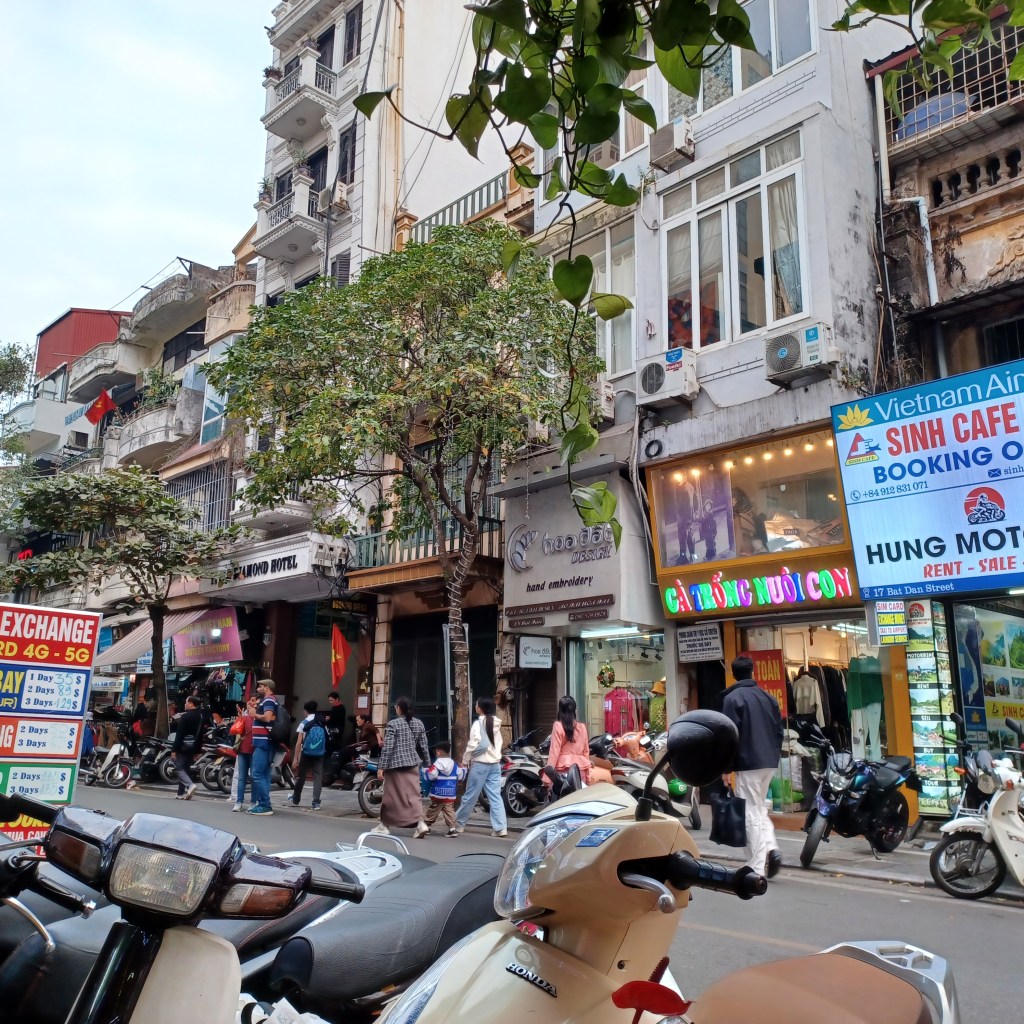
Many Vietnamese are still farming rice with ancient methods, which is backbreaking work. But perhaps 40% of the population has moved into cities as lively and colorful as any we have seen. With the encouragement of the Communist government, the Vietnamese have become tremendous entrepreneurs.
The economy seems to run on motorbikes. A guide noted, “You can clean a bike, or fix one, or steal one, or deliver materials on one.” People sit on the sidewalks with bamboo or plastic baskets full of fruit, fish, toys, or whatever else they can find to sell.
There are huge and thriving street markets, special night markets for crafts, endless black markets with parts for everything you can think of. Roadside living rooms have been turned into narrow shops or cafés. The USA hasn’t seen this level of mom and pop business since the corporations took over, if then. In Vietnam, mom probably has one business, pop another, and the kids are out hustling up their own gigs.
Elsewhere, I hope to describe the beauty of Vietnam landscapes, the deliciousness of the food, the lovely little shrines dotting every street, and the delightful people we met everywhere. It’s just good to report that though the scars of war remain, the Vietnamese are healing.
Go visit, if you can. Especially if the war left scars on your own heart, it will do you good.
Children crying from hunger. This is the age of cruelty. It ends now.
People sleeping in doorways. This is the age of poverty. It ends now.
Styrofoam washing up on beaches. This is the age of garbage. It ends now.
Neighbors burn down neighbors’ houses. This is the age of hatred. It ends now.
People with no hope pick up guns. This is the age of violence. It ends now.
This is the age of new creation. It begins with you.
By Jane Collins and Christina Starobin
Christina is the author of CORONA WILDFIRE & POEMS OF PROTEST, This Changes Everything, KALEIDOSCOPE CAFÉ, & A Human Being Is Not a Remote Control Device, the beginning of a series; all available through Cyberwit or Amazon.
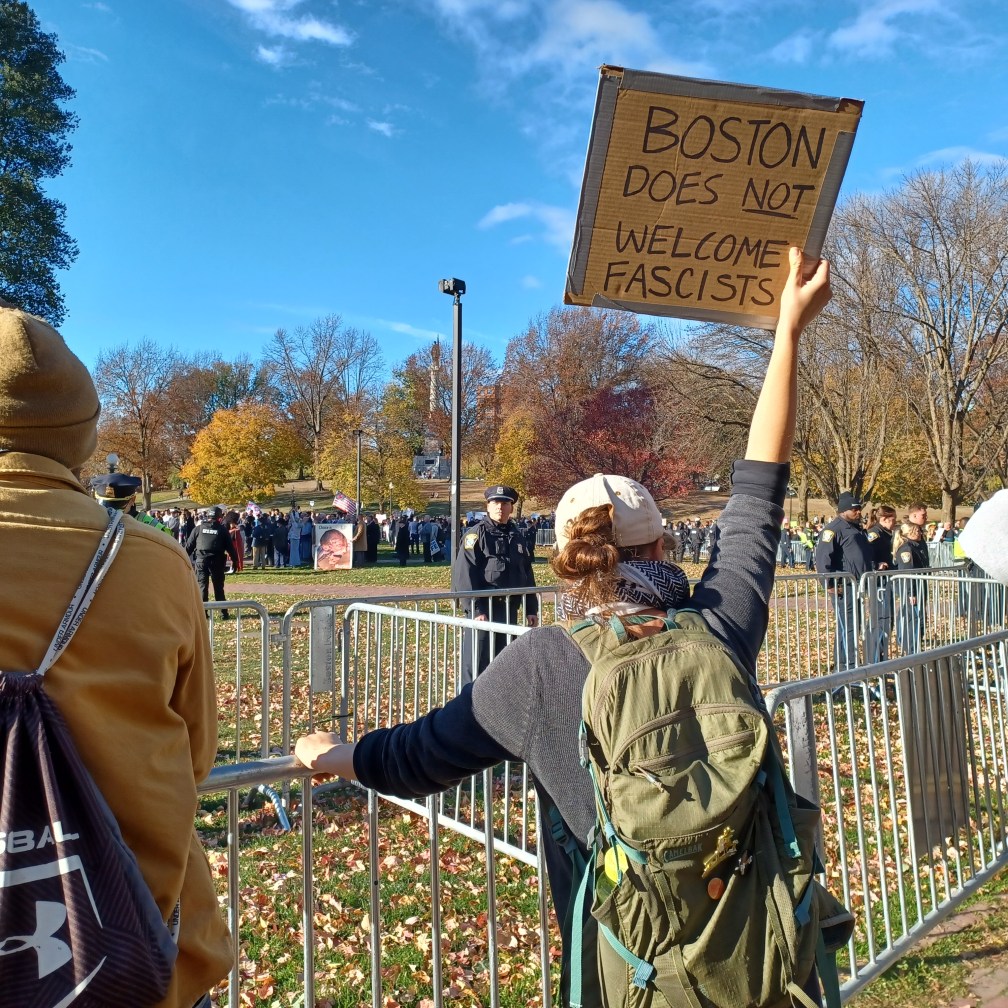
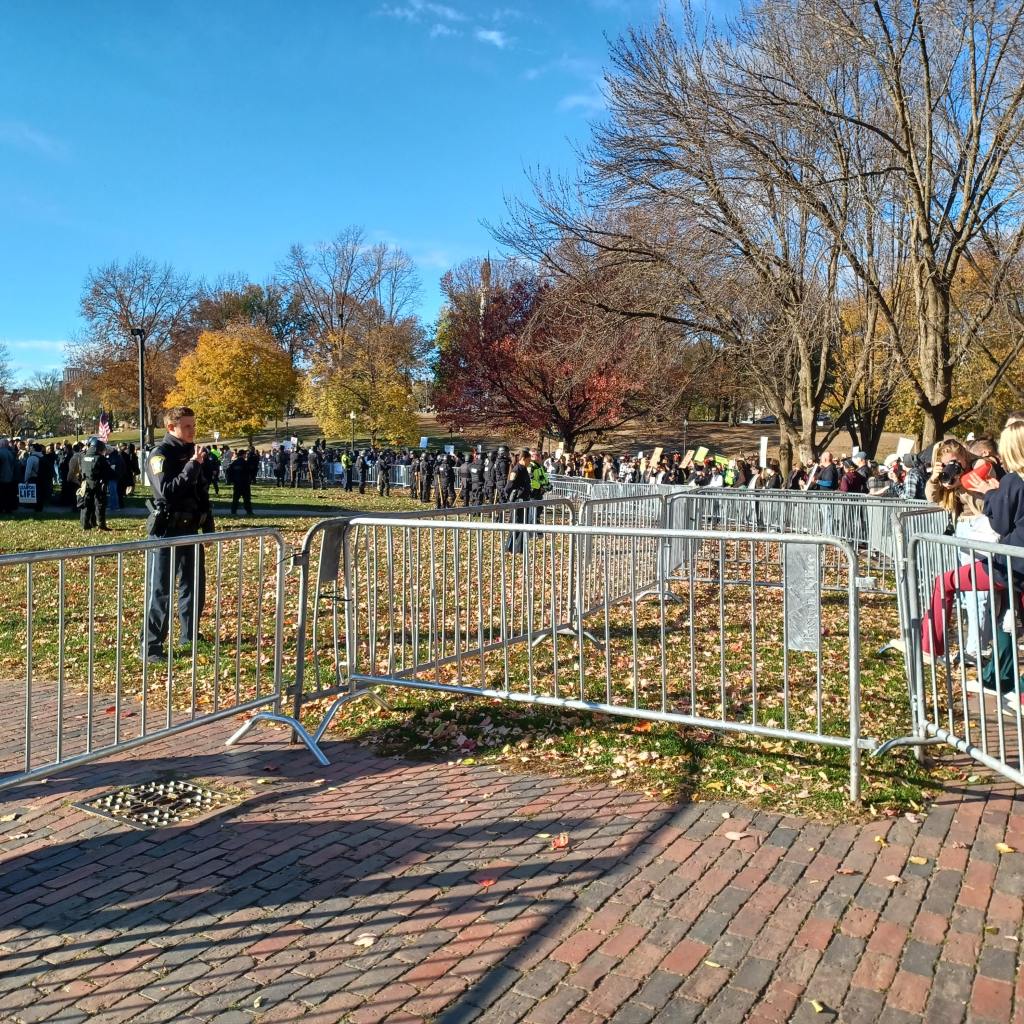
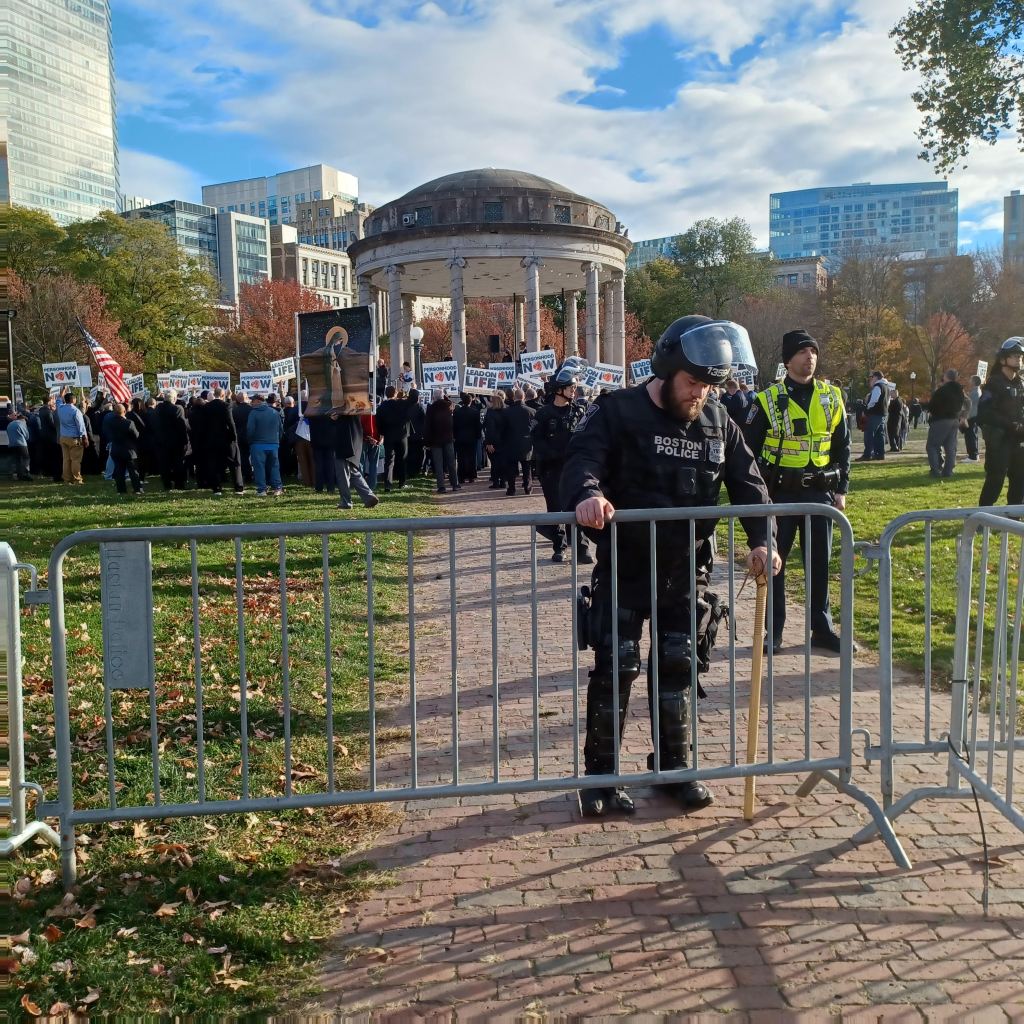
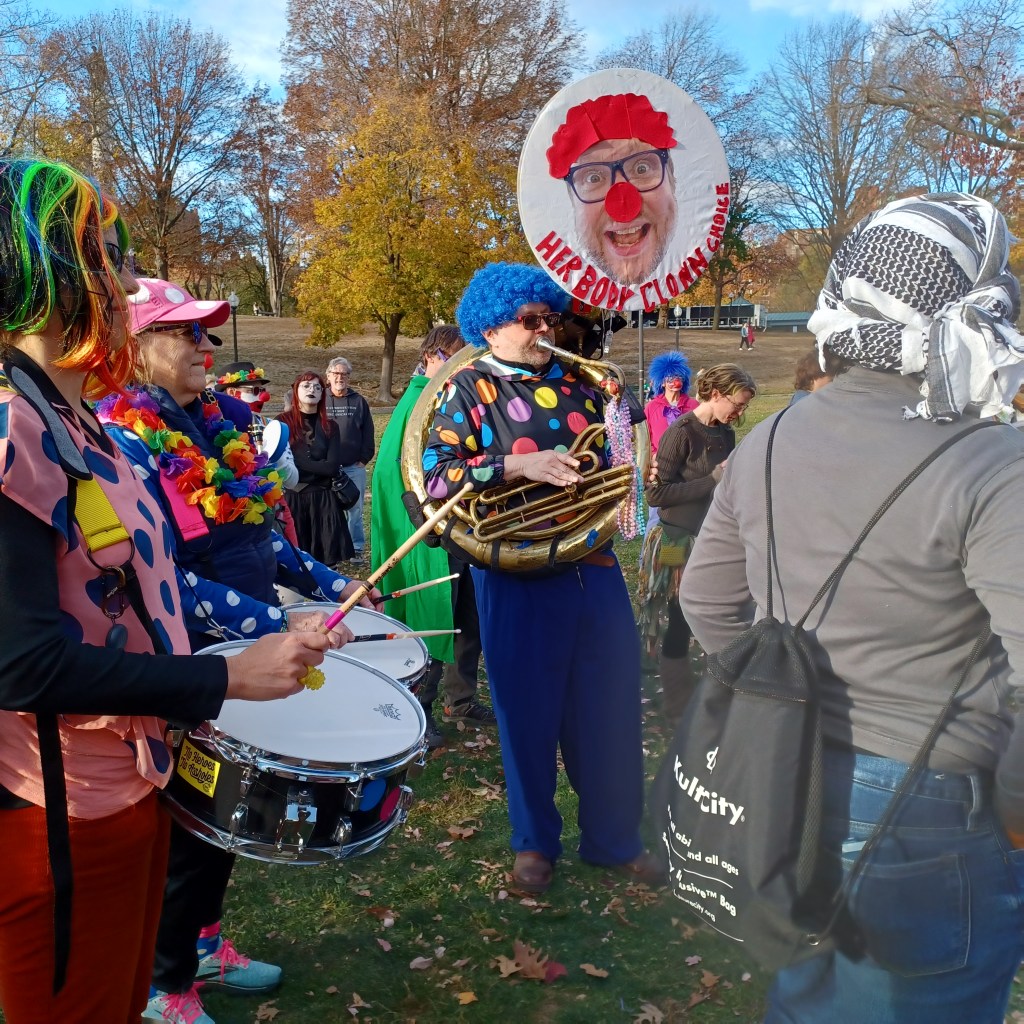
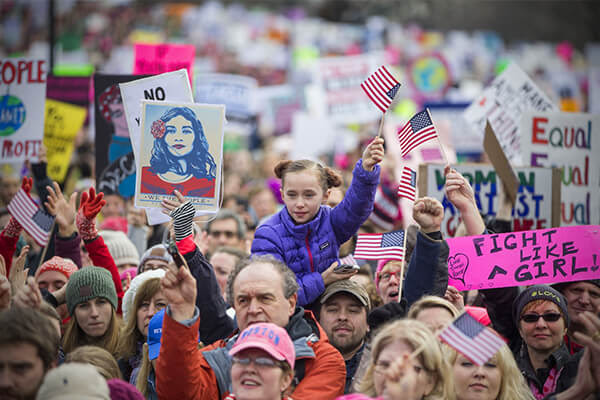
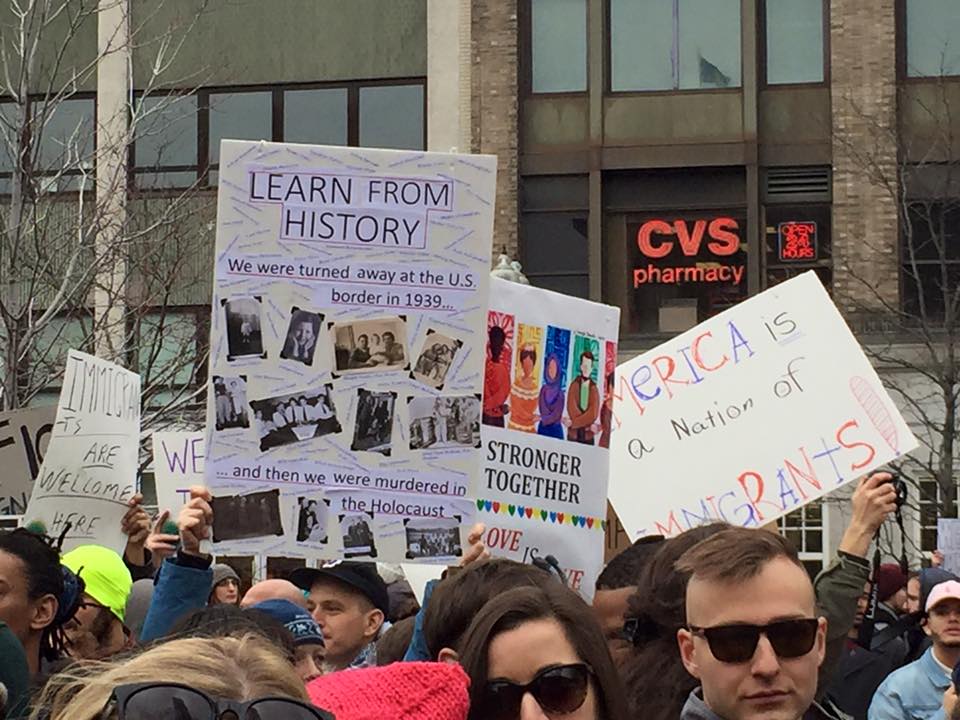
On November 16, around 150 people, nearly all white men, marched against abortion in Boston. I was proud of our city. The counter-protest was about ten times larger than the march. Approximately one in ten counter-protesters came dressed as clowns. There were a few Antifa people in black and a few communists with pamphlets and a bullhorn, whom everybody ignored.
It was a beautiful day, sunny and warm for the season. My son and I arrived late to the planned rally at the bandstand in the Boston Common. We thought we might have missed the whole thing. Then we saw a couple of cute young female clowns coming up the path. They told us the march was delayed but should be arriving any minute. Some student journalists from Emerson College, intrigued by his Veteran Healing sweatshirt, interviewed my son. Their questions boiled down to, Why are you here? His answer was, To fight fascism.
According to an NBC News report, police made nine arrests earlier in the “National Men’s March to Abolish Abortion and Rally for Personhood”. The report’s headline called it “a large anti-abortion march”, even though the only large crowd was the one that came out to oppose it. All the news reports I’ve seen feature many photos of the stern-looking men in black suits or priests’ clerical robes, and few photos of the much more colorful and numerous counter-protesters. There were almost as many police as marchers, some in full riot gear; the photographers liked them too.
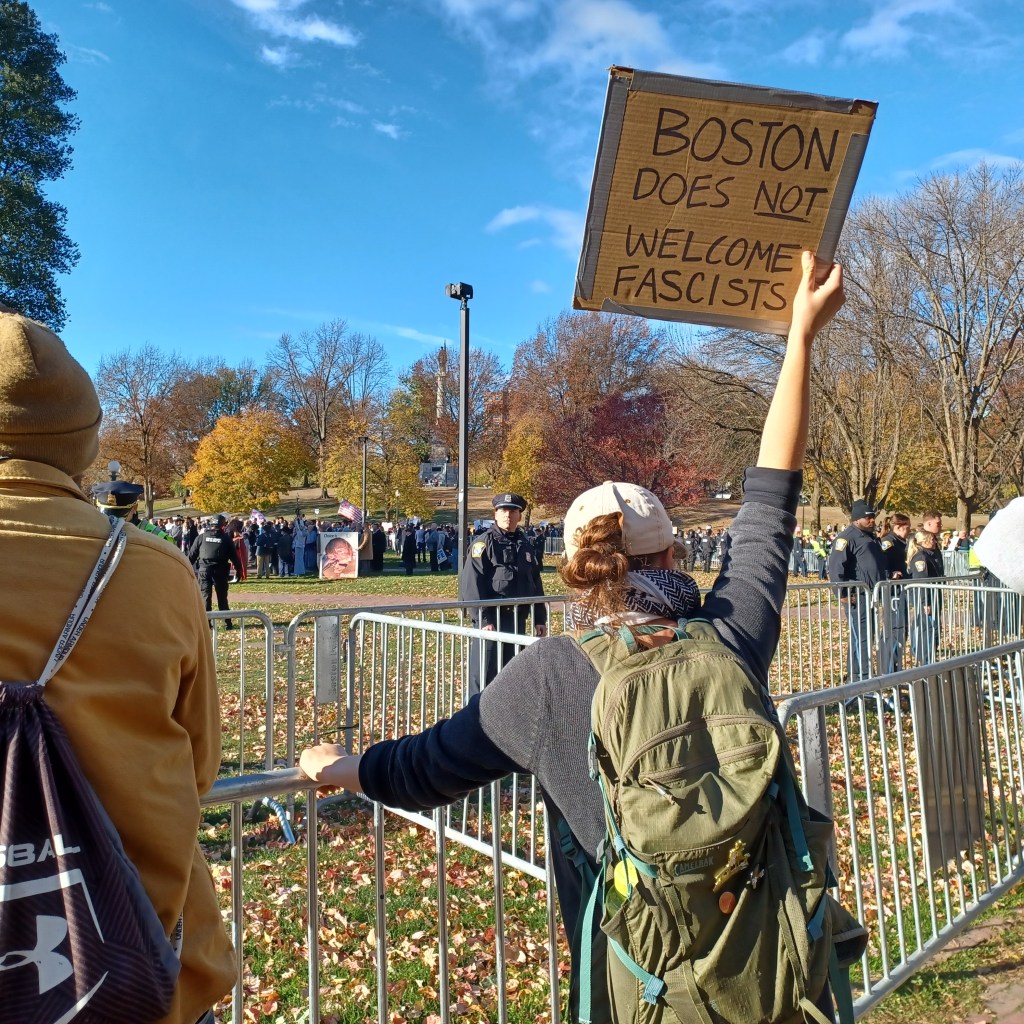
The counter-protesters carried handmade signs: “Thomas Jefferson disagreed with you! He believed in the separation of church and state.” “Wealthiest Nation with highest Maternal Mortality.” “Life begins at ejaculation/ Mandate vasectomies.” “Letting men decide about women’s healthcare is like letting your dog make decisions about your car because he likes to ride in it sometimes.” And my favorite: “He who hath not a uterus should shut the fucketh up; Fallopians 19:73.”
Trying to drown out the speakers, people blew whistles and horns, rang cowbells, and shouted slogans like “Racists, sexists, anti-gay/ All you fascists, go away!” “Pray! You’ll need it! Your cause will be defeated!” “Pro life? That’s a lie/ You don’t care if people die.” Pleasanter noise came from the Clown Band, about two dozen musicians, heavy on the brass. When the Men Against Abortion entered the cordoned-off bandstand, the band greeted them with the Imperial March from Star Wars.
Some of the police looked ready to attack the clown-inflected protest crowd. Two cops, though, stood right in front of the anti-abortion folks’ worst sign. It was a huge blow-up of a dismembered full-term fetus, which if it was real at all must have been from the delivery of a stillborn child in a last-ditch effort to save the mother’s life. Maybe those cops didn’t mean anything by blocking that sign for a few minutes. Or maybe they were wishing they had taken a sick day.
When the rally was over, and the marchers left the Common behind walls of police and metal barricades, clowns and friends lined their route with middle finger salutes. Most of the men in black marched on with jutting chins, looking straight ahead, and the few male children with them seemed to share the smug arrogance of their fathers. But I saw two boys, probably eight and ten years old, who hung their heads and looked completely miserable. Those poor little ones might already have been wondering which marchers were the real clowns.
There will be no way to avoid a succession of horrors in the coming four years. It’s no use waiting for the Democratic Party to tell us what to do. It has become a creature of corporate interests, out of touch with the needs of the non-rich. We have to tell the Party what to do.
The non-profit sector is a mess of single-issue organizations competing for attention and money. We are not single-issue people. Whether you are on a board or just a member, pressure your group to join other groups in as many coalitions as it can manage. All our issues are connected under the banner of peace, justice, and a survivable environment. Progress on any of our goals helps us to achieve all of them. Solidarity is key. We must stand up for one another.
More than changing institutions, we need to change minds. Leave your comfort zone. Don’t stick to preaching to the converted. If you can get access, go on Fox or the bro podcasts. Wait in line for a call-in radio talk show. Try to reach new audiences. Don’t talk down; persuade. Explain what you believe, and be ready to back it up.
We need big change. That means our actions must be non-violent. Violence is not change; it’s just part of the same cruel culture that is wrecking our world. If you are part of a protest, do whatever you can to keep things civil, no matter the provocation.
Expand your social set. Meet people who are not like you. Listen to them with respect. Everyone has something to teach. You don’t have to leave the country to find whole new worlds to explore. Besides, we need you here.
Most of all, keep yourself and your friends from wallowing in despair. If we think there’s no hope, we’ll stop trying, and then there really won’t be any hope.
I’m an American Jew, and this year the High Holy Days of my religion have a special, and terrible, meaning for me. Another year of violence in the Middle East has brought tragedy to millions, and contributed to a surge in anti-semitism around the world. Last Monday, I found some comfort in the company of others who feel, as I do, that our community should mark this Day of Atonement with more than personal acknowledgement of what we have done wrong.
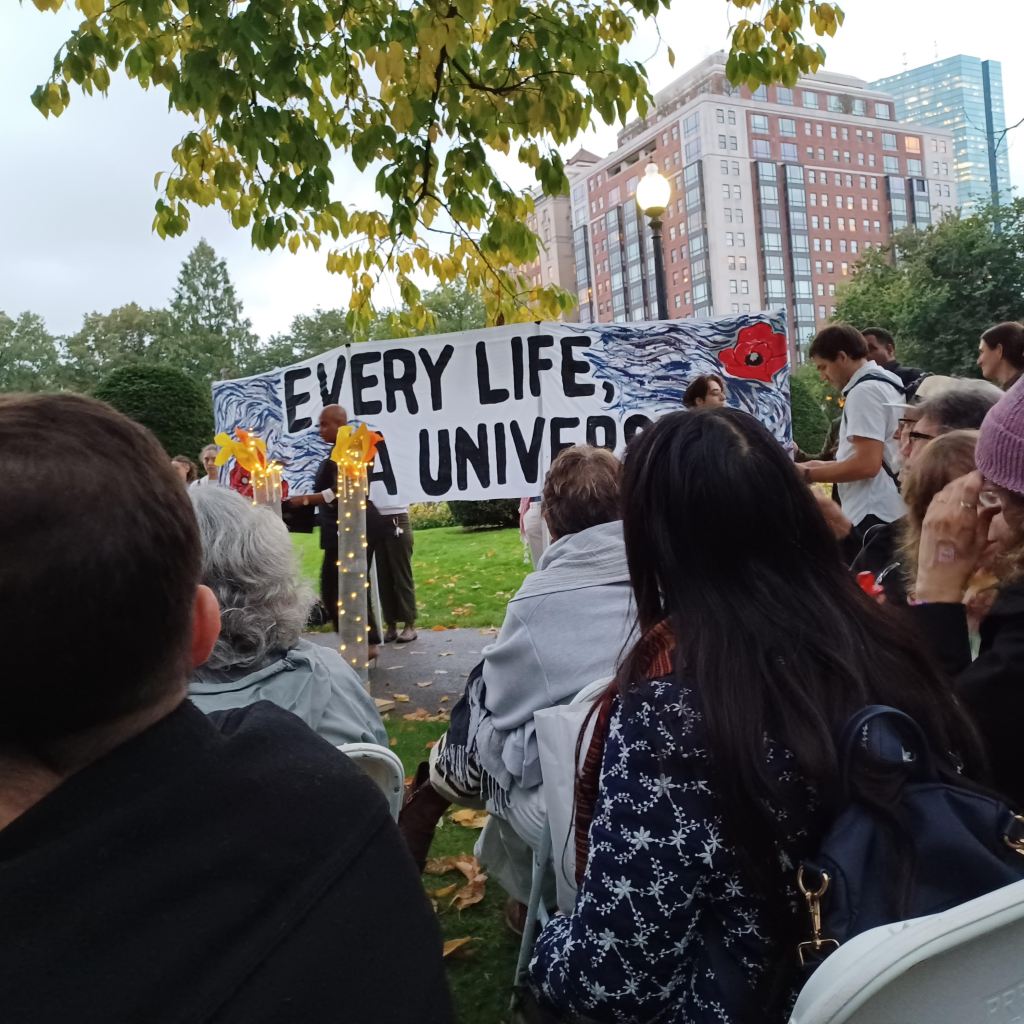
A year after a vicious Hamas attack on Israeli civilians turned long-simmering violence into open warfare, a couple of thousand non-Zionist Jews and our allies gathered in the Boston Garden. We met to grieve — not only for the more than 1200 Israelis killed on that day, and the hundreds kidnapped, but for the tens of thousands of Palestinians killed in the bloody year since then, and for the Lebanese who are now also under Israeli attack. The event was organized by IfNotNow, a group devoted to ending American support for Israeli apartheid and aggression toward Palestinians.
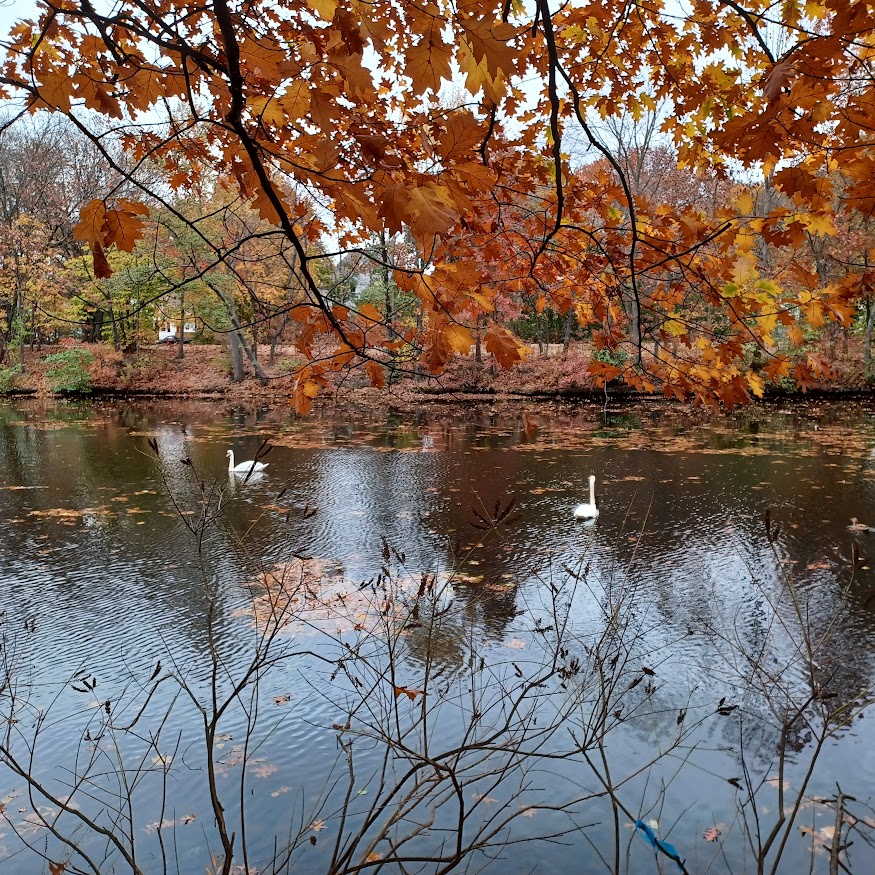
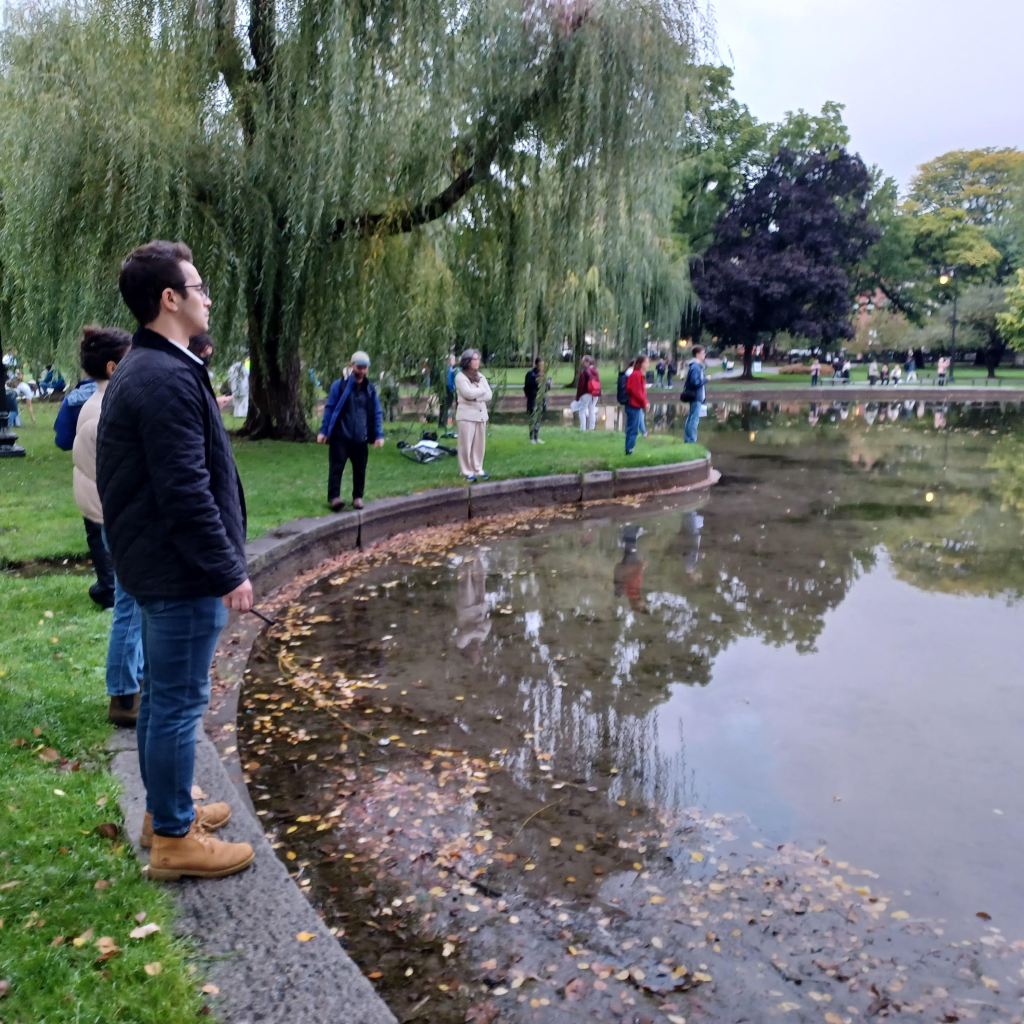
Late on the damp Monday afternoon of that sad anniversary, before most of the crowd showed up, a young rabbinical student led us through an ancient Jewish ritual called Tashlikh. This ceremony is performed during the “Days of Awe” between Rosh HaShanah – the Jewish New Year – and Yom Kippur, the Day of Atonement. One symbolically casts off one’s sins by throwing something in flowing water to be washed away. Usually people throw bread crumbs, but out of concern for the fish in the pond, we threw pebbles or dead leaves instead. The pond water wasn’t washing anything away, which also seemed symbolic to me.
The theme of the main event was “Every life is a universe”. Speakers included Rep. Ayanna Pressley, Rabbi Toba Spitzer, Imam Ahmad Barry, and Rakeea Chesick Gordis. That young woman gave eloquent testimony to losing close friends and family members during the Gaza war, including both Israelis and Palestinians. She spoke of drowning in grief, feeling overwhelmed by waves of it. Again and again, the speakers insisted: Jews cannot be safe if Palestinians are not free.
After an hour of speeches, prayers, and songs, rain began to drip through the trees. Mosquitos emerged from the mist over the pond to ensure our discomfort. Considering the suffering we were there to commemorate, nobody complained. At one point, volunteers handed out small strips of cloth we were to rip, as a sign of mourning, and attach to our clothes.
October 12 is the Day of Atonement in the current year 5785 of the Hebrew calendar. I believe that American Jews have a lot to atone for. I am not refering to personal sins; Jews are no more or less hateful, thoughtless, or selfish than anybody else. I mean the Jewish community as a whole. For the most part, we have supported Israel for the 76 years of its existence, no matter what it did. We have pressured the US to continue sending more than $3 billion a year in military assistance to Israel, and ignored what Israel did with all those weapons.
Ever since the Holocaust killed six million Jews in Europe and the Nakba displaced three-quarters of a million Palestinians in Israel, both sides have committed too many atrocities to list. The difference is that American weapons have turned the Jewish state from David into Goliath. Israel has become a paragon of military might. Nearly all of its people are or have been soldiers. They believe they are fighting for survival, which excuses all their violence as self-defense.
According to the United Nations, from 2008 through 2020, 5590 Palestinians were killed in the ongoing hostilities, compared to 251 Israelis. There are many conflicting estimates of the casualties since the founding of Israel in 1948, but on one thing they all agree. Far more Palestinians have died than Israelis. This conflict is deeply lopsided, and not only in lives lost. The longer it goes on, the more territory originally set aside for a Palestinian state disappears into Israeli hands. Even the rubble that was Gaza is likely to get rebuilt into beach towns for Jewish tourists.
Now it seems that many American Jews have decided to drop their indifference to religion and rejoin the Jewish community. During most wars, previously apolitical people tend to rally around the flag. This is “my country, right or wrong” time. Jews everywhere have been taught to believe that Israel, and not the Torah, is the central element of our religion. In many ways, Israel has become our religion.
After 9/11, the US squandered the world’s sympathy by starting two completely unnecessary and unprovoked wars. Instead of hunting down the gang of Saudi terrorists that bombed the World Trade Center, we invaded and occupied Afghanistan and then Iraq. We killed hundreds of thousands, and made millions homeless. Now Israel has squandered the sympathy it garnered after the Hamas attack by bombing the millions of Palestinians it holds captive behind walls and military checkpoints in Gaza and the West Bank. Most of those who survive are now homeless, and many are starving.
Zionist Jews, and most Israelis, believe that this violence is justified because it’s the only way to destroy the criminal gang that is Hamas. Yet this policy is doomed to fail. Violence begets violence. Every time an Israeli bomb kills someone, Hamas can recruit more members from among the people who loved them. Zionists blame Hamas for all the destruction on both sides, just as the most extreme pro-Palestinians blame it entirely on Israel’s decades of oppression and occupation.
The truth is that there is plenty of blame to go around. So long as we find war acceptable, we all must share the blame for the loss of so many irreplaceable universes. I am grateful to IfNotNow for giving us a chance to start the new year by acknowledging our part in the ongoing crime of mass murder. May the year to come bring a ceasefire, and healing to all who suffer. We must make peace. If not now, then when?
I’m 76 years old. I’ve been homeless, crazy, sick, lost people I love, seen good things turn to shit. And I still believe in magic.
I believe in the magic of loving kindness. I have seen it, felt it. Tried to practice it. And I’ve been watching a long time, and it works. I’ve seen it work.
I felt it in the streets in the ‘60s and at protests and vigils and marches ever since. For every useless war, every awful court decision, people come out in the street to say no together: No, please, not again.
I’ve felt that magical fellowship in congregations of many faiths, at neighborhood barbeques, at music and art events, parks, and beaches. I even felt it once in the Manhattan terminal of the Staten Island ferry, when a woman’s parrot got loose and many teams of strangers instantly formed to get it back.
The meek are everywhere. We take comfort in one another’s presence. We get along peacefully. We’re all colors, genders, religions. We exist in every country.
Some big ape starts hooting and beating his chest, and all the other big apes start hooting and beating their chests. Usually it’s just noise, and boys marking their territory, but sometimes it gets serious and leads to war.
This has nothing to do with protecting mothers and children. It’s anger, insecurity, arrogance, and pride, all the worst parts of our nature, roused up, encouraged. Feeling things are going their way, the big apes can strut their supremacy. They have the power now; they think it’s done. But this is not over.
We are the people of peace, and we must win. Magic lives in our hearts. The secret is to practice it together, in solidarity, across every issue, and to never give up.
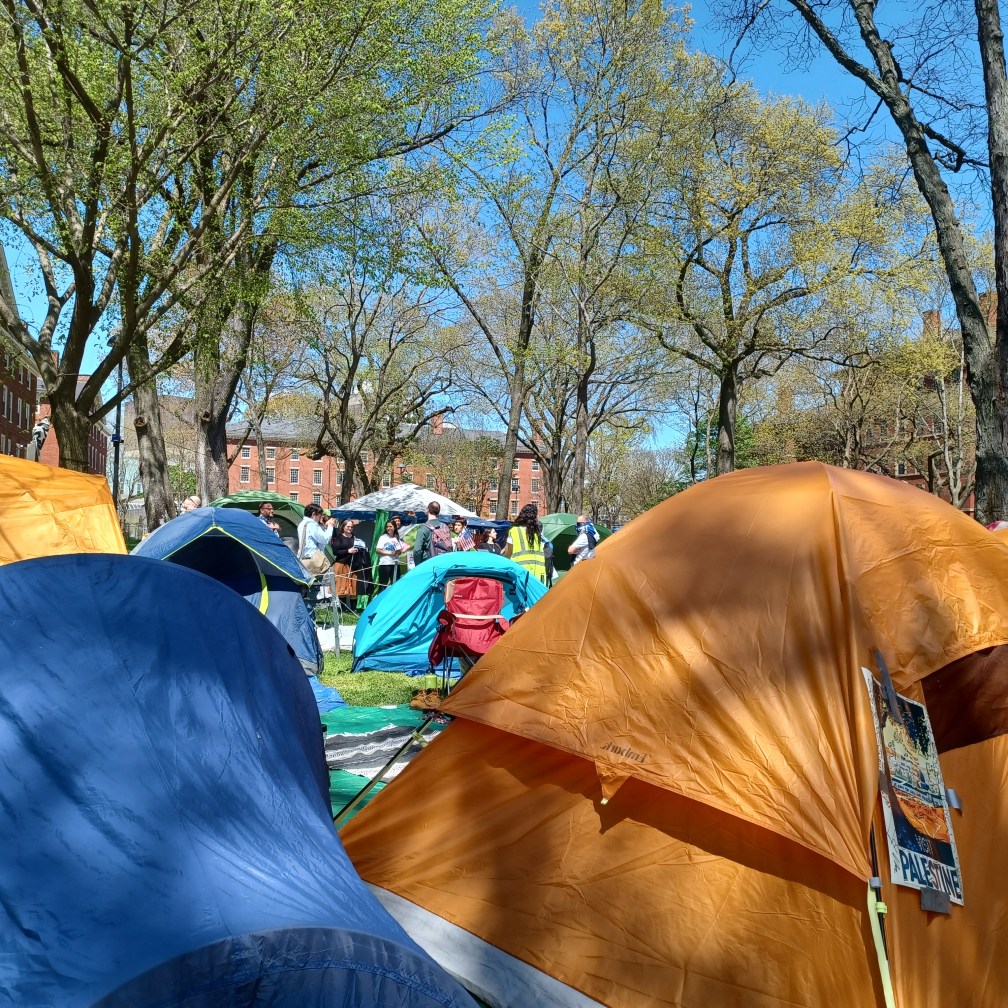
When I left Medford, it was a warm sunny day. In Harvard Square, it was chilly, damp, windy, and overcast. The mood of the encampment was equally gray. The students had just received a warning from the Ad Board that if they continued to camp outside University Hall they would face serious consequences. They were busy texting their family and friends, and possibly lawyers and media as well. I was there most of the afternoon from around noon until past 4 pm, and nobody was shouting, chanting, or using a bullhorn. There was one very interesting session on Palestinian textiles, especially the kaffiyeh and embroidery (tatreez), attended by half a dozen women.
If people are concerned about a kaffiyeh being draped over the John Harvard statue, I would remind them that it is an ancient Harvard custom for frat boys to piss on it.
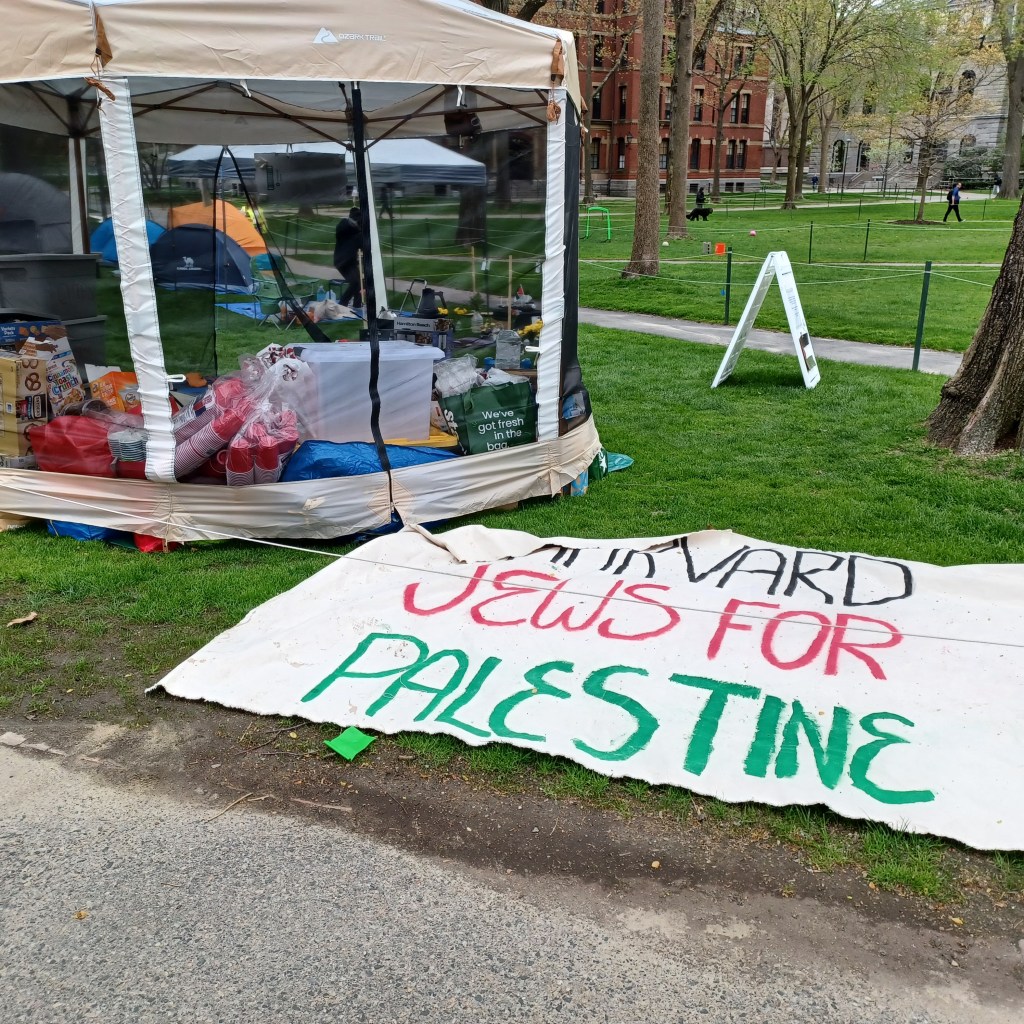
I tried to respect the community norms. First I spoke with a nice young woman who was patrolling the perimeter of the camp, to find out with whom I should speak, as a friend of the camp and not a member of the media. She promised to find me a member of the outreach committee. Meanwhile I took photos, careful not to include anyone’s face.
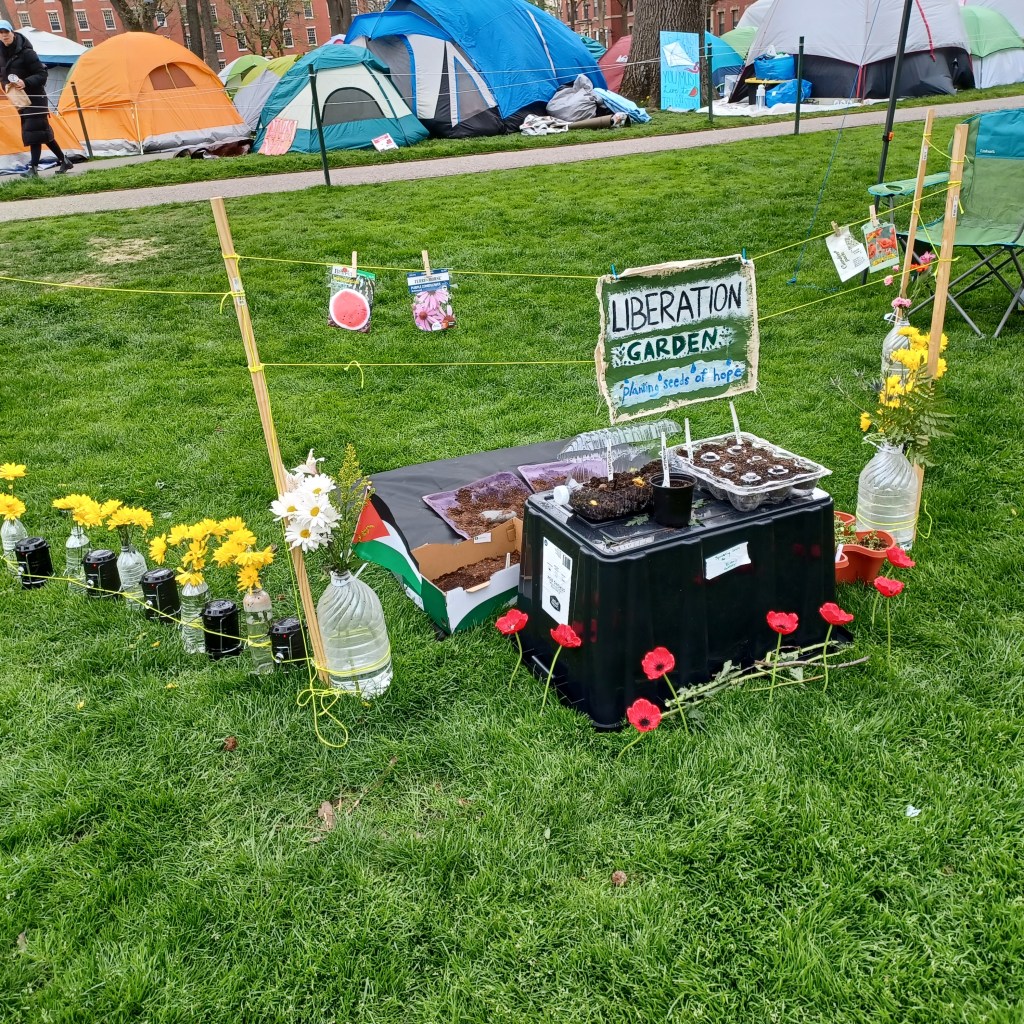
The signs outside the tents were hardly combative. Demands were posted, for HU to disclose and divest from its investments in Israel, and to drop all charges against students for their activism. I doubt any of the protesters expect these demands to be met. Other signs said: While you read, Gaza bleeds; Nationalism is Chametz (Hebrew for food prohibited on Passover); No Justice, No Peace, Palestine will never walk alone; Harvard invests in Palestinian death; and a big banner saying Harvard Jews for Palestine.
As for the slogan “From the river to the sea,” it first appeared in the original charter of Israel’s Likud party, where it did not refer to a hoped-for multi-ethnic democracy.
I chatted up several people while I waited. I asked if any administrators had opened a dialogue with them; they said not yet, but they were trying to negotiate something.
The students are risking their academic careers, and probably the wrath of their parents. As always with student protests, they are among the University’s most thoughtful, serious, and conscientious affiliates. They have a lot to lose and nothing to gain, on a personal level. What is the administration afraid of? Losing Zionist donations; and losing even more face than it has since it bumped its first Black president over…not much. Looks like somebody could go out with a handheld mic and just let people talk.
Finally I got to speak with one of the organizers, a Palestinian freshman named Mahmoud. He and many others have been protesting since Israel began its crazy over-reaction to the brutal Hamas attack in October. He said “The administration doesn’t understand that repression fuels us to fight harder.” The community is committed to non-violence, he told me.
As I started to leave, a man approached the camp wearing a kippah and a scarf with Stars of David on it. The perimeter-walker I first met was tailing him, much to his annoyance. She wouldn’t talk to him, which he thought was rude; I agreed, but I pointed out she was probably following camp protocol, and the idea was certainly to protect both him and the protesters. I made four or five rounds of the camp with this guy and the very determined young woman. She had probably never been called rude in her life. She couldn’t talk to the guy; he refused to tell me anything about himself or his opinions since he thought she was recording him; so I talked to him. As usual in such discussions, we got nowhere, but we parted on friendly terms. I walked him out the library gate.
5.2.2024
An old colleague of mine was gracious enough to meet with me for half an hour yesterday. She’s a very sweet, thoughtful person, and we were glad to see each other again. I asked her if the administration had established any dialog with the protesters. She couldn’t tell me details but said there were talks going on quietly in the background. She told me some students were feeling a lot of pressure from both peers and outside forces, and were afraid to speak out. We agreed on the nature of the encampment – nonviolent, disciplined, and committed – and on the need for the students to come up with some achievable goals.
The protesters’ three current demands, set by the national movement, can and will not be met. The University certainly will not disclose, much less divest itself of, its investments in Israel. It still hasn’t divested from fossil fuels, and many of us have been working on that for decades. It took forever to divest from South Africa during Apartheid. The third demand, for amnesty for student activists, can’t be met before they even go through the disciplinary process.
So I went back to the camp to tell them the little I had gleaned from talking with my colleague.
The weather was warm and sunny, and the mood seemed lighter accordingly. My perimeter-walking friend told me everybody was happy I had talked (and talked) with the counter-protester on my first visit, since their camp has agreed not to engage with provocateurs.
I tried to convince a few protesters to have the group consider setting goals the University might actually meet. Maybe teach-ins, or listening sessions, or moderated debates could be small steps toward spreading their understanding of the war in Gaza and the history of Israel/Palestine in general. While we were talking, I noticed Dean Khurana on the outskirts of the camp. The students said he’d visited before but wouldn’t talk with them.
There are about 50 tents in the Yard, fewer than during the Living Wage campaign in 2001 but probably more than during Occupy Harvard in 2011. Like those encampments, this one is self-policing and keeps itself clean. Yesterday some clotheslines had been strung up between trees. Sleeping bags and coats were hung up to dry.
At this time, early afternoon, about a dozen counter-protesters showed up. I have to describe them as quite loud and aggressive. They marched right into the middle of the encampment, singing Hebrew songs, accompanied by a man with a guitar. Their signs quoted the very worst threats from Hamas (“October 7th was just the first time…”) and showed photos of some of the hostages. They stayed in the middle of the camp for around 15 or 20 minutes. The pro-Palestinian campers did not engage with them at all. While the singing and shouting was going on, the campers quietly rearranged the perimeter ropes so the Zionist group had its own little peninsula open to the paths.
The counter-protest moved out of the camp itself to the lawn outside Mass Hall, where it could be more easily seen and heard by the media outside the gates. One man shouted: “Jews on this campus will not be intimidated, and we will not be silent.” I noticed my walking buddy from Monday in the group, and waved to him; he smiled and waved back to me.
I overheard a counter-protester say “Stop them from using the name Harvard, it’s a violation of trademark rules. Call Meta.”
A man from CAMERA, the Committee for Accuracy in Middle East Reporting and Analysis, a decades-old pro-Israel group, told passersby that they had planted 1200 Israeli flags on the HLS campus. I didn’t go to see and can’t find any reports confirming this. He expected they would soon be taken out. He also told a Globe reporter hovering outside the gates that this encampment was an unprecedented disruption at Harvard. I joined their conversation to correct that statement. As for noise, the encampment schedule for some days lists about an hour at dinner time to “make noise for liberation.” I haven’t stayed late enough to determine just how much noise that comes to. Most of the time the camp seems extremely quiet.
The camp was treated to a show of more than 100 bare backsides late last night during the annual Primal Scream event. The Crimson asserts that the streaking was nonpartisan and nonpolitical. Nobody seems to object to the primal screaming.
Our species has had a wild and crazy adolescence. These days we’re facing the consequences of our irresponsible behavior. We can now see that our bad habits will kill us if we don’t quit. It’s time to grow up.
Can we stop eating too much meat, using too much fuel, buying too much stuff we don’t need? Can we stop using plastic? Can we stop making war?
Many of us believe that only the rich have the power to change anything. This sense of insignificance is a delusion. Every person is just as significant as every other. Each of us offers a unique perspective that adds to our common understanding of our world. Whenever we listen to a new viewpoint, our culture shifts a little. We grow. Barriers fall; we make new connections. And anyone who has managed to kick an addiction knows that it’s not easy to change, but it’s possible.
We have a tremendous amount of work ahead of us. There’s no guarantee we can make the necessary changes. Maybe the civilization we have built is too powerful and its inertia too great, our addictions too ingrained. Maybe people are too greedy and violent to change our ways.
But we are much more than our bad habits. Every human survives infancy because someone fed us and wiped our little bottoms; such ordinary kindness is the neglected background of our lives. Nearly all of us are capable of caring for others, creating beauty, inventing new ways of doing things. And for the first time in history, we have the tools to take full advantage of these assets for the sake of all humanity: the internet and Artificial Intelligence.
In recent years, our culture has focused on our differences. We needed to understand how the spectrum of race, gender, and wealth affects individual lives. We needed to hear more voices than those of rich, straight, white men. With the internet, finally, all of us can speak. AI can tell us what people have already figured out about how to fix things, if we ask it the right questions. We are barely beginning to understand the power of this new tool.
The next stage of evolution is looking at common ground – what we share, how we’re all alike – instead of only at our differences. We can feel this common ground in a movie theater or concert. Everyone in the audience is at one with all the rest, in a way. Our attention has a common focus. Changing our culture means changing what we pay attention to. It’s time to focus on human survival.
Our attention is our singular gift, our most valuable asset. We can choose what we look at, what we like, what we buy – in both senses of the word. This is our vote. This is the direction we’re taking the culture, whether or not we want to admit our personal responsibility for it.
Status, wealth, nationality, and religion are things we made up, stories we tell ourselves about who we are. It can be hard to admit that we’re really just a bunch of panicky primates trying to figure out how to run the planet before we ruin it.
Our world is changing quickly. We now have the tools we need to organize ourselves for survival. Whether we can manage this or not is an open question. Let’s not give up before we try.
Let’s deal in oversimplifications for this argument. Imagine an extremist Christian man and an extremist Muslim man talking about their beliefs in a living room somewhere. Their discussion grows more and more heated, and, depending on the men’s temperaments, might even come to blows.
Meanwhile, their wives are in the kitchen, fixing tea and a snack. Are they discussing religion? Most likely not. They’re talking about men, maybe even about the challenges of living with true believers. The men in the living room are fussing. The women are laughing. The real difference in this (terribly stereotyped) scenario, I respectfully submit, is not between the Muslim couple and the Christian couple, but between the men and the women.
Any time you try to talk about culture you are forced to generalize. If you constantly qualify your projections by acknowledging the wide spectrum of behavior in any one culture, you can’t reach any conclusions at all besides the fact that people are strange, which holds true everywhere. When it comes to human behavior, there are more exceptions than rules.
In general, though, there are two cultures in conflict in the world today. One is dominant, but unstable. The guardians of this culture tend to be “alpha males,” that is, men with a need to be on top of their worlds, who are aggressive, self-centered, ambitious, and willing to resort to violence. This culture has encouraged certain kinds of material progress but results in constant struggle and increasing divides between haves and have-nots.
The other culture is submissive but stable. This culture is maintained and propagated mostly by women. It is other-centered, conciliatory, patient, and prevents or tamps down violence wherever possible. This culture keeps the human world going, for without it, the dominant culture would tear everything apart.
I’m going to call the dominant culture male, though it includes many biological females. I’ll call the complementary culture female, though it includes many biological males. There is no question about which culture is uppermost today. Anywhere you find hierarchy, whether in a capitalist, nominally communist, or oligarchic society, the male culture rules. Wherever you find egalitarianism, cooperation, and collaboration, the female culture is in charge.
Not every society in history has been ruled by alpha males. Sophisticated justice systems; decisions by councils of elders; inclusive mores that provide for and protect society’s outliers; peaceful agrarian societies: all of these indicate the primary influences of women’s culture.
On the other hand, violence; the heedless destruction of human and other natural resources; the oppression of the lower classes: all these are sure signs that the male culture is running the show.
Clearly women’s culture evolved around the need to protect children from men’s aggression. If some sector of society did not propagate the values of caregiving, altruism, and sharing, that society would not survive two generations.
In a world of many languages, where communication was difficult, male culture evolved to settle disputes through physical violence. It would be up to the males whether a tribe’s territory expanded or contracted. The more territory, the more access to game, water, and fuel, the better the tribe’s chances of survival. If you see the world as belonging to “us” or “them”, you want the biggest, baddest guys on your side.
Our world today hangs in the balance in more ways than one. Scientists tell us that our behavior over the next decade or so will determine whether global climate change continues at a pace likely to doom our (and most other) species, or whether it will moderate to a manageable level. Nuclear proliferation proceeds at a rate where unstable regimes and non-state actors have access to weapons that could render the planet uninhabitable except by cockroaches and rats. Water pollution and over-use is at the point of making entire countries vulnerable to death by disease or famine.
Whether our species survives these crises depends upon another balance: the balance between male and female culture. Male culture has ruled, nearly planet-wide, for centuries, cementing its hold though tyrannies and then through the spread of capitalism, which values and rewards selfishness, aggression, and greed. But the destruction that attends these values is catching up with us. More and more people realize that we could very well do ourselves in if we continue on our current path.
Meanwhile, female culture has begun to strengthen in ways unimaginable a century ago. Women’s liberation has barely begun, but its effects are threatening male dominance in every society. Some ancient techniques (violence against women and LGBTQ people, veiling, double standards on sexual experience) and some new ones (high heels, sexualization of younger and younger women, co-optation of women leaders) work against women’s rise, but the trend continues. Women have gotten the idea that they should participate fully in public life, and they are insisting on their right to do so. What has given this idea such strength and persistence?
I believe that deep in our collective unconscious, we know that women’s culture must assume dominance if humanity is to survive. We must stop hurting one another and start taking care of one another; we must stop wasting resources, and learn to conserve; we must clean up the messes we have made; we must stop rewarding greed, and place more value on sharing. Only women’s culture carries the tools and techniques to bring about these changes.
This necessary revolution, which seems so radical, would actually require only a shift in the balance of cultures. We just have to listen more closely to what Jung called the anima, the feminine side of our consciousness. The center in us that corresponds to female culture – the center of nurturing, caring, sustaining values and behaviors – must gain our respect, as it is the key to our species’ survival.
The movement toward women’s liberation arises from the deepest place in ourselves: the part that wants to live, and wants our children to live. Right now, many of the stories we tell ourselves are generated from our fear that survival is not possible. Even though every one of us contains the seeds of a new world, we despair of the possibility that they will grow and thrive.
When we choose our leaders, we should ask ourselves which culture they embody. We need more representatives of female culture to set public policy, whatever their gender. We need more women in positions of power, not because women are that different from men, but because they have been the custodians of the set of values around which our species must reform its behavior.
Those women laughing in the kitchen do not need to come into the living room and argue with the men. No: it’s the men who need to come into the kitchen, drink the tea, eat the cookies, and learn to laugh with the women.
Sometimes, in our culture, it seems the individual is all that matters. Life is about me: my career, my wealth and status, my history. We talk about intersectionality, the many identities that make up one person. What about intersectionality among people, rather than within them? Isn’t that our most important circumstance, as a species?
Say one person is gay, male, white, urban, and Jewish. Another is straight, female, Asian, suburban, and Buddhist. According to what is usually meant by intersectionality, one might expect them to have little in common. But they both love dogs; they’re both poets; and they’re both passionate gardeners, though the guy’s plants are all in pots on his balcony. How different are they?
Ethnicity, gender, religion – these are aspects of the self that help us feel part of groups larger than our immediate friends and family. These aspects are endlessly fascinating. They take up most of our public discussion. Yet they represent a fraction of what a person actually is. More of our couple’s thoughts and daily activities are likely to concern their dogs, their poems, and their plants than any of the supposedly more significant aspects of their identities.
Ethnicity, gender, and religion are stories we tell ourselves. These histories are important and yet, to a degree, imaginary. They help make individuals what we are. But how have they come to outweigh other aspects so much that we sort ourselves into such narrow categories?
This sorting is far from accidental. A very few people have accumulated most of the economic and political power on this planet. So long as Black and white, male and female, Hindu and Muslim, are convinced we are significantly different, we can’t get ourselves together to challenge that power. One only has to look at Trump, Xi, Putin, Modi, or any other authoritarian to see that they deliberately foment enmity among ordinary people.
Imaginary boundaries keep us fighting one another, instead of taking charge of the planet, which the current culture is ruining for everybody. Preventing ordinary people from organizing is a short-sighted strategy on the part of elites, since their grandchildren as well as ours will have to inhabit this poisoned planet. But the elites, being human, are not good at taking the long view.
The internet gives us new opportunities to take down the walls we have built. Rapid and radical climate change gives this project new urgency. Online, people can identify with other dog lovers, poets, or gardeners. One’s ethnicity, gender, and religion can begin to appear less relevant in these circles. Old associations give way to new. Meanwhile, racist, ethnic, and anti-LGBTQ violence reinforces the old boundaries. Hate crimes are committed by people who depend on those boundaries for their whole identities. The increasing violence points to the degree that such people feel threatened. Whenever there is peace, the old boundaries erode.
The Black Lives Matter movement drew in white as well as Black people, not just in the US but globally. The (nearly all peaceful) demonstrations centered on the suffering experienced by Black people for no reason except that their skin color put them on the wrong side of an imaginary wall. Earlier, the Occupy movement also spread around the world. Wealth is another imaginary wall that causes great suffering to people on the wrong side of it. In addition, the environmental movement and the #MeToo movement are global or in the process of becoming so. All these movements indicate that at least some people are beginning to see ourselves as human first, with every other aspect of ourselves being less significant than that primary, leveling, identity.
Every human is clearly a unique world unto themselves. Every human is also 99.9% exactly like every other human. If we focus only on the individual, we just see the actions of one person, subject to chance, a sort of Brownian motion, like the movements of a particular molecule. If we’re interested in the larger movements of our species, we have to consider that most obvious and invisible thing: our culture.
The paradox of being human is that the essence of our personality provides a through-line in our lives; we carry that essence with us, like a smell or a sound that only we can produce. Yet we change constantly. Every day brings us new experiences, and every experience changes us, becomes part of who we are, whether or not we think about it or remember it.
Imagine if we could see the connections between us. Every meeting would form a line. More meetings would make a stronger line. There would be lines between clerk and customer, police and criminal, writer and reader. Instead of a universe of separate points, we would see a dense network in which no point existed in isolation. The loneliest individual, after all, would not have survived infancy if someone had not fed them and wiped their bottom.
This dense network of connection, though impalpable, is who we are. This is the reality of our species. Like the individual, humanity has through-lines. The constant is human nature. The flux is culture, which never stays the same, one day to the next.
We can’t change human nature. We can, however, change culture. Everything we say or do changes the culture, as well as everything we buy, or boycott, everything we listen to, argue with, dismiss or support. In such small increments, the body of humanity moves. In what direction are we moving? Tiny cells in the body of our species, we can hardly tell. All any of us can do is move in any way we are able toward peace, sustainability, and justice. And hope.
We’ve been told it’s the things we have that make up our quality of life. That’s only part of the truth. We must have enough to eat and drink, and some place to get out of the weather. If we’re going to eat our food cooked, we need things to cook it in. Stuff does pile up around us; we’re messy, curious, greedy beasts like magpies or packrats, but we don’t have to make a virtue out of it.
Some things do make lives better, though they’re not usually the things advertisers are trying to sell us. Plumbing, for example, is a really good idea. Fashion is not only fun, it keeps clothing on everybody. The rich change clothes every season and their leavings filter out to everyone else.
Whatever we have, we can do without or make new, except for people. Only the people we’re close to are irreplaceable, our family and friends. We can lose a neighbor sometimes and go on all right, but it is devastating to lose a whole neighborhood.
Real quality of life depends on how we feel. If we’re healthy, and the people we love are healthy, and our household is peaceful, that’s worth any amount of money and any pile of stuff. If we’re suffering in mind or body, few things can comfort us.
Beautiful things soothe, please, and excite us, in the moments when we truly notice them. Art can improve our lives if we pay attention to it. Being in natural surroundings, where beauty continually renews and reinvents itself, comforts and sustains us. Many broken hearts have begun to heal in the woods and on rivers.
Community is precious. Fellowship is precious. That’s why a lot of people go to religious services. We get to feel kinship with the people around us. Community, fellowship, friendliness, peace: these provide real quality of life.
Networks of people are not material things. They are emotional and intellectual connections of shared experience. These invisible things, beyond what we can hold or measure, keep us alive.
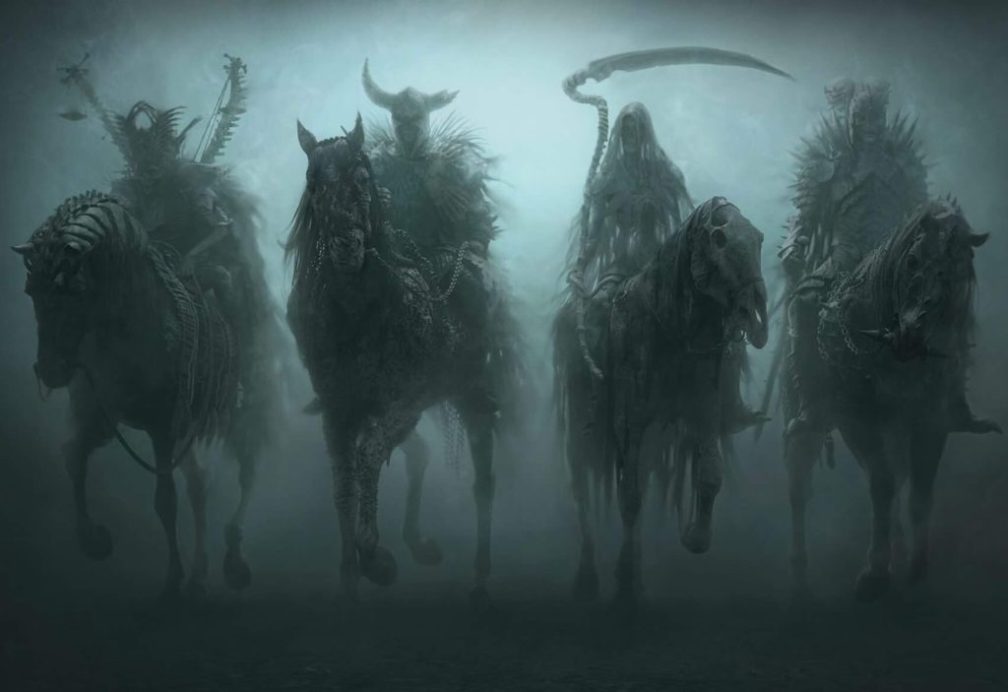
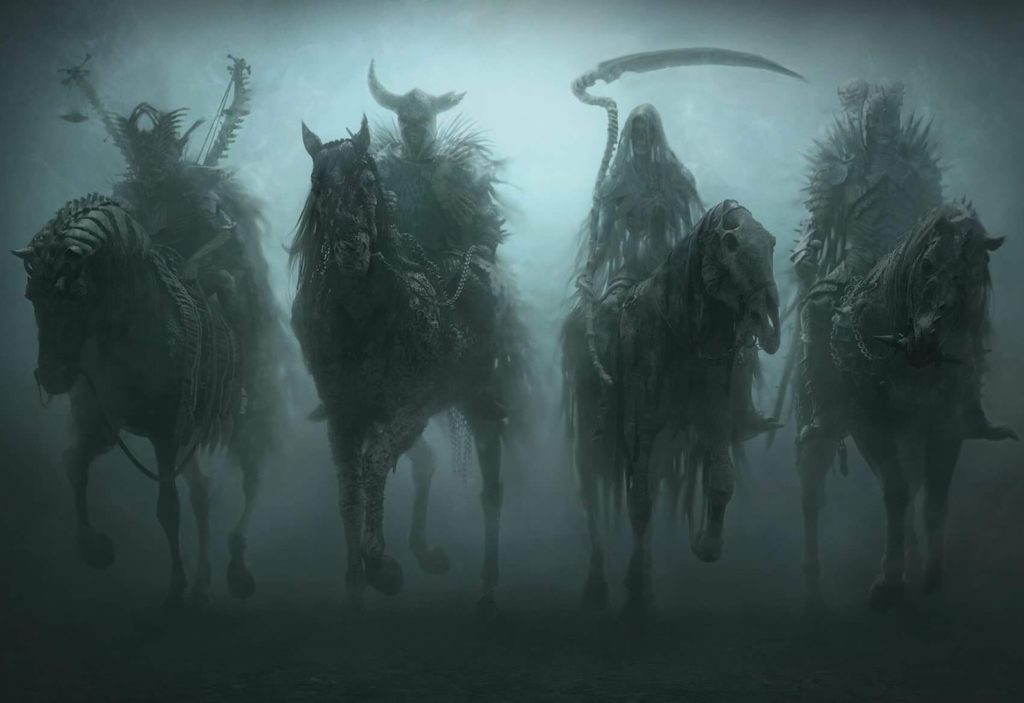
The Four Horsemen appear on the news every day: war, disease, famine, environmental catastrophe. Gee, who could have seen this coming? Whoever wrote the Book of Revelation two thousand years ago, for one. None of these things are exactly new in human experience. Since humanity decided to base our civilization on greed instead of compassion, this has been an easy prophecy to make.
The thing about prophecy is that it’s meant to scare people into changing our behavior. If it works, the direst predictions won’t come true. The prophecy makes the threat of extinction both vivid and immediate. We already know that our current path is not survivable. We just think we can keep going a little while longer, in spite of the evidence. Addicts need to “hit bottom” before they quit doing whatever is killing them. Has our society hit bottom yet?
Not the Neighborhood Watch
All our addictions – to drugs, to war, to fossil fuels, to accumulating stuff – stem from humanity’s central problem: how to keep from being ruled by the worst of us. The problem shows up in Putin’s aggression, Trump’s hatefulness, Big Oil’s continuing lies. The solution is not any single hero coming to save us. The solution is the best of us, working together.
Addicts endure going cold turkey through the love of friends and family, the encouragement of others in the same situation, and inner strength. The same things apply to all our addictions. If people can quit drinking, we can quit buying plastic junk. If one fragile, needy individual can stop smoking, this fragile, needy species can stop war.
Right now, the good guys are terribly disorganized. We’ve allowed ourselves to be separated by nationality, ethnicity, religion, gender identity. Even our do-gooder organizations are separated by the causes they support, as though peace and justice and environmental sustainability were not deeply interdependent.
National boundaries, financial wealth, and all the other barriers to our solidarity are products of human imagination. Apocalypse, on the other hand, is the furthest thing from imaginary. It will be the only reality if we remain divided behind those barriers instead of getting ourselves together.
Like it or not, this is our planet. It’s time we start owning it. Here’s another 2,000 year old prediction: the meek shall inherit the earth. If we do, it won’t be a moment too soon.
Panic is a natural first response to the awareness of what a terrible spot humanity is in. Despair often follows the panic. We have to calm down, and cheer ourselves up, before we can get to the real, urgent, practical work of saving the world.
Human-caused climate change is happening faster than even the worst pessimists predicted. The fires, floods, and droughts scare more people all the time. We are beginning to understand the harm we have done to ourselves and this beautiful earth. If enough of us are afraid enough, we might change our behavior before it’s too late. In a way, fear is our only hope.
Some have moved from denial straight to despair. That is natural but convenient. Despair lets us off the hook. Why take the trouble to change if we’re doomed anyway? If we believe human survival is impossible, we won’t even try to fight. But it’s not impossible; it’s just unlikely. There’s a big difference.
We know what to do. Reduce, re-use, recycle; cut way down on fossil fuels, plastics, military spending, and meat; educate women world-wide to curb population growth; prepare for mass migrations; and so on. But how do we do any of this when most of us feel so powerless, and we seem stuck with the status quo?
We do it through changing a culture that glorifies violence and greed. Each of us creates our culture every day, in what we buy, where we go, what we communicate. When we make different choices, we change the culture.
We’ve built our present world by imagining every detail. Everything we see around us is a product of human imagination – in fact, of countless imaginings. Money, status, nations, religions: all of these things are imaginary. When we think about them differently, they change. Now we must imagine a sustainable world where humanity and other species can thrive.
This is a time to rally ourselves, not give up. As has been said, it doesn’t matter what we did. What matters is what we do once we know what we have done.
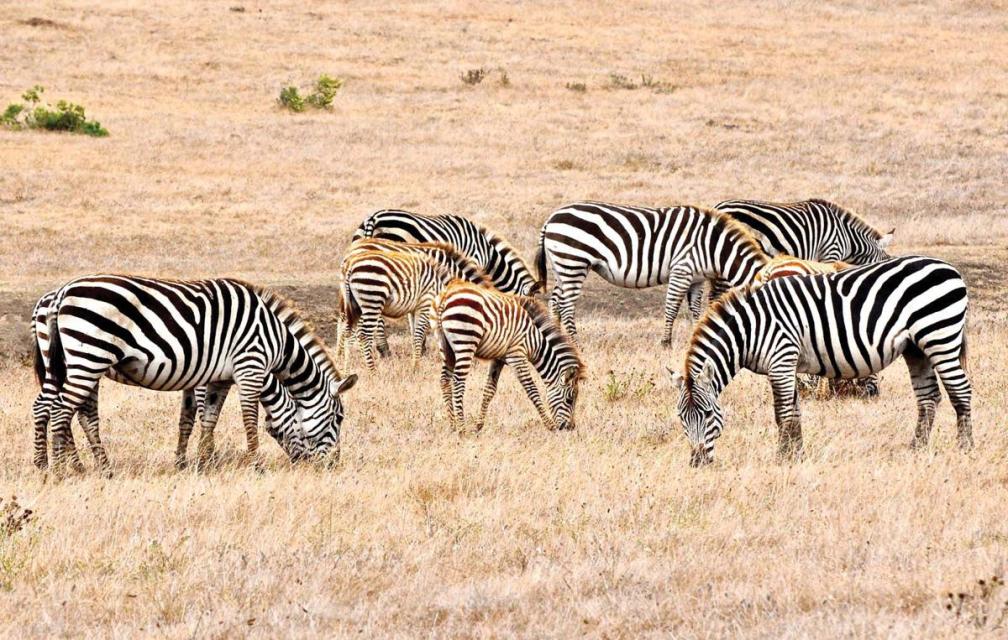
Ants, zebras, monkeys, snakes: each member of a species looks and acts pretty much like all the rest. They can tell one another apart, but we can’t, unless we study them closely. The differences are tiny; the similarities, vast.
The same goes for humans: each one of us is unique, but we’re as alike as snowflakes. No person’s history, character, or appearance is the same as any other’s. These variations are endlessly fascinating. We need them; they are how we tell one another apart. But they form only a tiny fraction of what we really are.
Science tells us that all humans are almost exactly the same. Day to day, we ignore that knowledge, though it explains a great deal.
Why can a good actor portray a wide range of characters? Why, when we go to the movies, does the whole audience agree on who is the good guy and who is the villain? Why do we laugh and gasp in the same places? How can good novelists get us to understand people we’ve never met, and who in fact do not exist?
Because people are pretty much all the same: variations on the theme of being human. Shouldn’t we be talking about this theme and not only its variations?
Our dominant culture emphasizes the individual — one’s career, one’s wealth, one’s behavior — even though these things usually matter only to that individual and perhaps a few relatives and friends. We pay much less attention to our behavior as a species. Yet it’s our bad behavior as a species, not as individuals, that is endangering the future of humanity.
There’s a lot of talk lately about “transhumanism,” the attempt to transcend human limits. I believe that before we can transcend humanism, we must achieve it.
The problems that threaten human survival arise from our refusal to acknowledge our behavior as a species rather than as individuals. The only solutions to them are global — in other words, species-wide.
The internet is revolutionizing global communications, maybe not a moment too soon. Now people can communicate across the world in real time. You don’t have to be rich to do so; all you need is access to an online device. The barriers of personal appearance, location, and circumstance vanish, leaving only your words, and images (mostly) of your choice. Being online is as close to becoming a spirit — transcending material limitations — as we are likely to get.
Of course we use the internet mostly for sex and music. This is typical behavior for our species. Without regulation, we also use it for insulting one another, showing off, lying, and gossiping. Also standard. We form interest groups; we make friends as well as enemies; we come to the aid of people in trouble.
What we don’t do online, at least not yet, is run the planet.
Right now, humanity is poorly organized for survival. So long as we primarily identify as members of subgroups like nations, religions, or ethnicities, we will find it hard to deal with problems that pertain to all those subgroups. Our organizations focus on issues specific to themselves and compete to place those issues above the rest. Even though, as individuals, most of us want to end hunger, war, and environmental devastation, our organizations have different priorities.
We are such a creative, adaptable species that we manage to live in every environment on earth, the deep sea, and outer space. The climate change our bad behavior has engendered is creating a new environment for us all. It’s impossible to predict whether, much less how, we will figure out how to survive this different world. If we survive, the global reach of the internet will have everything to do with it.
One thing is certain. However humanity re-organizes and adapts, everyone alive will be involved: not just the 1% global elite, or the 99% of us who do not have illusions of limitless power, but 100% of us. None of us stands alone. All of us need other people. Our individual lives will end one day. In the meantime, though it seems unlikely, don’t give up hope that humanity itself – our pattern, our theme, our weird and wonderful species – will find a way to endure.
I was raised Jewish. The New Testament was off limits. When I got old enough to question why, I read the books, and became – not a Christian – but a fan of Jesus of Nazareth. He was a radical poet, a superb teacher, a lyrical rabbi. His words, his stories, his metaphors, moved and delighted me in a way that rarely happened when I studied Jewish lore in the Talmud.
What was so dangerous in the teachings of this great rabbi that his work was forbidden to Jews? He taught that the most important thing was to be kind to one another, not to follow the rules. This threatened the fabric of Judaism, knitted from thousands of strands of legal arguments, meant to cover the actions of Jews at all times. If one could put aside these historic threads, one would be, in effect, naked in the world. One would be the agent of one’s own actions rather than limited by the prescriptions and prohibitions of generations of wise men.
If the meek are going to inherit the earth, we should get ourselves organized.
In a system, or an anti-system, like the one Jesus proposed, every individual would be a free actor. Such a person might or might not choose to remain in the community built for protection and survival over the centuries. The rabbis, those living encyclopedias of rules and regulations, would be no more and no less than any other people except as they demonstrated compassion towards others, non-Jews as well as Jews. All would be equal in the sight of God.
What Jesus represented was a threat to the powers that be. In his day, those were the Sanhedrin, the council of rabbis, as well as the occupying army of the Romans. In the centuries to come, they were the Church, and the priests who claimed its power for themselves, as well as nation-states. He taught that souls were equal, even the souls of small children, and of women. What glory they could claim belonged to themselves alone, for their acts of kindness, and not for their service to organized religion. To counter such egalitarianism, the Church turned the words of Jesus into mysteries that could only be safely plumbed by priests, intermediaries trained by the Church. Ordinary people could not be trusted with the Word.
Jesus trusted ordinary people. He could have remained among the rabbis, a precocious scholar, rising to be powerful and important among the established leaders of his faith. Instead he hung out with prostitutes, drinkers, and gamblers, not to mention fishermen. He believed in the meek, the gentle, the powerless. He threatened the idea of corporal power itself. If you knew that all you needed to satisfy the only true Power in the universe was compassion, you would be less likely to submit to those who rule through fear. You would be free.
Nobody who has risen through a hierarchy of power likes people to be free. What would happen if the masses of people, the lowly ones, the meek, began to see themselves as equal to those who rule them? Every person who has fought for and gained power in an organization would feel a disturbance, shall we say, in the force. The few who use force would have to recognize the overwhelming numbers of the gentle. Such a change in public consciousness would shake not only religions but nations.
The rabbis knew Jesus was a threat. All hierarchical organizations know that he remains a threat. He didn’t believe in top-down power. He tried to awaken power in the grassroots, from the bottom up. He believed in people; he exalted the meek. What he preached was neither obedience nor resistance, but solidarity, the most revolutionary concept in a world designed to keep the meek under the knee of the powerful.
Sometimes I rush other people, but I hate to be rushed, myself. Pastor Bobby said a useful thing to the congregation before my baptism. He told us to slow down. All my life until then I had hurried. I could never do enough, fast enough. I was breathless with hurry and worry.
My two-and-a-half-year-old pointed his chubby finger at me before the baptism. With a solemn look straight in my eyes, he said: “Now yell really loud, and then work.” And so I did.
When my heart rate still hadn’t slowed down after Bobby dunked me backwards in the font, I realized that being Jewish and getting reborn as a Christian might not completely explain the state I was in. I hadn’t slept more than an hour or two a night for weeks. The last straw was finding that two-year-old on his knees by his bed one night, sobbing. I checked myself into a psych ward.
My seven-year-old cuddled with me the night I turned myself in. He told me if they arrested me, he would stay with me in jail. He was already a fierce protector. Now that role is tattooed on his arm in the form of a Hindu god.
They asked my name at the hospital, but I was in a joking mood in my relief at being in a safe place, away from where I could freak my children out, so I told the intake worker I was Jesus Number Six Million and One.
He didn’t get it.
I was referring to the six million Jews who were killed in the Holocaust. Jews rarely mention the seven-plus million others the Nazis killed: Poles, Catholics, gypsies, people with disabilities, homosexuals. I never thought I was actually Jesus Christ. I just felt crucified.
It was the Reagan Recession, and my husband couldn’t find any construction work. After the bank foreclosed on our farm, he and I and our three small children spent nine months living with my mother-in-law, a sweet woman, but very devout. She had to go across the street to her mother’s tiny house with one of our kids at night so everyone would have a place to sleep.
Poverty can make you crazy. I don’t even know how anybody stays sane in this society if they have no money. Everything becomes impossible.
I came to the hospital to get myself down off the cross.
In a psych ward, the people around you matter as much as the medical staff, maybe more. I was lucky. I was in a good ward. There were vegetables; there were regulars; another Jesus and a John the Baptist; and one terrified and confused adolescent boy who had probably tried to kill himself. Satan came to visit, briefly, late one night, but mercifully was quarantined by the authorities and left the next morning.
I had been salting my food heavily, even every bite of apple. My body must have known something. In the hospital, they put me on a different salt, lithium. It took a while to work but saved my life in this crisis. I was lucky, again, to avoid its long-term use, because it can be toxic.
It was hard to focus since things seemed to be flashing, glittering, radiating significance. The other patients anchored my attention, mysterious separate worlds that they were.
One day in art therapy, my friend Jimmy used markers to color in a picture of a tiger, orange and black, in a green jungle. It was stunningly beautiful. His psychosis made the picture vibrate with meaning.
Everyone recognized the picture’s power. Jimmy put it up on his door. Someone stole it. Jimmy seemed indifferent but I was furious. The next therapy session, I colored in the same picture, using Jimmy’s colors and style as far as I could remember them, making as close a copy as I could, though it did not have the magic of Jimmy’s original. I labeled it at the bottom: After Jimmy. I taped it to my door until the nurses took it down.
In a good ward, people try to help one another by telling the truth about what they observe. It’s hard to get that from a nurse or doctor. They’re cagey about sharing what they see. The patients in a psych ward have no energy for anything but the truth, so that’s what people speak, if they speak at all. Even the weirdest bullshit people say is a form of truth, if you listen carefully. No one is pretending. Everyone is wrestling with an angel, or demon, or however they perceive the struggle, but in crisis it is a desperate struggle, the battle for your life, for your own mind, for any kind of control over what you say and do, so the terrible truths can stop helplessly spilling out of your mouth, keeping you on one side of the flood and everybody else on the other side.
One time, a nurse got angry at one of us for swearing. Some of the nurses were self-righteous Christians, not really what you want when you’re soul-naked and crazy and babbling truth. She yelled at this guy for a few minutes while he sat there in silence, and then she stormed out. Somebody remarked, “They’re crazier than we are.”
The hardest part for me was not being able to see my kids for weeks. My seven-year-old carefully colored in a picture of a bee and a flower and mailed it to me. I looked at it a lot. That was me, a busy bee.
I needed to take Bobby’s advice and slow down. Mania can kill you with lack of sleep and pressured heart rate. The recovering vegetables needed to speed up. One day a silent woman grabbed me by the arm and insisted, with vehement gestures, that I walk the hall with her.
The hall was a checkerboard of black and white tiles. My new friend placed her feet carefully on the pattern. When I started to go faster, she’d put her hand on my arm to slow me back down. That woman did more to help me heal than anybody else. She was trying to get back up to her normal speed. I was trying to get back down. We balanced each other.
I drew a picture of her wearing a nice dress instead of a baggy gown, with her hair in a neat bun instead of wild. I was trying to help her off her own cross, whatever it was, but whether it helped or hurt I will never know.
Where we hung out in the common room, the television was a real presence. Some of us heard the voice of God in it more than once. This was a truth-telling God with a loving sense of humor. It was a welcome voice.
Once one of us threw a tantrum, not at any of the patients or staff but perhaps at the world in general. Just after nurses led him away, the television said, “His anger is part of his charm.” The timing was perfect. Everybody laughed.
Nobody talked trivia. Nobody was interested in politics or sports or celebrity gossip.
Sitting with our backs against the hallway wall one night, I coaxed Jimmy into showing me where he had slashed his wrists. I compared my wrist to his. Inside the dark chocolate skin, his flesh was the same color as mine. We both stared at our wrists next to each other. It was comforting somehow.
The frightened teenager came in late one night. I was up. I was always up. He lingered in his doorway, looking around. He was glad to talk with somebody besides his father or his nurse. I told him he was lucky, he landed in a good ward. Some silent ones, some nice people, nobody especially scary. After that, he called me “Mrs. Cool.”
When someone called a patient, a phone in the hallway would ring. Nurses ignored it. Sometimes one of us would pick up and find the person the caller wanted. I got in the habit of answering it in a singsong lilt like a company switchboard operator: “Hell-o, Crazy People…”
One of the most embarrassing moments to remember, and there are many, is that I sang. Some people liked it; they listened in the hallway when I sang in my room, looking out the window into the park. But once I wanted to cheer this sad guy up, and I sang to him from the hallway, “The Longest Time” – a Billy Joel song. I meant it as an expression of cosmic all-embracing love, but people teased him about it, and his family heard he had a girlfriend. Actually from the way his sons talked to him about it, maybe that was a good thing. They seemed glad to have something to joke with him about.
The nurses found me amusing, until late one night I got frustrated with the nurse on duty, who was doing paperwork and refused to talk to me. I banged my wrist against the edge of her window. I wasn’t suicidal; I was just being a drama queen. Oh boy, did that get her attention. In a moment, two large male orderlies materialized on either side of me. They hustled me into my room and strapped me in my bed with leather restraints on my ankles and wrists. Then a nurse injected me with Thorazine, an anti-psychotic. She said it would knock me out for hours. I woke up 20 minutes later.
I found that I could wriggle around enough to sit up, leaning back on my arms. When a nurse came by, she reassured herself that I was done acting up, and removed the restraints. I asked her to show me the padded cell, as I thought that would be the next step if I misbehaved again. She laughed. There was no such thing. I was already in the locked ward. The restraints, and the Thorazine, were the worst consequences they had.
It was spring. I missed the farm. Early one morning, my mind stopped buzzing long enough that I could hear a blackbird sing in the park. That song rang as pure and clear as anything I had ever heard, all by itself in the silence.
I was beginning to come back down from the thrilling, dangerous ride I’d been on. I tried to stick to my principles. Be kind. Recycle. I collected the little things hospitals waste by the ton: medicine cups, the plastic tableware they give you when they can’t trust you with real knives and forks, paper products. I heard nurses tell each other to see me if they needed supplies, I had stacks.
Once I was sleeping again, the doctors decided I was ready for a day pass. My husband took me to a huge drugstore that would have overwhelmed me with sensation just weeks before. I bought a few things I needed while he waited outside. The moment I entered the store, one of my favorite songs started to play on the sound system: “Strange Days,” by John Lennon. The last notes of the song played just as I left. I felt like the universe was encouraging me.
The kids were waiting at my mother-in-law’s. Seeing them, holding them, was heaven.
When the hospital released me, finally, we moved north to the state where my parents lived, and where there were construction jobs. My mother found a wonderful old psychiatrist who saw me a few times, and then took me off lithium. He didn’t think I would get that crazy again, and I haven’t. I’m usually pretty happy with myself and my world.
Still, I’m as crazy as the next person. I get depressed, I get anxious, I have insomnia, I get angry about nothing, I over-react. The pandemic almost pushed me over the edge, but I turned to the things that always help me: friends, music, meditation, walks by the riverside, my husband, my kids.
All I want people to know is that sometimes life gets better. We are not things that get broken and can’t be fixed. We’re alive, and we can heal.
Why can’t the good guys get our act together? So many people have been working hard on so many good things. But for 50 years, the progressive movement has been split into “special interests” by single-issue organizations. Environmentalists, social change activists, advocates for economic fairness, or for seniors, or children, or other species – all compete against one another for top billing on political agendas, media attention, and funding.
But if we’re going to build a world humans can survive in, we will need to do a wide spectrum of things. We have to stop fracking and using fossil fuels and nonbiodegradable plastic. We have to house the homeless and feed the hungry. We have to share the wealth to create economic justice. We have to educate our children, and protect our seniors. Most of us care about all these issues. Most nonprofit organizations only care about one.
If we support a single-issue group with our time or money, we should pressure it to work in coalition. This won’t be easy. Paid staff at these organizations have built their careers on “their” issue and will be reluctant to put that issue in context. For them, it’s about keeping such power as they have. In this way, we are poorly organized for survival.
That’s why it’s so important for progressives to take over the Democratic Party. That’s the only place where every issue is part of the agenda. The nonprofit sector in the US does a lot of good things, but it’s not only fractured internally, it’s on too small a scale to deal with huge national or international problems. And it is organized according to the whims of donors, i.e. people with money.
If we overcome all the cheating and manage to get Democrats in power again, poor Biden will have to deal with a mess on every level. No matter what we care about most, the Republicans under Trump (and before him too) have screwed it up. Everything we love is in danger.
We can’t keep fighting over which issue is most important. We have to make progress on all of them. Every single-issue organization has gathered data on that issue and knows how to educate people about it. If they work together – if we insist that they work together in order to win our continued support – they can each add a valuable piece to the puzzle of how to create a sustainable world.
Eventually this puzzle has to be worked out by all countries, not just the US. But if the good guys here manage to get it together, the US can once again offer some moral leadership to the rest of the world. This is not up to Biden, or any politician, my friends. It’s up to the American people.
I’ve been scared most of my life: of nuclear war, of hateful prejudice, of environmental destruction. I always wondered why other people weren’t scared too.
Now that so many more people are afraid — of COVID-19, of poverty, of climate catastrophe — I feel better. At last, we are beginning to face the consequences of the way humanity has behaved. That means there’s a chance we can change our behavior.
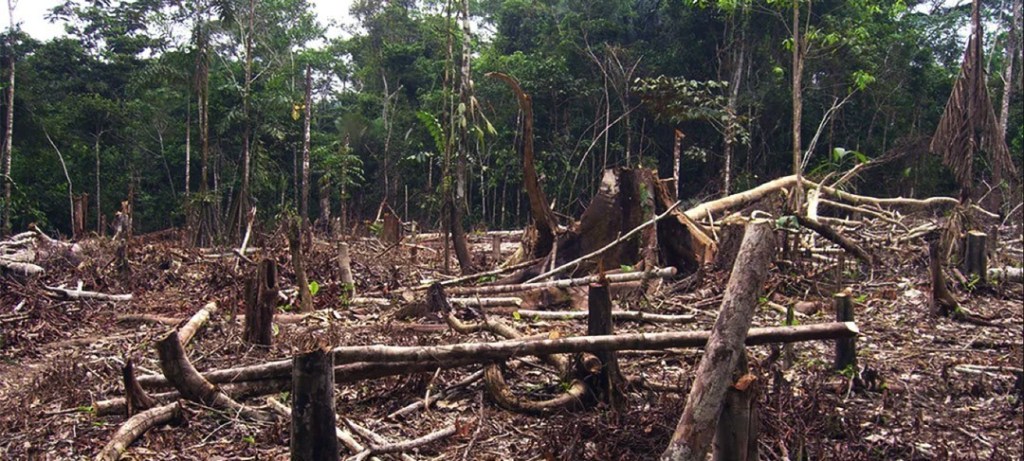
We have based our culture on greed and violence. This is no way to run a planet. We have been cutting down rainforests, the lungs of the earth, so we can have palm oil and hamburgers. Now the earth is heating up so fast, we’re afraid humanity can’t stay alive on it much longer.
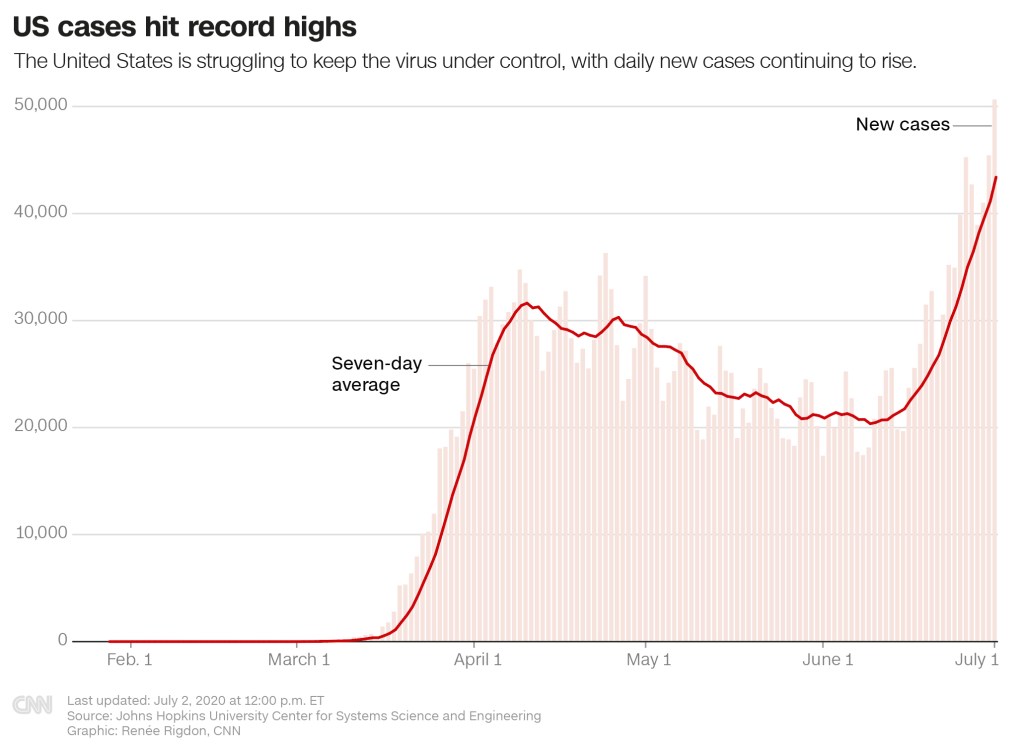
The USA is showing the rest of the world what happens when you refuse to acknowledge reality. Trump insists the virus is a hoax, and basic safety measures are an attack on our freedoms. So hundreds of thousands of Americans are dying. Eventually, we will admit the only way to save our people is to wear masks and maintain distance everywhere we go. Meanwhile we will lose far too many. But we will learn.
The USA is also showing the world how to change the culture. Thanks to huge, nonviolent protests, the Black Lives Matter movement has finally made most Americans aware that racism is another deadly virus we all must fight. Black people have moved from fear to anger, from suffering to action. They have educated and mobilized their allies. This is how we make a difference: we do it together.
So do get afraid, my friends. Just don’t stay that way. This is a beautiful world. Humanity is worth saving: people can be awesomely kind and creative. It’s not individuals who are the problem, even Trump; it’s our cruel and selfish culture. Let’s get together and change it.
The US is in such terrible shape that lately, I’ve been writing only about this country. American media almost always do that, which helps to keep us ignorant. They give us the news they think we want to hear rather than what we need to know. Right now, we need to know why so many countries are dealing with COVID-19 so much better than we are.
This little blog is not the place to detail ways other nations are bending the curve and saving the lives of their residents. (One good article that does so is at https://time.com/5851633/best-global-responses-covid-19/) The methods vary, from severe lock-downs to widespread contact tracing. The only thing these nations have in common is that their leaders reacted to the virus quickly with action, generous use of public resources, and consistent messaging.
Of course in the US, our leader knew about the virus two months before he did anything at all. Since then, he has called the virus a hoax, refuses to wear a mask, won’t tell people to take simple precautions, cuts ties to scientists, cuts funds for testing, and keeps pushing states to re-open businesses and schools as though the virus has gone away even though he knows it’s spiking. Trump is killing Americans.
One thing we learn from watching other nations, and even from watching the US states that are keeping cases down, is that people can radically change our behavior when we know we must in order to survive. We change our work patterns, our child care arrangements, our social interactions, the way we shop and entertain ourselves. And we can make these changes literally overnight.
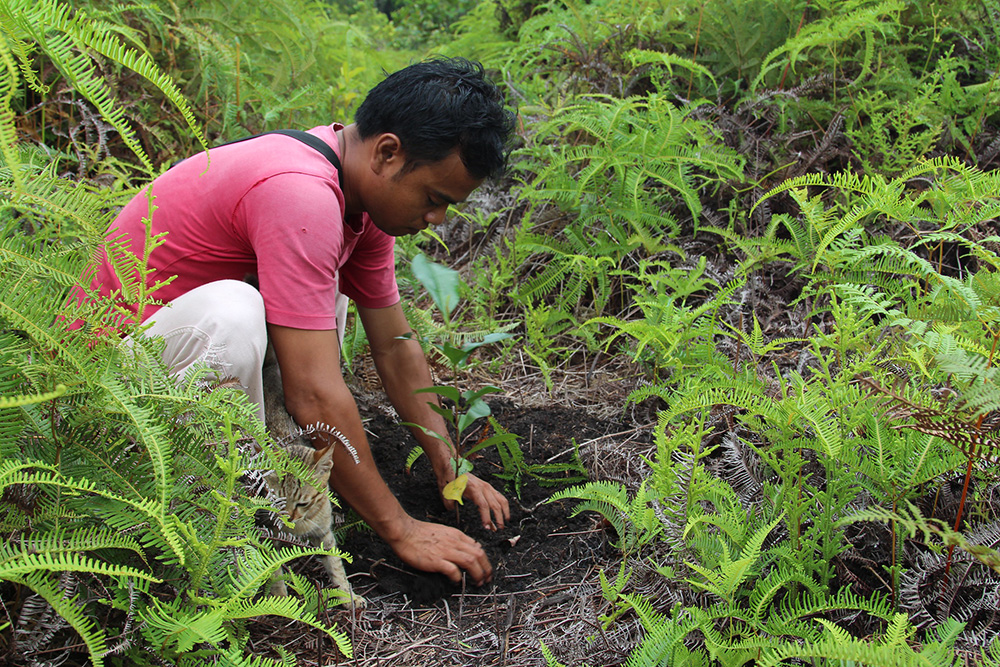
This is good to know. Because we as a species have a lot of changes to make, big changes that have to happen quickly if humanity is to survive. We have to stop using non-biodegradable plastic and fossil fuels, for example. We have to stop cutting down rainforests and start planting billions of trees. Keeping the planet habitable will require people to make much less stuff and use much less energy. This will be hard. But once we know that’s what we have to do, we can do it.
Without sane leadership, Americans are too confused to take effective action. We can begin to change that, this November. Then the real work of saving ourselves must begin.





















 Alice T4