Time to Grow Up

Our species has had a wild and crazy adolescence. These days we’re facing the consequences of our irresponsible behavior. We can now see that our bad habits will kill us if we don’t quit. It’s time to grow up.

Can we stop eating too much meat, using too much fuel, buying too much stuff we don’t need? Can we stop using plastic? Can we stop making war?

Many of us believe that only the rich have the power to change anything. This sense of insignificance is a delusion. Every person is just as significant as every other. Each of us offers a unique perspective that adds to our common understanding of our world. Whenever we listen to a new viewpoint, our culture shifts a little. We grow. Barriers fall; we make new connections. And anyone who has managed to kick an addiction knows that it’s not easy to change, but it’s possible.

We have a tremendous amount of work ahead of us. There’s no guarantee we can make the necessary changes. Maybe the civilization we have built is too powerful and its inertia too great, our addictions too ingrained. Maybe people are too greedy and violent to change our ways.

But we are much more than our bad habits. Every human survives infancy because someone fed us and wiped our little bottoms; such ordinary kindness is the neglected background of our lives. Nearly all of us are capable of caring for others, creating beauty, inventing new ways of doing things. And for the first time in history, we have the tools to take full advantage of these assets for the sake of all humanity: the internet and Artificial Intelligence.

In recent years, our culture has focused on our differences. We needed to understand how the spectrum of race, gender, and wealth affects individual lives. We needed to hear more voices than those of rich, straight, white men. With the internet, finally, all of us can speak. AI can tell us what people have already figured out about how to fix things, if we ask it the right questions. We are barely beginning to understand the power of this new tool.

The next stage of evolution is looking at common ground – what we share, how we’re all alike – instead of only at our differences. We can feel this common ground in a movie theater or concert. Everyone in the audience is at one with all the rest, in a way. Our attention has a common focus. Changing our culture means changing what we pay attention to. It’s time to focus on human survival.

Our attention is our singular gift, our most valuable asset. We can choose what we look at, what we like, what we buy – in both senses of the word. This is our vote. This is the direction we’re taking the culture, whether or not we want to admit our personal responsibility for it.

Status, wealth, nationality, and religion are things we made up, stories we tell ourselves about who we are. It can be hard to admit that we’re really just a bunch of panicky primates trying to figure out how to run the planet before we ruin it.

Our world is changing quickly. We now have the tools we need to organize ourselves for survival. Whether we can manage this or not is an open question. Let’s not give up before we try.

Broadcast News: November 24, 2023

The main story on NBC Nightly News concerned the first hostage release in the Israel/Gaza war. About 10 minutes into the broadcast, they ran three stories, all involving heightened mall security on Black Friday. The first story was about a pro-Palestine protest in LA that briefly blocked traffic to a mall; the second was on a bomb threat in New Jersey; the third was on the continuing upsurge of “smash and grab” robberies nationwide. But the headline banner read “Black Friday Protests”, while all three images that ran over it were of the completely unrelated robberies. Viewers were left with the impression that the anti-war protesters were wearing black like Antifa, concealing their identities with masks, smashing store windows, and grabbing the goods.

I don’t think the network deliberately conflated the protest and robbery stories. Lester Holt and his staff were merely lazy, and possibly still digesting their Thanksgiving turkey. Whatever their excuse might be, their carelessness revealed their unconscious bias. They painted with the blackest of brushes protests that were clearly motivated by moral outrage. Anyone who has attended big political demonstrations knows that there are usually a few people on the fringe who are looking for a fight, or for a distraction to cover some criminal activity. Often, the major media will cover the few bad actors and ignore thousands of peaceful demonstrators. 

In this case, a news venue used images of criminal activity that it knew had no connection with a protest to smear that protest, and by extension, all pro-Palestinian protests. Millions of people watched this piece of fake news. And it wasn’t even on Fox.

People of Peace

Now is the time for all good people to come to the aid of the species. The forces of greed and violence have driven us to despair. We know we must change how we live, but we don’t believe we can.

The forces of good have been scattered. We’re fighting on separate battlefields, although we face the same enemies. We have to join forces to win this war.

We need to make big changes. That means a revolution. But it can’t be a violent revolution. Violence isn’t change. Violence is the enemy we are fighting. If we fail to be nonviolent, we are playing the enemy’s game, and we will lose.

Most people are the walking wounded. We live in a brutal culture. A few have everything. The rest of us have to fight for the scraps. The rulers urge us against one another. They want us to fight amongst ourselves.

Israeli against Palestinian. Ukrainian against Russian. Black against white. Men against women. We who are all the same – brothers and sisters – are fighting one another instead of the forces of violence and greed.

It’s time for this species to wake up and get ourselves together. We have to learn to live together, to work together, if we’re going to figure out how this organism in which we are living cells – humanity – is going to survive.

Survival will mean working in coalition. Trying to understand each other. Breaking down barriers, not building them up. This is how we create a real revolution, the big change we need.

We people of peace must join together if peace and justice are ever to prevail.

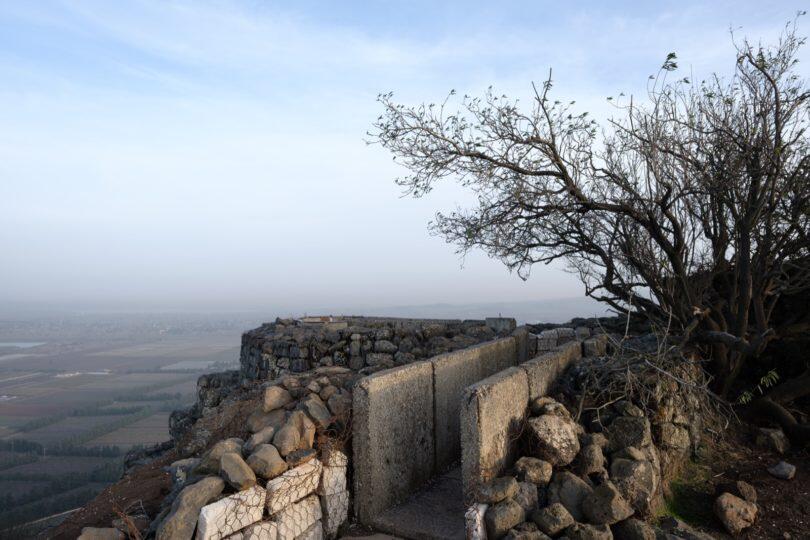
The Golan Heights, 1968

(Incident that failed to appear in any newspaper or radio report: Three unarmed Arab men attempting to steal cattle were killed by an Israeli Army patrol)

Imagine you are a child with a brown crayon
and draw hills: Bump. Line. Bump. Another line.
Imagine you’re a hawk, and circle those hills,
searching for rodents in the dry grass.
Imagine you’re a bee in the busy season
probing daisies, larkspur, overwhelmed by poppies.
Here, winter is mud; spring, flowers; summer, prairie fire.

Imagine you are grown up to be a soldier
perched in a spy tower on a barren hill.
The hawk ignores you.
The flowers grow elsewhere.
The mud finds you, all right.

And now it’s fall, a chill dry season unrelieved
by the bright birds of the lowlands, when on the flat places
tired cattle forage miles for their supper.
Some hard wind of war has swept
the tan stone villages bare.  Herders of sheep and cattle,
artisans, bakers of flat breads, small traders,
people with long deep roots in the stony soil –
when war snapped them loose they blew all the way to Damascus.
There they wait, in camps behind tall wired fences,
for another great wind to blow them back again.
They wonder at how little they weigh in the world.
And their cattle – their milk and meat,
their very sandals to bear them over the rocks –
impervious to rumor, too dull to run,
after all outweigh their masters and remain at home.

But blown by the same fierce wind that tumbled the others,
new masters squat on the prairie.
Milder in the valley, gusts uprooted
only these lightweight ones, the young and thoughtless,
already halfway into the air with pride.
In the green nave of the valley, raised near the sound of waters,
surrounded by the fruit and flowers of their parents’ toil,
these sprouts were haunted.
Always they peered at the highlands, felt watched and blind.
In the pride of their imaginations it was they
who would watch from the heights.  In their hearts’ calculus
all factors faded under the edge that overlooked them,
that frozen wave of rock, a step up in the world.
Toward what, or what the next step might be,
they couldn’t see or care.  When the wind came,
they spread wings of longing and coasted up.

Now they are here.  They look down at their natal valleys,
around at stubble.  The cattle are their cattle.
It was the space they conquered.  They did not conquer
the people, never met, can’t imagine them.
One drunk old man remained, weighted by stupor.
Now he sells canned goods he found abandoned,
trades in sign language, bobs and grins.
He is granted the respect due the insane.

The new masters choose clean spaces.
They avoid the empty villages,
build tin huts or use old army barracks.
The soldiers were Russian.  Transients do not haunt.
The wind shattered all the glass in the one large town;
the streets sparkle.  A child’s rubber sandal, splintered chairs…
no one will live here again but the madman.
Of all this, the cattle only know
their new masters bully them like the old, but ineptly.
They wander farther before men track them down.

Sauntering forth at daybreak from spartan huts,
the settlement cowboys bus to the ranch for breakfast.
Their old army van’s the noisiest thing in miles,
jolting on roads built hastily by the British.
The young men hold on silently, watching
the few colors wake on the desert plains.
Breakfast is boiled black coffee, scrambled eggs,
jokes with the cook and rougher jokes with each other.
Outside, the tough little horses stamp and blow.
Then more rituals: smoothing on saddle blankets,
kicking the horses’ bellies to tighten the girth.
Now the brief sadness of going separate ways:
they are few, the cattle many, and the plains wide.

The cattle are a losing venture, too stringy to sell.
The settlement diner supports the ranch.  Every male worker
longs to be a cowboy.
In the fields and kitchens, each one waits his turn.
They go without new coats to pay for the time
Brahma bulls are imported to improve the herd.
These gallants are guarded at night like any harem,
and led at dawn in stately pearl-grey pageant
out to some waiting cows not half their size.
Things go wrong at once.  They need help mating.
As the fall chill deepens, pneumonia strikes the bulls.
The cows’ knees buckle from the growing weight in their wombs.
By spring all the bulls will die, and most of their mates.
The few survivors birth by Caesarean section
and are too weak to nurse their over-sized young.
The settlers postpone new boots to pay for the birthings
and three pet calves with humps on their small backs
reproach them: you pushed too hard, too fast.

In the villages, untended roses
have reached their splendid, fragrant bloom again.
All summer, what food the gardens volunteered
was eaten by birds and shy four-footed things
still watching for those whose loss
was their small gain.
Those gardeners have not gone far, but only receded.
They know when the army patrols.  Some nights
the old masters, sneaking up
with familiar movements, persuade the cattle
the shortest distance between square meals
lies across the border.
In the morning, the cowboys miss a dozen or thirty.
For a while, the patrols double, and the raids cease.
To the cowboys, what is being stolen
is not meat or sandals but
their mastership, the illusion of peace in war.
When raiders are caught, they learn
to expect no quarter.

Imagine you are a bee among the last roses
on a bush mulched by rubble and broken glass.
Imagine you’re a hawk, circling an old foundation.
In the end of things
there is good hunting.
Roses into wildflowers.  Houses into grass.

By Jane Collins

The Gaza War

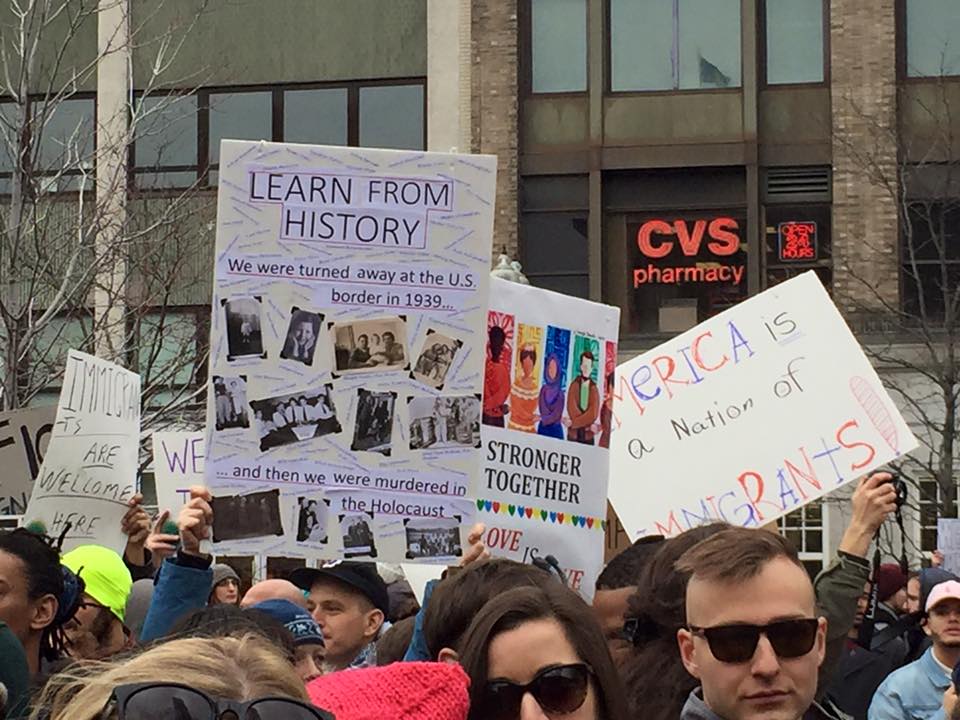
Don’t stand with Israel. Don’t stand with Palestine. Stand for peace.

Since the inexcusable massacre of Israeli civilians by Hamas, many thousands are suffering and dying on both sides. More suffering is sure to follow. Israel has trapped more than 2 million Palestinians in the Gaza strip, where Hamas uses them as human shields. Any attack on Hamas leadership is going to kill civilians. Israel seems determined to deprive that population of food, water, and electricity. Neither Israel nor Egypt has given them a way out of the trap so far.

Both sides have terrible governments, which care only about their own power and not about their people, or justice, or democracy. Horrors have been committed by both sides for decades while the rest of the world has only added fuel to the fire. Both sides have rejected nonviolent solutions. Both sides have killed leaders who worked toward peace.

Americans must push our own far-from-adequate government to send food, water, and medicine
to Gaza; establish escape routes; and use our substantial leverage with Israel to effect a ceasefire and begin peace negotiations with Palestinians who abhor the terrorist strategy of Hamas. No lasting peace can come without justice for the dispossessed.

There is much more at stake here than the fate of the Middle East. I believe human survival depends on nonviolent resistance to war. War not only ruins lives, communities, and environments, it sucks up the attention and resources we need to curb climate change.

If the US had not set a terrible precedent by occupying Iraq in an unprovoked war, or if NATO had not been so aggressive in its recent expansion, perhaps we could have prevented the Russian invasion of Ukraine. If the world had encouraged the nonviolent Boycott, Divest, and Sanction movement protesting the Israeli theft of Palestinian land instead of dismissing it as anti-Semitism, perhaps we could have undermined the fury that supports Hamas.

Vigils, petitions, letters to Congress, and marches for peace and justice might not seem to have much effect. But they hearten participants, create alliances, educate, and with luck might change a vote or two. At the very least they serve to target our real enemy, which is the war machine that has made our country the world’s largest arms merchant, and continues to enrich a few while destroying the planet for the rest of us.

Late Harvest

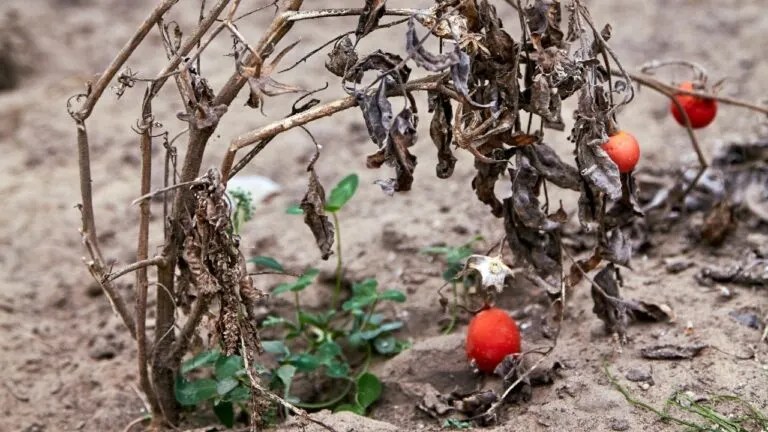
The days are getting short. The sun doesn’t feel so warm, when it shines. Weeds have grown up in the garden. Nobody cares. They won’t stop the last tomatoes from ripening.

Parts of the plants have turned brown and limp. But if you pull one up, thinking it’s dead, you might be surprised by a good-sized fruit at the end of the dry stalk. So you leave the garden looking raggedy, overgrown, with brown among the living green. There are still treasures in it.

Here and there is a small yellow flower or two. The bees know where. The sunflower bushes are swarming with bees, and some butterflies, wasps, and moths. Creatures are still finding nourishment here.

I have lost some old friends recently. One died after a long illness. One is moving to be near family, now that she needs people to check in on her. One has been hospitalized several times; she has to have another operation and she’s terrified. The oldest of all of them is doing well but worries about becoming a burden to her daughter. I’ve always been in good health, but lately, something is going on with my heart.

Are we all dry stalks, then? Or is there still some juice in these old growths?

We live through more rains, more wind and clouds, more sunshine. We hope for a late harvest.

War of the Worldviews

Let’s deal in oversimplifications for this argument. Imagine an extremist Christian man and an extremist Muslim man talking about their beliefs in a living room somewhere. Their discussion grows more and more heated, and, depending on the men’s temperaments, might even come to blows. 

Meanwhile, their wives are in the kitchen, fixing tea and a snack. Are they discussing religion? Most likely not. They’re talking about men, maybe even about the challenges of living with true believers. The men in the living room are fussing. The women are laughing. The real difference in this (terribly stereotyped) scenario, I respectfully submit, is not between the Muslim couple and the Christian couple, but between the men and the women. 

Any time you try to talk about culture you are forced to generalize. If you constantly qualify your projections by acknowledging the wide spectrum of behavior in any one culture, you can’t reach any conclusions at all besides the fact that people are strange, which holds true everywhere. When it comes to human behavior, there are more exceptions than rules.

In general, though, there are two cultures in conflict in the world today. One is dominant, but unstable. The guardians of this culture tend to be “alpha males,” that is, men with a need to be on top of their worlds, who are aggressive, self-centered, ambitious, and willing to resort to violence. This culture has encouraged certain kinds of material progress but results in constant struggle and increasing divides between haves and have-nots. 

The other culture is submissive but stable. This culture is maintained and propagated mostly by women. It is other-centered, conciliatory, patient, and prevents or tamps down violence wherever possible. This culture keeps the human world going, for without it, the dominant culture would tear everything apart.

I’m going to call the dominant culture male, though it includes many biological females. I’ll call the complementary culture female, though it includes many biological males. There is no question about which culture is uppermost today. Anywhere you find hierarchy, whether in a capitalist, nominally communist, or oligarchic society, the male culture rules. Wherever you find egalitarianism, cooperation, and collaboration, the female culture is in charge.

Not every society in history has been ruled by alpha males. Sophisticated justice systems; decisions by councils of elders; inclusive mores that provide for and protect society’s outliers; peaceful agrarian societies: all of these indicate the primary influences of women’s culture.

On the other hand, violence; the heedless destruction of human and other natural resources; the oppression of the lower classes: all these are sure signs that the male culture is running the show. 

Clearly women’s culture evolved around the need to protect children from men’s aggression. If some sector of society did not propagate the values of caregiving, altruism, and sharing, that society would not survive two generations. 

In a world of many languages, where communication was difficult, male culture evolved to settle disputes through physical violence. It would be up to the males whether a tribe’s territory expanded or contracted. The more territory, the more access to game, water, and fuel, the better the tribe’s chances of survival. If you see the world as belonging to “us” or “them”, you want the biggest, baddest guys on your side. 

Our world today hangs in the balance in more ways than one. Scientists tell us that our behavior over the next decade or so will determine whether global climate change continues at a pace likely to doom our (and most other) species, or whether it will moderate to a manageable level. Nuclear proliferation proceeds at a rate where unstable regimes and non-state actors have access to weapons that could render the planet uninhabitable except by cockroaches and rats. Water pollution and over-use is at the point of making entire countries vulnerable to death by disease or famine.

Whether our species survives these crises depends upon another balance: the balance between male and female culture. Male culture has ruled, nearly planet-wide, for centuries, cementing its hold though tyrannies and then through the spread of capitalism, which values and rewards selfishness, aggression, and greed. But the destruction that attends these values is catching up with us. More and more people realize that we could very well do ourselves in if we continue on our current path. 

Meanwhile, female culture has begun to strengthen in ways unimaginable a century ago. Women’s liberation has barely begun, but its effects are threatening male dominance in every society. Some ancient techniques (violence against women and LGBTQ people, veiling, double standards on sexual experience) and some new ones (high heels, sexualization of younger and younger women, co-optation of women leaders) work against women’s rise, but the trend continues. Women have gotten the idea that they should participate fully in public life, and they are insisting on their right to do so. What has given this idea such strength and persistence?

I believe that deep in our collective unconscious, we know that women’s culture must assume dominance if humanity is to survive. We must stop hurting one another and start taking care of one another; we must stop wasting resources, and learn to conserve; we must clean up the messes we have made; we must stop rewarding greed, and place more value on sharing. Only women’s culture carries the tools and techniques to bring about these changes.

This necessary revolution, which seems so radical, would actually require only a shift in the balance of cultures. We just have to listen more closely to what Jung called the anima, the feminine side of our consciousness. The center in us that corresponds to female culture – the center of nurturing, caring, sustaining values and behaviors – must gain our respect, as it is the key to our species’ survival.

The movement toward women’s liberation arises from the deepest place in ourselves: the part that wants to live, and wants our children to live. Right now, many of the stories we tell ourselves are generated from our fear that survival is not possible. Even though every one of us contains the seeds of a new world, we despair of the possibility that they will grow and thrive.

When we choose our leaders, we should ask ourselves which culture they embody. We need more representatives of female culture to set public policy, whatever their gender. We need more women in positions of power, not because women are that different from men, but because they have been the custodians of the set of values around which our species must reform its behavior.

Those women laughing in the kitchen do not need to come into the living room and argue with the men. No: it’s the men who need to come into the kitchen, drink the tea, eat the cookies, and learn to laugh with the women. 
Intersectionality

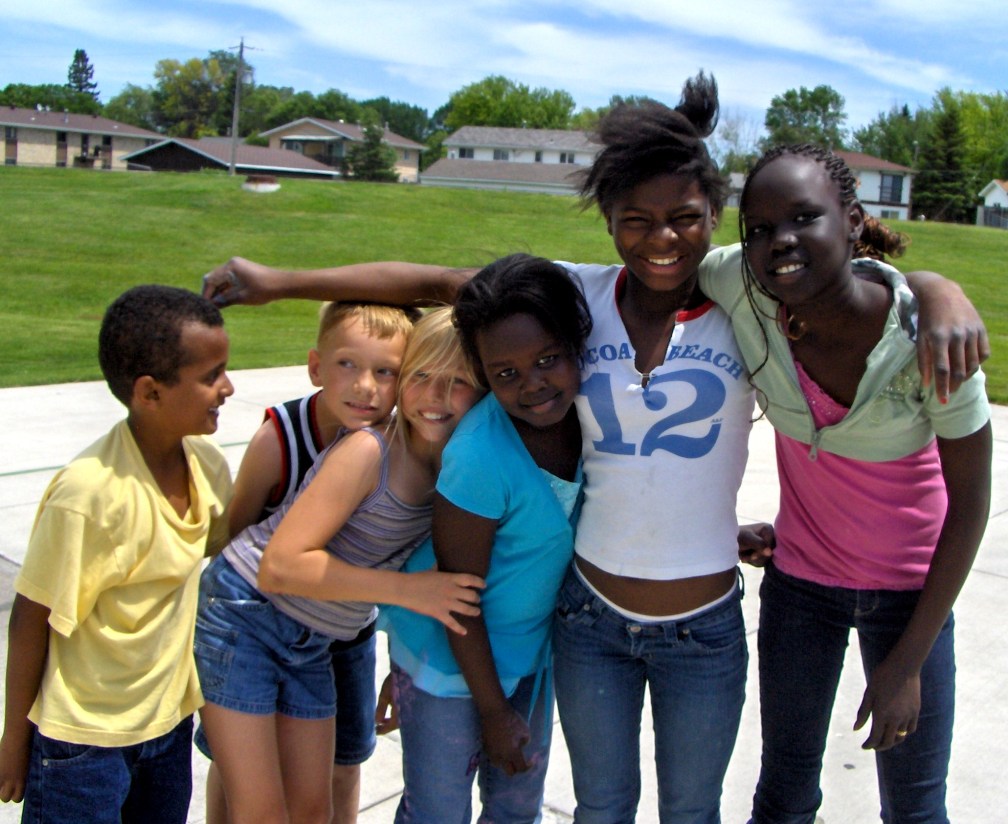
Sometimes, in our culture, it seems the individual is all that matters. Life is about me: my career, my wealth and status, my history. We talk about intersectionality, the many identities that make up one person. What about intersectionality among people, rather than within them? Isn’t that our most important circumstance, as a species?

Say one person is gay, male, white, urban, and Jewish. Another is straight, female, Asian, suburban, and Buddhist. According to what is usually meant by intersectionality, one might expect them to have little in common. But they both love dogs; they’re both poets; and they’re both passionate gardeners, though the guy’s plants are all in pots on his balcony. How different are they?

Ethnicity, gender, religion – these are aspects of the self that help us feel part of groups larger than our immediate friends and family. These aspects are endlessly fascinating. They take up most of our public discussion. Yet they represent a fraction of what a person actually is. More of our couple’s thoughts and daily activities are likely to concern their dogs, their poems, and their plants than any of the supposedly more significant aspects of their identities.

Ethnicity, gender, and religion are stories we tell ourselves. These histories are important and yet, to a degree, imaginary. They help make individuals what we are. But how have they come to outweigh other aspects so much that we sort ourselves into such narrow categories?

This sorting is far from accidental. A very few people have accumulated most of the economic and political power on this planet. So long as Black and white, male and female, Hindu and Muslim, are convinced we are significantly different, we can’t get ourselves together to challenge that power. One only has to look at Trump, Xi, Putin, Modi, or any other authoritarian to see that they deliberately foment enmity among ordinary people.

Imaginary boundaries keep us fighting one another, instead of taking charge of the planet, which the current culture is ruining for everybody. Preventing ordinary people from organizing is a short-sighted strategy on the part of elites, since their grandchildren as well as ours will have to inhabit this poisoned planet. But the elites, being human, are not good at taking the long view.

The internet gives us new opportunities to take down the walls we have built. Rapid and radical climate change gives this project new urgency. Online, people can identify with other dog lovers, poets, or gardeners. One’s ethnicity, gender, and religion can begin to appear less relevant in these circles. Old associations give way to new. Meanwhile, racist, ethnic, and anti-LGBTQ violence reinforces the old boundaries. Hate crimes are committed by people who depend on those boundaries for their whole identities. The increasing violence points to the degree that such people feel threatened. Whenever there is peace, the old boundaries erode.

The Black Lives Matter movement drew in white as well as Black people, not just in the US but globally. The (nearly all peaceful) demonstrations centered on the suffering experienced by Black people for no reason except that their skin color put them on the wrong side of an imaginary wall. Earlier, the Occupy movement also spread around the world. Wealth is another imaginary wall that causes great suffering to people on the wrong side of it. In addition, the environmental movement and the #MeToo movement are global or in the process of becoming so. All these movements indicate that at least some people are beginning to see ourselves as human first, with every other aspect of ourselves being less significant than that primary, leveling, identity.

Every human is clearly a unique world unto themselves. Every human is also 99.9% exactly like every other human. If we focus only on the individual, we just see the actions of one person, subject to chance, a sort of Brownian motion, like the movements of a particular molecule. If we’re interested in the larger movements of our species, we have to consider that most obvious and invisible thing: our culture.

The paradox of being human is that the essence of our personality provides a through-line in our lives; we carry that essence with us, like a smell or a sound that only we can produce. Yet we change constantly. Every day brings us new experiences, and every experience changes us, becomes part of who we are, whether or not we think about it or remember it.

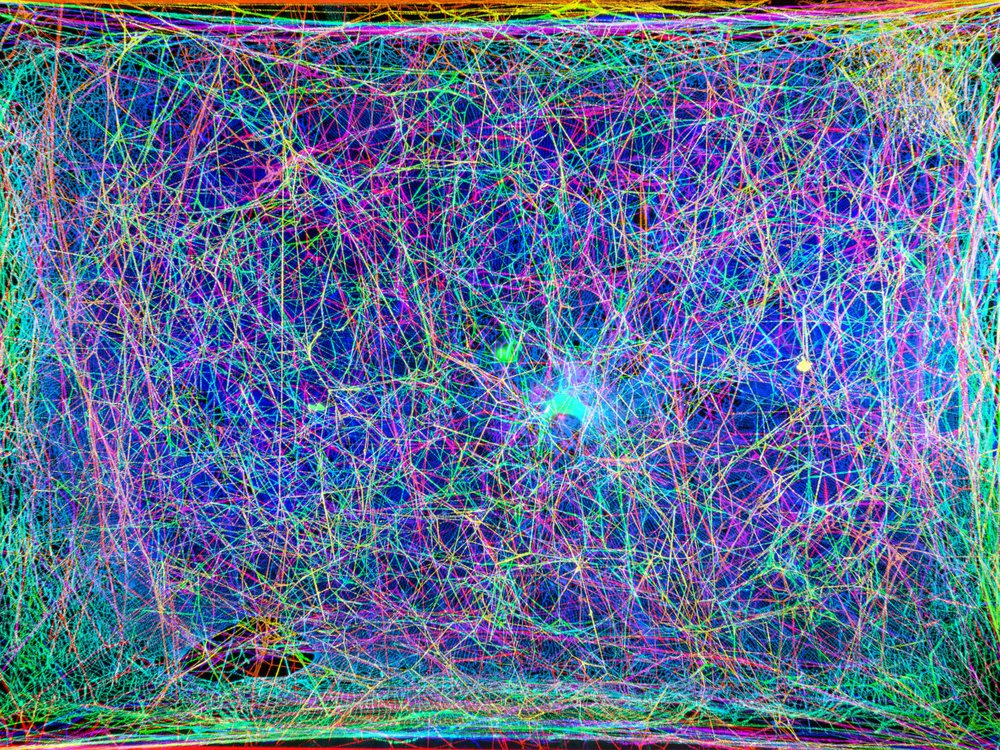
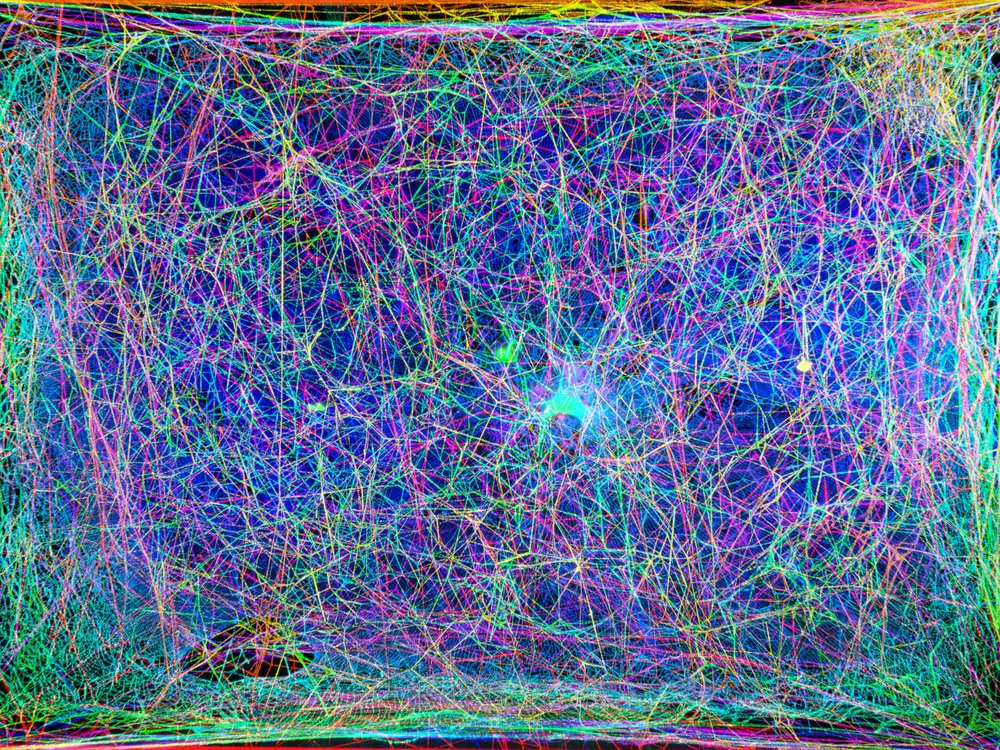
Imagine if we could see the connections between us. Every meeting would form a line. More meetings would make a stronger line. There would be lines between clerk and customer, police and criminal, writer and reader. Instead of a universe of separate points, we would see a dense network in which no point existed in isolation. The loneliest individual, after all, would not have survived infancy if someone had not fed them and wiped their bottom.

This dense network of connection, though impalpable, is who we are. This is the reality of our species. Like the individual, humanity has through-lines. The constant is human nature. The flux is culture, which never stays the same, one day to the next.

We can’t change human nature. We can, however, change culture. Everything we say or do changes the culture, as well as everything we buy, or boycott, everything we listen to, argue with, dismiss or support. In such small increments, the body of humanity moves. In what direction are we moving? Tiny cells in the body of our species, we can hardly tell. All any of us can do is move in any way we are able toward peace, sustainability, and justice. And hope.

Broadcast News: April 25, 2023

It’s so weird how the major networks frame the news. A case in point is Nora O’Donnell’s CBS evening show on the day Biden announced his run for re-election.

The only issue CBS raised was Biden’s age. An interviewer on the street asked two young women for their opinion. One was white, one black – perhaps the network’s idea of balanced perspectives. Both thought Biden was too old to run. 

Trump appeared twice in this broadcast. The first time was a clip of him declaring that “you could take the five worst presidents in American history and they would not have done the damage Joe Biden has done.” One doubts he could name those five presidents, but never mind. What damage, what evidence? CBS does not comment or counter. Trump’s second mention was for the opening of his trial for sexual assault and defamation..

CBS followed the “worst presidents” quote with a finding from its recent opinion poll, in which they asked people “Are things in the US out of control?” and 72% answered yes. What did they mean? Mass shootings, climate change, the debt ceiling? A ridiculously vague question, no explanation of the response, and the blame for whatever problems respondents had in mind is tacitly placed on Biden. 

Later on in the same broadcast, O’Donnell ran a piece about Harry Belafonte, who died that day at the age of 96. The piece said he was an activist for social justice “during the civil rights movement,” even though he was an activist his whole long life. Clips proved he was still vibrant, articulate, passionate, and compelling in his early 90s. 

So does advanced age mean a person is unable to fulfill important public functions? According to this broadcast, the answer is yes in Biden’s case, but no in Belafonte’s. 

If the networks hadn’t given Trump $3 billion worth of free publicity during the 2016 campaign because he was so entertaining, he might never have become president, never encouraged the resurgence of white supremacy, never roused his followers to support police violence or misogyny. Maybe now things in this country would not feel so out of control. 

This broadcast also covered Texas storms with “hail bigger than ping pong balls” and more floods in Florida, and somehow failed to mention climate change. 

CBS newscasts are very similar to those of ABC and NBC. All three networks usually cover the same stories, in the same way, and often in the same order. They rarely mention other countries, unless American citizens are involved. They don’t use graphs or charts even when using them would be the most effective way to communicate what’s going on, as with COVID or climate change. And if they lean left, as common wisdom tends to suppose, they sure have a funny way of showing it.

Made Stupid

It’s depressing how little most Americans know, and how little they want to know. The refusal to wear masks or get vaccinated is only one example. More Americans believe in angels than in evolution. Enough Americans believe that Trump won the last election to put our democracy in real danger.

People are not born stupid. Anyone who has been fortunate enough to spend time around babies knows that we’re born curious, observant, and eager to connect the dots of experience. It takes years of conditioning to make people stupid.

Our consumer economy relies on an adequate supply of stupidity. If we could not be convinced to buy stuff we don’t need, the bottom would fall out of the global marketplace. Today’s deep hole would look like a pockmark. A critical number of Americans must believe that this perfume will make us sexy, this car will make us happy, this drink will make us high achievers. No ad suggests we should save our money or cut our consumption. We are trained to keep shopping.

photo by Phoebe Potter

Stupidity training starts as soon as we plunk a baby in front of a screen. The ads never stop after that, telling our children to want things that their families can’t afford, making them hungry for food that is bad for their health, convincing them they must have toys they would do better without. The average American child views more than 40,000 television ads every year, and more through social media. There is no counter-programming in schools, although learning how to spot a con should be required curriculum.

By default, we leave counter-programming up to parents, but most parents aren’t home to teach it. Ever since the cost of living outpaced income growth in the 1970s, it has taken two incomes to support a family. Women were forced to go to work whether they wanted to or not. The question of who was going to take care of the children was never faced by the federal government. Every family had to figure that out for themselves. Often the answer involved unqualified caregivers, or no caregivers at all – inaugurating the age of latch-key kids.

Now we have had more than two generations of children who were left pretty much to their own devices after school. Unfortunately their devices were usually television, or, more recently, cell phones.

Meanwhile, public education has been steadily degraded, although teachers and administrators still try valiantly to make it work. Republican administrations particularly have had it in for education; a well-informed public trained to observe, analyze, and think critically would never support cutting taxes for the rich, or waging unprovoked war, or subsidizing the fossil fuel industry. In other words, it would never elect Republicans.

Shortly after President Carter created a cabinet-level Department of Education, Reagan called for its total elimination, and succeeded in severely cutting its funding. When Reagan entered office, the federal share of total education funding was 12%; when he left 8 years later, the share was 6%. His Education Secretary, William Bennett, a neoconservative, oversaw these cuts in order to weaken public education in favor of private and religious schooling.

George W. Bush signed the No Child Left Behind Act, which punished poor schools for failing without funding effective remedies. Trump put Betsy DeVos in charge of public education because of her lifelong devotion to private education.

Racism has played its part. Once public schools were integrated, white parents began to take their children out of the system. People with money put their children in private schools or moved to rich suburbs where taxes on expensive real estate resulted in good public schools. This removed parents with power and influence from PTAs and school boards in disadvantaged neighborhoods. White people with less money turned to religious schools.

Private schools make sure kids learn a second language early, experience music and arts, take field trips to museums and farms. Poor kids enter the lottery for charter schools or do without all that. Their teachers are forced to “teach to the test,” without the flexibility to teach anything but basic math and literacy. Most of the things that make school fun have disappeared.

State and local education funding account for 90% of what we spend on schools. School budgets were cut by an average of 7% during the decade following the 2008 recession, with predictable results. The 2015 Programme for International Student Assessment study of 15 year olds ranked the US 38th out of 71 countries in math and 24th in science. Less than half of Americans are proficient readers. The pandemic, and the remote learning it required, has made things immeasurably worse.

4 out of 10 Americans believe humans and dinosaurs coexisted. 1 out of 4 believe the sun revolves around the earth. Almost half believe in ghosts. 4 out of 10 think homosexual people choose their own orientation. The poll didn’t ask why they think anybody would do that. 6 out of 10 believe that dreams predict the future. An astounding 3 out of 4 believe there is indisputable evidence that alien beings have visited Earth. How far away do they think the nearest stars really are, and do they know that the speed of light limits how fast anything can travel? The answers would indisputably be disturbing.

Possibly even more significant than American ignorance about science is our ignorance about our democracy. Only 9 states and Washington DC require a full year of education in civics or US governance. Most states require half a year. 11 states require none at all. Until the 1960s, most schools required three separate courses on American government.

Nearly half of Americans cannot identify the three branches of government. 1 out of 4 believe the USA won its independence from some nation other than Great Britain. 3 out of 4 do not know that the Bill of Rights prohibits the establishment of an official religion in the US. Most Americans believe we spend around 25% of our budget on foreign aid; the real figure is under 1%.

Ignorance is self-reinforcing. If you’re ever embarrassed by not knowing a subject, it’s much easier to mock the people who do know it as intellectual snobs than to learn about it yourself. You’re managing to feed and clothe yourself, so you really didn’t need to know that thing anyway, right? And it’s a comfort that your friends don’t know it either. Gradually, we have slid into a situation where knowing things makes a person different, alien, not normal.

We can stop being so stupid, but it’s going to take time and money. We can hire more teachers and pay them much better. We can stop funneling public money to charter and religious schools. People who believe in education can run for school board. We can put civics, history, geography, and the arts back into curricula. We can lengthen the school day and invite community members in to teach what they know.

Intellectuals and academics can venture out of the ivory tower and start talking to the rest of us again. The media might consider what we need to know in a time of drastic climate change and food insecurity, instead of feeding us the empty calories of celebrity gossip.

Stupidity might be good for the corporate bottom line, but it’s terrible for humanity’s bottom line. We got this far by being smart and creative. We can only keep going if we wise up. Vote Democratic. It’s our best shot at surviving our epidemic of Dumb.

Quality of Life

We’ve been told it’s the things we have that make up our quality of life. That’s only part of the truth. We must have enough to eat and drink, and some place to get out of the weather. If we’re going to eat our food cooked, we need things to cook it in. Stuff does pile up around us; we’re messy, curious, greedy beasts like magpies or packrats, but we don’t have to make a virtue out of it.

Some things do make lives better, though they’re not usually the things advertisers are trying to sell us. Plumbing, for example, is a really good idea. Fashion is not only fun, it keeps clothing on everybody. The rich change clothes every season and their leavings filter out to everyone else.

Whatever we have, we can do without or make new, except for people. Only the people we’re close to are irreplaceable, our family and friends. We can lose a neighbor sometimes and go on all right, but it is devastating to lose a whole neighborhood.

Real quality of life depends on how we feel. If we’re healthy, and the people we love are healthy, and our household is peaceful, that’s worth any amount of money and any pile of stuff. If we’re suffering in mind or body, few things can comfort us.

Beautiful things soothe, please, and excite us, in the moments when we truly notice them. Art can improve our lives if we pay attention to it. Being in natural surroundings, where beauty continually renews and reinvents itself, comforts and sustains us. Many broken hearts have begun to heal in the woods and on rivers.

Community is precious. Fellowship is precious. That’s why a lot of people go to religious services. We get to feel kinship with the people around us. Community, fellowship, friendliness, peace: these provide real quality of life.

Networks of people are not material things. They are emotional and intellectual connections of shared experience. These invisible things, beyond what we can hold or measure, keep us alive.

The rest is landfill.

Atheist’s Bible: Apocalypse

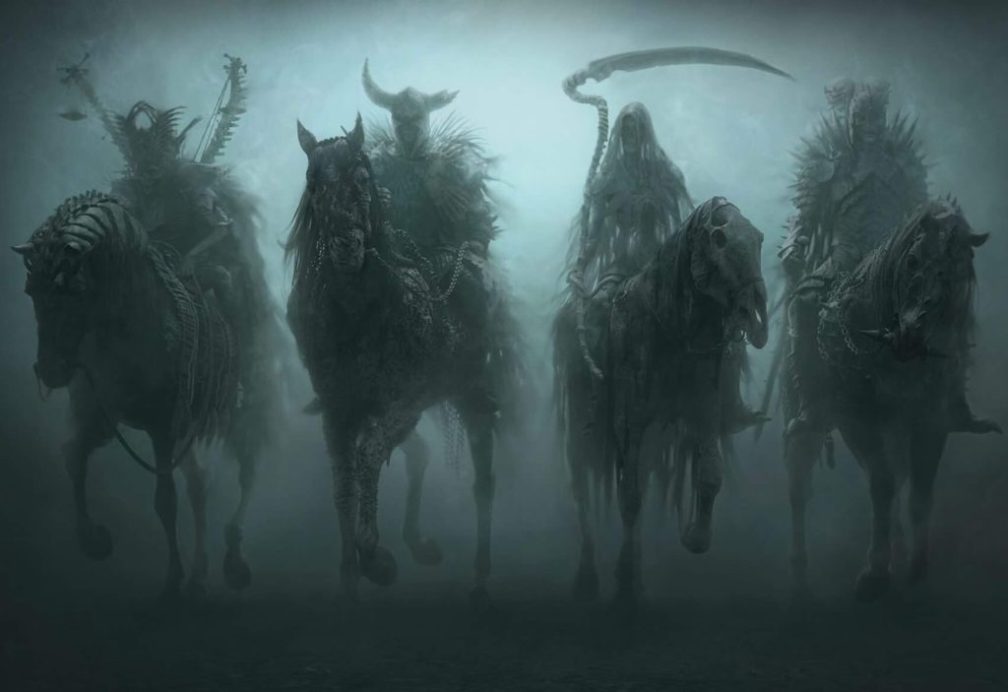
The Four Horsemen appear on the news every day: war, disease, famine, environmental catastrophe. Gee, who could have seen this coming? Whoever wrote the Book of Revelation two thousand years ago, for one. None of these things are exactly new in human experience. Since humanity decided to base our civilization on greed instead of compassion, this has been an easy prophecy to make.

The thing about prophecy is that it’s meant to scare people into changing our behavior. If it works, the direst predictions won’t come true. The prophecy makes the threat of extinction both vivid and immediate. We already know that our current path is not survivable. We just think we can keep going a little while longer, in spite of the evidence. Addicts need to “hit bottom” before they quit doing whatever is killing them. Has our society hit bottom yet?

Not the Neighborhood Watch

All our addictions – to drugs, to war, to fossil fuels, to accumulating stuff – stem from humanity’s central problem: how to keep from being ruled by the worst of us. The problem shows up in Putin’s aggression, Trump’s hatefulness, Big Oil’s continuing lies. The solution is not any single hero coming to save us. The solution is the best of us, working together.

Addicts endure going cold turkey through the love of friends and family, the encouragement of others in the same situation, and inner strength. The same things apply to all our addictions. If people can quit drinking, we can quit buying plastic junk. If one fragile, needy individual can stop smoking, this fragile, needy species can stop war.

Right now, the good guys are terribly disorganized. We’ve allowed ourselves to be separated by nationality, ethnicity, religion, gender identity. Even our do-gooder organizations are separated by the causes they support, as though peace and justice and environmental sustainability were not deeply interdependent.

National boundaries, financial wealth, and all the other barriers to our solidarity are products of human imagination. Apocalypse, on the other hand, is the furthest thing from imaginary. It will be the only reality if we remain divided behind those barriers instead of getting ourselves together.

Like it or not, this is our planet. It’s time we start owning it. Here’s another 2,000 year old prediction: the meek shall inherit the earth. If we do, it won’t be a moment too soon.

Panicking? Good.

Not a moment too soon.

Panic is a natural first response to the awareness of what a terrible spot humanity is in. Despair often follows the panic. We have to calm down, and cheer ourselves up, before we can get to the real, urgent, practical work of saving the world.

Human-caused climate change is happening faster than even the worst pessimists predicted. The fires, floods, and droughts scare more people all the time. We are beginning to understand the harm we have done to ourselves and this beautiful earth. If enough of us are afraid enough, we might change our behavior before it’s too late. In a way, fear is our only hope.

Some have moved from denial straight to despair. That is natural but convenient. Despair lets us off the hook. Why take the trouble to change if we’re doomed anyway? If we believe human survival is impossible, we won’t even try to fight. But it’s not impossible; it’s just unlikely. There’s a big difference.

We know what to do. Reduce, re-use, recycle; cut way down on fossil fuels, plastics, military spending, and meat; educate women world-wide to curb population growth; prepare for mass migrations; and so on. But how do we do any of this when most of us feel so powerless, and we seem stuck with the status quo?

We do it through changing a culture that glorifies violence and greed. Each of us creates our culture every day, in what we buy, where we go, what we communicate. When we make different choices, we change the culture.

We’ve built our present world by imagining every detail. Everything we see around us is a product of human imagination – in fact, of countless imaginings. Money, status, nations, religions: all of these things are imaginary. When we think about them differently, they change. Now we must imagine a sustainable world where humanity and other species can thrive.

This is a time to rally ourselves, not give up. As has been said, it doesn’t matter what we did. What matters is what we do once we know what we have done.

My Abortion

It was 1971. I had just graduated from college. My only income came from making and selling papier mâché puppets in Harvard Square. That was enough to pay my expenses, since I shared a house in the country that had no running water, electricity, or telephone. When my housemates and I needed to go to town, we walked two miles and then hitchhiked from the main road. It was a good life: my first taste of freedom. I felt calm and happy, full of possibility.

Then I found out I was pregnant.

I panicked. To say I was not ready to raise a child is a huge understatement. I had just left a long-term but unhappy relationship and begun to see the love of my life, but we were so different that I wasn’t sure it would work out. And I wasn’t sure which boyfriend was the father.

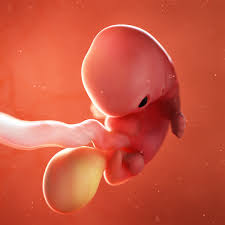
Fetus at 7 weeks, larger than life size

I’d been using a diaphragm and spermicide. This method of birth control is supposed to be 92 to 96% effective. I was among the 4 to 8% of women who get pregnant anyway. At this point in my life, pregnancy was an existential horror.

Abortion was illegal in New Hampshire. We had to get to New York, where Planned Parenthood was charging $250 for abortions. We did have that much, but only just. My new boyfriend and future husband owned a functional car. One of his friends loaned us a biofeedback device, which somehow measured your brain activity and beeped to let you know when you were calming down.

We went straight to the clinic. I attached the electrodes of the device in the waiting room. The nurses were fascinated with it and asked me a lot of questions, which I answered by talking about meditation. The procedure didn’t take long and didn’t hurt much. The nurses said I was the only woman they’d seen who smiled all the way through. I wasn’t happy. I was ending a life before it could begin. But it felt completely necessary and I was at ease with the decision. I still am.

Most of the women in the recovery room were weeping, though.

Afterwards, I felt weak and shaky, and I was bleeding quite a bit. A friend was letting us stay at their house in Long Island for a couple of days. To get there, we had to cross a bridge with a toll we hadn’t expected. We stopped the car and searched under the seat cushions to scrounge enough coins to pay the fee.

The only thing I remember from that stay in Long Island is watching a small cat try to kill a large rabbit. They were evenly matched. The cat hung on to the back of the rabbit’s neck while it hopped across the street. Then the cat found its footing and dragged the rabbit back across the street. This happened several times. Finally the cat gave up and the rabbit hopped away.

A couple of years later, I married the man who drove me to New York. We’ve been together for 50 years, through richer and poorer, in sickness and health. We have three children and three grandchildren, all of whom are way above average, and whom we love with all our hearts. None of our family would be here now if I had let that first pregnancy come to term.

There are many things in life that are beyond our control. Pregnancy should not be one of them. If you don’t like abortion – and nobody likes abortion – fight for free and easily available contraception. That would keep this sad procedure to a minimum. But women will not stop getting abortions if they need them. Having a baby determines everything for a woman – at least it does for women who are not rich. If you are forced to have a baby when you don’t want to, you are not a free person, and America is not a free country.

More Adventures with Homeless People

Talk radio is a tough medium. Hosts can be hostile; callers are often abusive. Liberal pundits avoid these venues, where they come under attack with no one to defend them. Facts turn out to be puny weapons against ignorance and prejudice. But the guests on this particular show were as tough as the medium. And they came armed with more than facts. They had stories to tell.

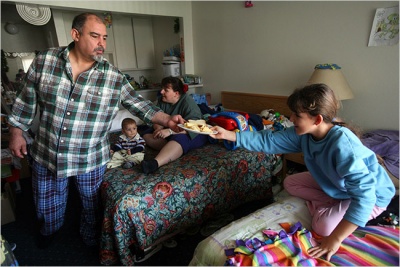
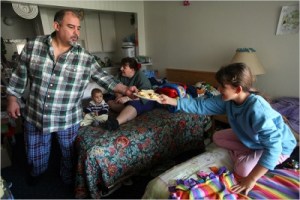
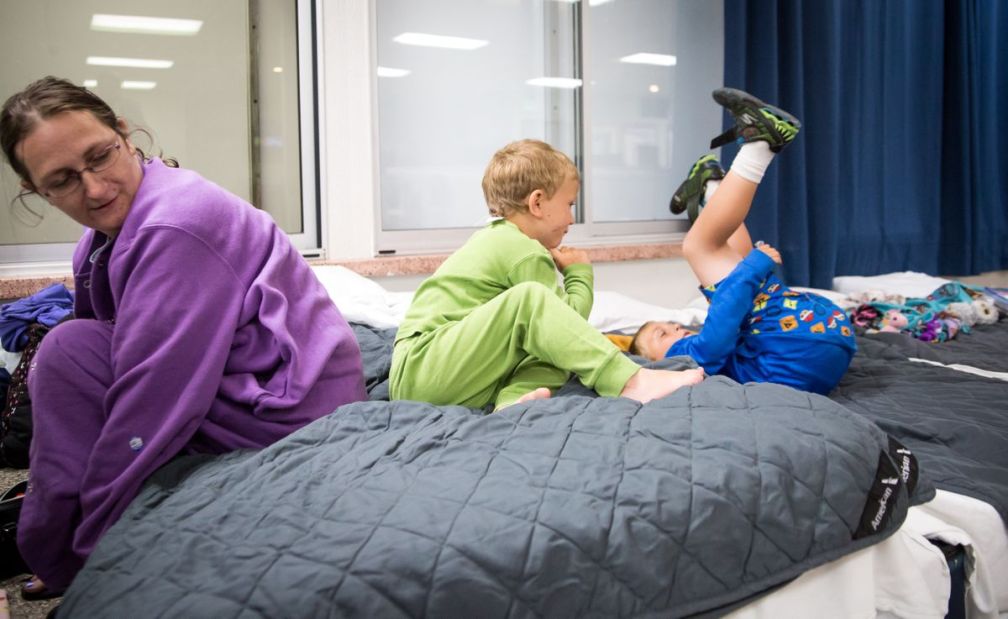
More than 30 years ago, I sat in the green room at WRKO in Boston, watching four women battle with host Gene Burns and his right-wing audience. These women were homeless along with their children. They were living in welfare motels and time was running out on their stays. If they couldn’t find anywhere to move when their time was up, the state would put their kids in foster care and they’d be on the street. They had nowhere to move; if they hadn’t already run through all their options, they wouldn’t have been in the motels. They were desperate. They were angry. They had nothing left to lose.

Burns expected these women to be victims, or leeches. He had no idea who he’d be dealing with. These women were warriors.

TriCap, a local anti-poverty agency, had hired me to organize people on welfare, scraping my poverty-level salary from the dregs of federal and state programs. I got to know dozens of homeless parents over a year of meetings. These four women were among the most articulate and clear-minded people I had met. They had been training for this show one day a week for a month.

In Massachusetts, families can only get shelter if they go through the whole eviction process, waiting until the Sheriff throws all their belongings out on the street.
photo from Bread of Life in Malden, MA

At our first training, the women told their stories. One survived a serious illness but lost her job. Another one’s husband disappeared with their car and their life savings. Another fled a man who had raped her daughter. The fourth had been trying to escape dependency by going to college, until the state raised the fees so she could no longer afford rent. The women critiqued one another’s stories: be sure to tell that part, maybe leave those details out.

At the second training, we brainstormed how to respond to the worst calls they might get on the show. They came up with witty rejoinders to every ugly assumption, corrections for each common misunderstanding. They practiced responding calmly to name-calling. We laughed a lot that day.

The Massachusetts Coalition for the Homeless sent a policy wonk to our third meeting. She handed out one-page fact sheets and the women quizzed her on state policies. That was a serious discussion. We had pizza, and they brought leftover slices back to the motels where volunteers had been taking care of their kids.

Our fourth meeting wasn’t really a training. The only thing we did was tell our birthing stories. Only mothers can stand all the gory details, and even relish them, if mother and baby survived. By the end of that day we were sisters.

Burns had booked the women for the first hour of his four-hour show. After that hour, he called me in the green room to see if they could stay another hour. He did that twice more. When they started talking, he was skeptical and condescending. But as they answered his questions honestly, and met his listeners’ nasty comments with humor and understanding, his attitude shifted. Eventually he started saying things like “I can’t believe this is happening in America” and “This is such a cruel system, we have to change it.” Even his callers began to show some respect.

The show ended at 2pm. Burns thanked the women, praised their intelligence and courage, and then told them the station wanted to treat them to lunch at a nearby Italian restaurant. That was the first hot food some of them had eaten in months. They weren’t allowed to cook in the motels. Everyone got boxes for the leftovers, to give their kids.

We had to take three trains back to our ride in Revere. An old man was playing guitar in the Park Street subway station where we waited for the first train. He began to sing “Dream a Little Dream of Me,” a standard by Doris Day that everyone seemed to know. We sang along.

Sweet dreams till sunbeams find you
Sweet dreams that leave all worries behind you
But in your dreams whatever they be
Dream a little dream of me

When our train came in, I gave him my box of leftover lasagna. After we got on board, he blew us kisses while we waved and smiled.

Burns told us that his show reached 100,000 people. Two weeks after the women’s show ran live, he played the whole thing again, on Mother’s Day. Who knows how many minds the women changed. Maybe the strength they showed that day was enough to bear them through whatever came next. But I don’t know what happened to them. Their time at the motels ran out, and in those years before cell phones and email, we had no way to stay in touch.

Today, the US is about to experience a new wave of homelessness, worse than the one Reagan caused when he destroyed affordable housing programs in the 1980s. There have been eviction moratoriums during the pandemic, but they don’t cover everybody and they can’t last forever. Sooner or later, the rent will come due. Many renters won’t be able to pay. Some will find new, cheaper housing. Some won’t.

There are still talk radio shows people listen to while they drive to work, and podcasts galore. Pundits will share what they think about homelessness. I hope somebody remembers to ask the homeless.

Adventures with Homeless People

The women were nervous when we entered the Statehouse. They had chatted excitedly all the way from the welfare motel in Everett, where two volunteers with vans had picked us up. But now the sight of the enormous gold dome, the series of broad granite steps, and the lofty, echoing marble entryway intimidated them into silence. I handed out the information packets we had written together. Before they split up to go to various legislators’ offices, I reminded them that they were the experts. They were here to educate their elected representatives about family homelessness.

I was here as a baby-walker for one mother who couldn’t keep her infant quiet while she was sitting still. He slept on my shoulder as I wandered the halls. I was also responsible for a four-year-old, antsy from months of confinement in one room, who darted around touching things but came when I called her. I consulted my hand-drawn map to find the offices where we had made appointments. Sometimes the doors were open, and I could see the women talking calmly to the men behind the desks. During our training sessions, I tried to build their confidence by assuring them that they had built-in advantages communicating with the reps, since they were women and the reps were, well, men.

At one point, the elevator doors opened near me and my small charges. In the elevator stood that redheaded scourge, Barbara Anderson, then head of Citizens for Limited Taxation, and her coterie of tall white men in suits. While the doors stayed open, I blurted: “You’re kicking families out of their housing! You’re hurting old people and sick people! Shame on you!” Everyone in the elevator looked over my head, stone-faced. The little girl asked me why I yelled at that woman. “She’s part of the reason you and your mom had to leave home, honey.”

This was an emergency situation, even for people whose whole lives were one long emergency. Massachusetts was planning to kick hundreds of families out of shelters and motels when the federal funds ran out, refusing to pick up the tab for their stays with state money. That deadline was approaching for many in the following week. These were women and children, and a few men, with absolutely nowhere else to go.

It was the late 1980s. Reagan was tough on poor people and all the programs ever designed to help them. I had been hired by an anti-poverty agency with the dregs of state and federal funding to organize people on welfare. People on welfare, I soon discovered, did not want to stick their heads up for fear of losing the little they had. They were happy to meet once a week and eat free doughnuts and complain about the system. They provided good support for one another. But they were not going to speak out in public and risk coming to the attention of the authorities, which could cut off their benefits for any reason at any time.

Families in the welfare motels, however, were facing eviction from their last housing option. They had nothing left to lose. They were angry, and scared, and they were ready to fight.

The welfare motels were terrible housing, but better than nothing. Several kids could be crowded into one room with their parent. There was mold; there was falling plaster; there was broken plumbing; there were cockroaches. The hotels would not allow hotplates so all their meals were cold. Children had no place to play, and often could not reach the schools in their home communities.

Parents were already traumatized. Some had suffered an accident or illness that made them unable to work for a time. They lost their jobs, then their housing. Some had gotten the short end of the stick in a divorce. One married her high school sweetheart and soon got pregnant. When the baby was born, her husband left her, disappearing with their car and all the money in their bank account. Some women had children with medical problems, and the only way to get health care for them was to leave their jobs and go on welfare. Many of these families had suffered actual eviction, where they watched as sheriff’s deputies carried their belongings out to the street.

The women told their stories to the legislators. They also dispelled some myths. Most people on welfare were white. Less than half of all families on welfare had access to any public or subsidized housing. The majority had worked full time until they no longer could, often because they couldn’t afford childcare and refused to leave their children alone. Some had worked part time, under the table, because every dime they admitted to making came out of their welfare check, which was about half what they needed to survive. Sooner or later they couldn’t make the rent. They and their children couch surfed with friends and family members until they got kicked out. Some had already lost a child to the foster care system because they had no safe place to stay.

We met up at the agreed-upon place and time. The women were exhausted. On the way home, they talked about the legislators’ reactions, or their lack of reaction. None of the legislators had known about the planned evictions until the women told them. Some of the moms said they had spoken with a reporter for a local news radio station, the only media person who responded to the press release I had sent to so many.

Back at the hotel, we all crammed into one room to watch the six o’clock news on tv. We were astounded to see the state welfare commissioner make a statement, in the midst of camera flashes and boom mics. The state had never planned to evict homeless families from the hotels, she said; that was all a misunderstanding.

In the motel room, there were screams and laughter and hugs and tears. These women were warriors. They were fighting a war against impossible odds. But today, on this battlefield, they had won.

Not the 99% but the 100%

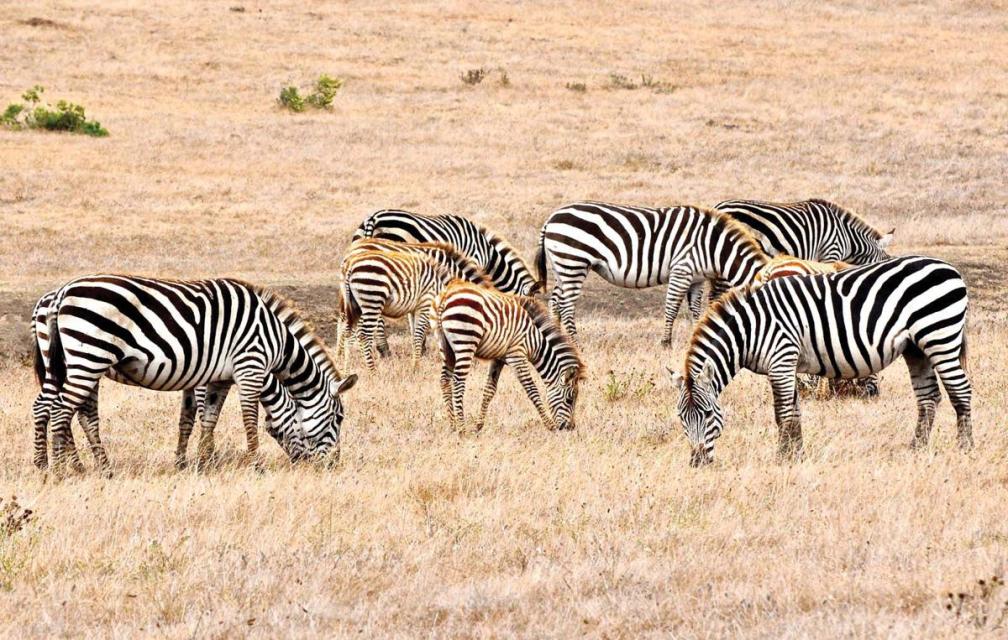
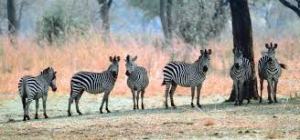
Ants, zebras, monkeys, snakes: each member of a species looks and acts pretty much like all the rest. They can tell one another apart, but we can’t, unless we study them closely. The differences are tiny; the similarities, vast.

The same goes for humans: each one of us is unique, but we’re as alike as snowflakes. No person’s history, character, or appearance is the same as any other’s. These variations are endlessly fascinating. We need them; they are how we tell one another apart. But they form only a tiny fraction of what we really are.

Science tells us that all humans are almost exactly the same. Day to day, we ignore that knowledge, though it explains a great deal.

Why can a good actor portray a wide range of characters? Why, when we go to the movies, does the whole audience agree on who is the good guy and who is the villain? Why do we laugh and gasp in the same places? How can good novelists get us to understand people we’ve never met, and who in fact do not exist?

Because people are pretty much all the same: variations on the theme of being human. Shouldn’t we be talking about this theme and not only its variations?

Our dominant culture emphasizes the individual — one’s career, one’s wealth, one’s behavior — even though these things usually matter only to that individual and perhaps a few relatives and friends. We pay much less attention to our behavior as a species. Yet it’s our bad behavior as a species, not as individuals, that is endangering the future of humanity.

There’s a lot of talk lately about “transhumanism,” the attempt to transcend human limits. I believe that before we can transcend humanism, we must achieve it.

The problems that threaten human survival arise from our refusal to acknowledge our behavior as a species rather than as individuals. The only solutions to them are global — in other words, species-wide.

The internet is revolutionizing global communications, maybe not a moment too soon. Now people can communicate across the world in real time. You don’t have to be rich to do so; all you need is access to an online device. The barriers of personal appearance, location, and circumstance vanish, leaving only your words, and images (mostly) of your choice. Being online is as close to becoming a spirit — transcending material limitations — as we are likely to get.

Of course we use the internet mostly for sex and music. This is typical behavior for our species. Without regulation, we also use it for insulting one another, showing off, lying, and gossiping. Also standard. We form interest groups; we make friends as well as enemies; we come to the aid of people in trouble.

What we don’t do online, at least not yet, is run the planet.

Right now, humanity is poorly organized for survival. So long as we primarily identify as members of subgroups like nations, religions, or ethnicities, we will find it hard to deal with problems that pertain to all those subgroups. Our organizations focus on issues specific to themselves and compete to place those issues above the rest. Even though, as individuals, most of us want to end hunger, war, and environmental devastation, our organizations have different priorities.

We are such a creative, adaptable species that we manage to live in every environment on earth, the deep sea, and outer space. The climate change our bad behavior has engendered is creating a new environment for us all. It’s impossible to predict whether, much less how, we will figure out how to survive this different world. If we survive, the global reach of the internet will have everything to do with it.

One thing is certain. However humanity re-organizes and adapts, everyone alive will be involved: not just the 1% global elite, or the 99% of us who do not have illusions of limitless power, but 100% of us. None of us stands alone. All of us need other people. Our individual lives will end one day. In the meantime, though it seems unlikely, don’t give up hope that humanity itself – our pattern, our theme, our weird and wonderful species  –  will find a way to endure.

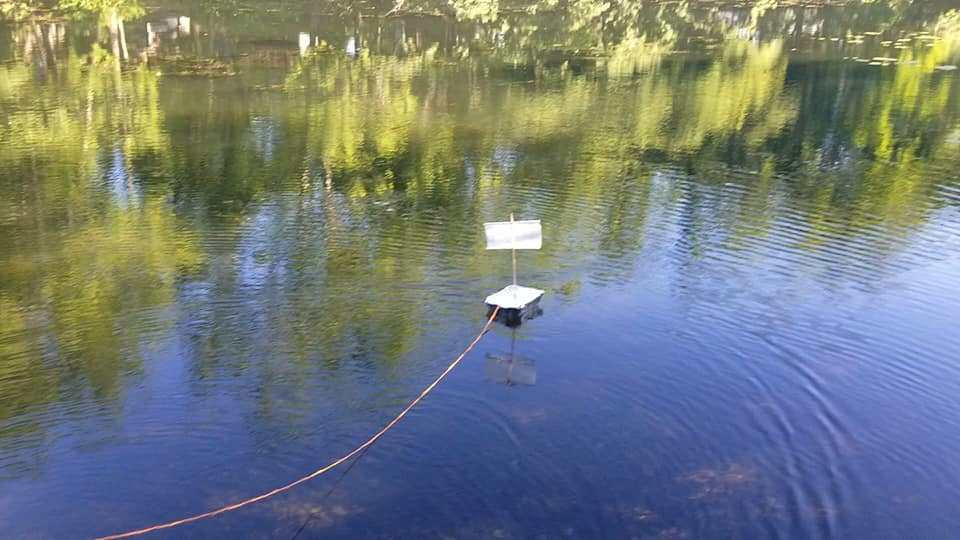
Life on the River

It’s June, so there are lots of babies. Baby rabbits, nibbling on the gardens and driving the dogs crazy. Baby ducks, gathered closely around their mothers. Baby geese, joining the honking, pooping herds in the meadows.

This year, a pair of swans nested at the confluence of our town’s river with a small stream. They spent weeks building up the nest, bending their long necks to scoop dead leaves and twigs into a pile that rose a couple of feet higher than the river surface. Once the eggs were laid, the pair took turns sitting on them. The one swimming around and noshing was on patrol. If a duck or goose or dog came too close to the nest, there would be a great loud flapping of wings, and the intruder would leave in a hurry.

Now there are four fluffy little baby swans, cygnets, visible on royal cruises with one parent ahead and one behind. Nobody messes with the swans. They can fly, but they don’t have to.

I watch the adults learn how to co-parent. Swan #1 swims quickly under the bridge, minus offspring, and then flaps its wings and rushes up the bank, rousts Swan #2 from its resting place in the brush, then swims back down the river in a big hurry. Swan #2 scrabbles down the bank, calling out this really loud noise that starts with a squeal and ends with a honk. It swims around a moment, stretching its wings and neck, and then follows Swan #1 under the bridge. A couple minutes later, here comes one of the swans with babies close behind it. I think that was a shift change and Swan #2 was yelling “Okay, I’ll be there in a minute, let me finish my coffee!”

Several years ago, the government rebuilt the old dam between the lakes our river flows through, complete with a modern fish ladder. Thanks to the ladder, the dwindling stock of alewife – a small herring-like fish that breeds here – has rebounded. The state estimates that their population has gone from 200,000 to more than 700,000.

Black-crowned night herons come for the spawning run of alewife every spring. At night, they pick a local tree to roost in, crowding the branches like big ripe fruit. The great blue and little green herons also enjoy the alewife. They’re so full, they often stop fishing to stand around and nap.

Since the state closed storm sewer overflow pipes, the painted turtles have also rebounded. They bask in family rows on riverside logs and driftwood every sunny morning, lined up by size from large to very little. When danger approaches, they plop into the water one by one, with the biggest the last to go and the first to re-emerge.

The other big change on the river is the traffic. We used to get motorboats and jet skis going much too fast, leaving wakes that eroded the banks. Then a canoe and kayak rental place opened up. During the pandemic, boating has been a great way to have some safe family fun, or just to get outside without a mask. The river is full of these little boats on every nice weekend. Although the herons don’t like being in the public eye, they haven’t gone far.

There are two big upsides to this new kind of traffic. One is that the motorboats have slowed way down. With so many kayaks, a speeding boat might run somebody over. I suspect that the boat club lawyer sent a memo.

The other upside is that now the river is known and loved by many more people. Some are bound to join the community that defends the river. The water and its woodsy banks are always in danger from pollution, garbage, and invasive species. Our wild, or wildish, places need all the friends they can get.

People have plied these waters in canoes for centuries or longer. Until this past century, the river ran through woods and swamps. Now there’s only a narrow green strip on either side of it, trees and shrubs growing thickly up the steep banks. Beyond that, in most places, small grassy areas lie between the river and the streets, houses, and shops of our town. Nothing much lives in the grass besides ticks and field mice.

The river shows many signs of abuse and neglect. Plastic water bottles and other trash get stuck in the driftwood. Lack of maintenance on the walking paths has exposed the roots of riverside trees that keep the paths from washing into the water. Maintenance and oversight are the easiest things to cut from state and city budgets.

But what a rich variety of life still manages to thrive in the river and those two narrow strips of green. Water lilies by the thousand open their fragrant white petals; small-mouth bass nestle in the reeds; dragonflies dart and hover. Once I saw an otter, undulating at the surface like a broad brown velvet ribbon.

Humans also thrive along this water. People walk, run, bike, watch birds, have picnics. A woman dances along to the music on her headset. Nobody can calculate the river’s physical, mental, and social benefits to our community. Recently, plastic lawn chairs have appeared in a few choice sitting spots. Some walkers bring bags with them to pick up litter.

This is a beautiful world. Maybe we’re learning to stop our trashy ways and cherish it. If so, it won’t be a moment too soon.

Atheist’s Bible: The Meek

I was raised Jewish. The New Testament was off limits. When I got old enough to question why, I read the books, and became – not a Christian – but a fan of Jesus of Nazareth. He was a radical poet, a superb teacher, a lyrical rabbi. His words, his stories, his metaphors, moved and delighted me in a way that rarely happened when I studied Jewish lore in the Talmud.

What was so dangerous in the teachings of this great rabbi that his work was forbidden to Jews? He taught that the most important thing was to be kind to one another, not to follow the rules. This threatened the fabric of Judaism, knitted from thousands of strands of legal arguments, meant to cover the actions of Jews at all times. If one could put aside these historic threads, one would be, in effect, naked in the world. One would be the agent of one’s own actions rather than limited by the prescriptions and prohibitions of generations of wise men.

If the meek are going to inherit the earth, we should get ourselves organized.

In a system, or an anti-system, like the one Jesus proposed, every individual would be a free actor. Such a person might or might not choose to remain in the community built for protection and survival over the centuries. The rabbis, those living encyclopedias of rules and regulations, would be no more and no less than any other people except as they demonstrated compassion towards others, non-Jews as well as Jews. All would be equal in the sight of God.

What Jesus represented was a threat to the powers that be. In his day, those were the Sanhedrin, the council of rabbis, as well as the occupying army of the Romans. In the centuries to come, they were the Church, and the priests who claimed its power for themselves, as well as nation-states. He taught that souls were equal, even the souls of small children, and of women. What glory they could claim belonged to themselves alone, for their acts of kindness, and not for their service to organized religion. To counter such egalitarianism, the Church turned the words of Jesus into mysteries that could only be safely plumbed by priests, intermediaries trained by the Church. Ordinary people could not be trusted with the Word.

Jesus trusted ordinary people. He could have remained among the rabbis, a precocious scholar, rising to be powerful and important among the established leaders of his faith. Instead he hung out with prostitutes, drinkers, and gamblers, not to mention fishermen. He believed in the meek, the gentle, the powerless. He threatened the idea of corporal power itself. If you knew that all you needed to satisfy the only true Power in the universe was compassion, you would be less likely to submit to those who rule through fear. You would be free.

Nobody who has risen through a hierarchy of power likes people to be free. What would happen if the masses of people, the lowly ones, the meek, began to see themselves as equal to those who rule them? Every person who has fought for and gained power in an organization would feel a disturbance, shall we say, in the force. The few who use force would have to recognize the overwhelming numbers of the gentle. Such a change in public consciousness would shake not only religions but nations.

The rabbis knew Jesus was a threat. All hierarchical organizations know that he remains a threat. He didn’t believe in top-down power. He tried to awaken power in the grassroots, from the bottom up. He believed in people; he exalted the meek. What he preached was neither obedience nor resistance, but solidarity, the most revolutionary concept in a world designed to keep the meek under the knee of the powerful.

My 50th Harvard Reunion

Harvard Square was empty this Commencement day, as it was last year. Except for the pandemic, it would have been mobbed with black-robed graduates and their beaming, picture-taking families. It would have been the 50th reunion of the Class of 1971.

Some of my classmates were involved in the takeover of the main administration building during the so-called Revolution in the spring of 1969. I was out of town that year, in a frontier kibbutz in Occupied Syria. The then-president of Harvard University called mine “the worst class ever.”

I’m not the worst member of the worst class, but I try. Every five years, at the major reunions, I make a fool of myself in some way. Our reunion committee used to schedule talent shows where any member of the class could sing or recite or play an instrument for five minutes.

At the 20th reunion, I read a poem about a new world forming suddenly, like crystals in a supersaturated solution. At the 30th reunion, in 2001, I read one about the meek, so nervous about it that I had to take my shoes off to be sure of my ground.

At the 35th, I harangued the audience about the Iraq War. At the 40th, I ran a slideshow called “Instead of Apocalypse.” By the 45th reunion, the committee decided those open-mike nights were too hard to manage. Instead, they offered an evening of entertainment by the famous artists and performers in our class. A good friend of mine ran off a few hundred stapled-together booklets of his artwork and my poems. We stood at the doors of the entertainment, handing them out. People took them thinking they were programs for the evening.

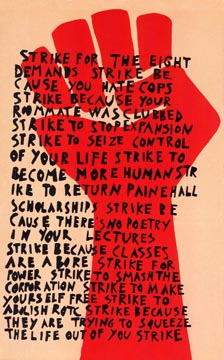
This year there were no events to take part in, or to crash. So I postered the Yard.

            Every life is big to the person living it.

The bulletin boards had just been cleared. There were many open places where I could tape up little slips of paper. I broke one poem into stanzas:

……………………………..

Love is not dead, not defeated, not damaged, not out of reach. Love has not been bought, sold, or stolen. Love is not a wholly-owned subsidiary of any corporation. The kingdom of loving is within you. Love is not something you fall into. Love is something you make and keep on making. Love is an act of will. Love is a way of life. Love is the opposite of greed. Love is not blind; lust is blind. Love sees truly. Love is the only path to our survival. Love is revolution.

Revolution cannot be violent. Revolution is change. Violence is just more of the same damn thing. There is no use fighting to save the world with violence. The rulers of this world have more weapons and fewer scruples than anyone else. Violence is their game. We cannot win that game. We must stop playing it. We must play a new game. Our strength lies in one another. Love is real change. Love is revolution.

The world is changing. Learn to travel light. When the water rises, all your stuff will not help you. The things you own will mean nothing any more. Your community will mean everything. Be ready for the change. Pay attention. Help where you can. We will survive by taking care of one another. Selfishness is suicide. Love is revolution.

When the old world ends, the new world begins. In the old world, money was power. In the new world, spirit is power. You choose to make the world better or worse with every act. This is your power. Race, nationality, class, gender, physical appearance – these matter in the old world, not in the new. The most important things in the new world are the quality of your awareness and the strength of your relationships. The old world ran on greed. The new world runs on human connection. Love is revolution.

……………………………..

I said hello to a few old friends: the guard at the gatehouse, the head of Yard security, an eloquent and clear-minded homeless man. Otherwise I was confident no one would want to look at me. I’m a short, plain old woman with a peace sign on my hat.

I’m invisible. I have trouble talking. But I can still speak my mind, and I hope you will speak yours.

How many lives do you think you have? Is this not your planet?