Race is an Illusion

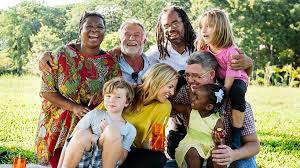
Race is an illusion. Hardly anybody is as black or as white as they think they are. Of course racism is all too real. It’s just one of the many ways we have been taught to hate and fear other ordinary people, instead of our actual oppressors. But the “race” it targets is a product of the human imagination.
Gender is an illusion. Nobody is as male or as female as they think they are. Human sexuality is not specific about its targets. If something has a bump or a hole, somebody will want to make love to it. Sex is real, and we can talk about it forever. But if we’re not actually part of somebody else’s sex life, it’s none of our business and talking about it is just gossip.

As for religion, we’ve been arguing over those questions for tens of thousands of years. We have lately learned some tolerance for other people’s beliefs, but we don’t seem any closer to agreeing on answers. So, can we please take religion off the main agenda? It’s a side issue. We have to hang on to the Golden Rule, which is the foundation on which all religions are built. But the rest of every religion is testament to the fact that people will believe just about anything. Nobody knows whether there is a god or an afterlife. Everybody is guessing. Let’s move on.
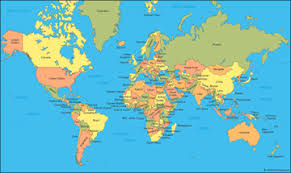
National boundaries are figments of our imagination, enforced by the nations we have imagined into being.

Nations are just as made-up as those other fantasies. We draw imaginary lines on the earth’s surface, placed according to power plays, stories, and rivalries local or distant, and behave as though they made people on one side of them different from people on the other. Languages are real. Nations are collaborative fictions.

Money is also fictional. Worldwide, if everybody at once wanted to trade their money for real things, the real things would vanish long before the numbers on the balance sheets. There is nothing real behind the numbers. They don’t add up. The global economic crisis of a decade ago should have taught us that. Rich people are rich because we choose to believe the numbers. If we ceased to believe, they would just be naked primates surrounded by a bunch of mostly useless stuff, exactly like everyone else, though perhaps lacking in some basic survival skills.

All these imaginary boundaries between people have claimed multitudes of victims. The damage is real and ongoing. It is not enough to heal wounds. More damage will be inflicted until we realize that the boundaries, the categories, the divisions, are all products of our collective imaginations and we are free to stop believing in them.

Maybe then we can begin to pay attention to the real world, and how we can survive the damage we have done to it.

Every holiday season, the New York City Macy’s department store covers its block-long front with a huge neon sign saying “Believe.” This is a good way to sell unnecessary goods. Believe you need them. Believe you can afford them. Believe other people will love you more if you buy them things.

I wish someone would put up an equally huge sign across the street. This sign would read: “Doubt.”

The Occupy movement did our culture a great favor by highlighting income inequality, an issue that illuminates the tremendous imbalances we have to resolve. Occupy did not go far enough, however. The movement we need will not be about the one percent, or the 99 percent. It will be about the 100 percent – about everybody. Because either we figure out how to live sustainably together on the only world we have, or our species goes the way of the dinosaurs, without even a comet strike for an excuse. And once we’re extinct, there won’t be anybody left to care what color or gender or religion we were. So maybe we could try caring a little less about all that before it’s too late.
Shit Piles Up

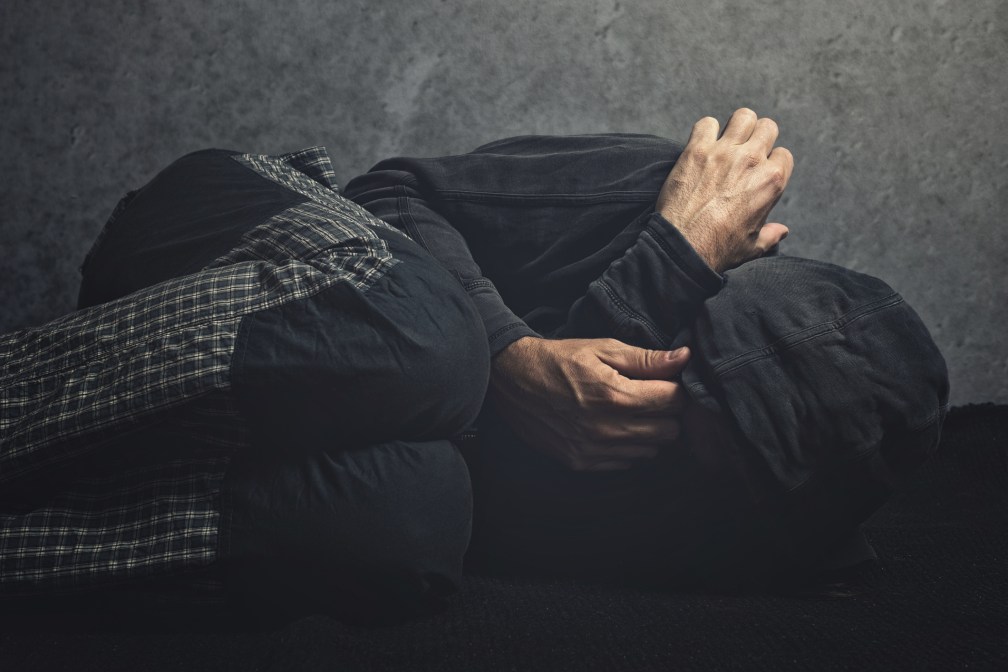
Everybody who goes through rehab knows. Everybody who has ever cleaned a toilet knows. If you don’t keep cleaning up, if you don’t deal with the ration of ugly shit we get and make every day, it piles up and gets really disgusting and harder and harder to remove. We have to keep cleaning up.
But what disappears first from government spending when people refuse to raise taxes? Maintenance. Keeping things clean and safe. So the ugly shit piles up.

Bacteria grow in uninspected food. Cars fall into sinkholes caused by ancient infrastructure. Old gas lines leak and houses explode. Lead leaches into the water and stunts the brains of thousands of children. It costs a lot to fix the damage. If we refuse to pay the price of keeping things clean and safe, eventually we will pay a much higher price. And some of the damage can never be fixed.

So let’s clean up our shit as we go. That will motivate us to create less shit to begin with. Plastic, for example: if it won’t biodegrade, we need to stop manufacturing it.

Trillions of pieces of garbage now orbit our planet, gyre on the oceans, choke the fish and poison the birds. Yet we keep making more stuff that has such a short useful life, if it gets used at all, that we might as well ship it straight from the factory to the landfill and save everybody a lot of time and trouble.

Emotional shit piles up too. Everybody who’s ever had therapy knows that. We manufacture useless crap like anger, resentment, envy, and shame, and pile it up inside. Eventually everything inside us gets disgusting and we can’t stand ourselves any more. We have to learn to clean up as we go.

Same thing with nations. We do each other dirty, and the small harms pile up. Eventually we go to war, which does more harm than anything. The residue from that damage leads to future wars. We have to clean up as we go. Notwithstanding the egos of our leaders and the pride of our ideologues, we have to apologize, make restitution, and as far as possible, repair what we have broken. Maintaining peace can be expensive, but it’s cheaper than war.

Self-Medicating

Why are so many Americans self-medicating? What kind of pain makes people do drugs?

Some people are self-medicating for a pain that is spiritual rather than physical.
Addiction crisis

There’s a hole in people’s lives that no surgery can close, the hole where meaning ought to be. We see what a mess humanity has made of the world. If we thought our actions could help, our lives might mean something. Instead, we feel useless. Worse, we feel we are part of the problem whether we want to be or not.

Our civilization is built on violence and greed. It oppresses billions so that thousands can be unimaginably wealthy. America has benefitted more from this system than any other country. Any sensitive person will feel this, and suffer for it.

There used to be a drug designed specifically to ease moral suffering; it was called religion, and it worked quite well as long as people believed in it. Once we stop believing impossible things, however, that drug stops working, and the pain returns. There is no grand plan to justify things being the way they are. There is only humanity to blame, so we hate ourselves.

Since we have ceded moral leadership to religions, it’s hard for young people who don’t believe in any religion to find spiritual guidance. The current Pope’s been pretty good. Thich Nhat Hanh died, dammit. There are probably more religious leaders out there who rise above politics, but they don’t get much media attention. What young people need to know is that humanity urgently requires each one of them to take action.

Nobody can tell anyone else exactly what they should do. All our circumstances are different, and we each have unique histories, talents, and skills. But the work that must be done is clear enough. On the environment, social and economic justice, and peace, there are groups doing effective work, and far more tasks than there are people willing to do them.

The missing piece, the piece that will connect young people to the necessary work they can do, is hope that this work will make a difference. It is the hope that humanity can save itself, and be worth the saving.

Lacking hope, lacking meaning, lacking connection, people do drugs. Drugs make the pain bearable. But only hope for the future can make the pain go away.

The Sleeping Giant Awakes

It’s rare that we get an archetype as pure as Trump. He’s the apotheosis of greed, its avatar. The brutality, the swagger, the cold-heartedness, the deliberate and constant lying, all to feed his enormous ego: he’s the logical conclusion of basing a culture on the worship of wealth.

How clear does it have to get? Everything about him is so over the top, we hang on to every sliver of breaking news in horrified fascination. This is the worst of America. This is capitalism gone rancid.

Trump is a bully. His answer to everything is to threaten. He’s a spoiled brat who has always cheated to get what he wants, and has never suffered the consequences. He believes that other people are stupid, and his people keep proving him right.

And yet the man has done us a favor. He has shocked us awake.

Democracy is the sleeping giant in America. Theoretically, the government belongs to the people it serves. Theoretically, we can elect representatives to safeguard our interests instead of just shunting more of our wealth to the rich. But 40% of us don’t vote.

Non-voters are largely working class, the very class that has increased productivity and yet lost ground economically ever since the Reagan era. These people have come to believe that all politicians are alike, both parties are owned by large corporations, and their own votes would change nothing. There is just enough truth in these beliefs to make them self-reinforcing. If you don’t believe change is possible, you don’t try to change anything.

In spite of the complete disorganization of the Left, once Trump was elected, women, people of color, immigrants, students, teachers and their friends began to fill our streets in protest. COVID-19 put a stop to street demonstrations. But resistance to Trump’s oligarchy continues online, in ways quite separate from politics as usual. The Democratic party is not organizing protest. Nobody is. It’s happening anyway.

Unfettered greed in the form of anything-goes capitalism has not only ruined millions of lives but is quickly making the earth uninhabitable. When we recognize the crisis, we shake off passivity and begin to fight.

Trump is what happens when Americans abdicate our responsibility. We have been asleep at the wheel. We have to take back control of our country, grab that wheel and change direction. If we don’t stop the greed-heads from running our country, they will run it right over the cliff.

Trump is a symbol of everything this country has done wrong. Democracy is the hope that we can make things right.

Tomorrow

We’re not flying? Good.
We’re working from home? Good.
Soon money will run low and we’ll stop shopping. Good. As long as we can get enough to eat.

There are so many not-good, very bad, seriously horrible things about this pandemic. And not much of an up-side; but it does exist, and maybe it helps a little to think about that.

We’re depending on neighbors.
We’re helping the sick. We’re sacrificing to protect others. We understand that people matter more than anything. Good.

We’re staying home, keeping physical distance, trying to save lives. We’re letting nonviolent offenders out of prison. The unsustainable economy of limitless growth is stalling. Good. Limitless growth is not health; it’s cancer.

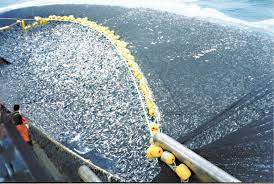
We might even stop over-fishing and let the ocean repopulate.

We’re using less fossil fuels. Pollution is dropping. We knew we had to reduce our carbon footprint to be able to moderate and survive climate change. We did not imagine this would be the way to achieve it. Maybe, though, knowing it was necessary might have prepared us to take the steps we have recently taken to moderate and survive COVID-19.

We will need to rebuild when the worse of this crisis is over. With luck and sufficient global consciousness, we will build a greener, more equitable, kinder world.

Now is the time to rethink everything.

“Blessed”

I’m starting to feel bugged by the word “blessed.” The way it’s used more and more seems to imply that people who are lucky to escape harm are “blessed”…which also implies that people who experienced that harm were cursed. That’s the flip side everybody ignores. It’s a backdoor way of blaming the victim. God must be punishing these people who suffer, and clearly God loves me better than them, so I must be a better person than they are.

Life is chaotic and dangerous, and more so all the time, thanks to the actions of humanity and not any supreme being. We can be grateful for our own well-being without claiming we earned it by being especially virtuous, or having been “blessed.” Those of us who are doing okay are mostly just lucky, to be born where and when we were, to the families we have, and with the gifts bestowed by our genes and upbringing.

This word “blessed” is especially beloved of broadcast news reporters, who feed the word to people who have just survived a fire or flood and are bewildered by trying to understand why they lived and their neighbors didn’t. I would like to see people just acknowledge their gratitude for their good luck and not have to tie it to morality or religion. Even at Christmas. Don’t take credit for any mercy you have been shown. Just love, and show mercy to others who have not had your good luck.

Here’s a suggestion: instead of bragging about being “blessed,” live so that you’re a blessing to other people.

I believe in creativity.

I believe in the human imagination.

I believe in working together. I believe we’re in crisis and we need to save ourselves. I believe we have to save ourselves together.

I believe I mess up all the time and so do you. I believe we’re not so different. I believe if we took the time we would understand each other. I believe we never completely understand ourselves.

I believe we’re in too much of a hurry. I believe the situation is urgent and we must act. If we stop doing some things, I believe that is doing something.

I believe that what each of us does is very important. I believe it is more important to be good to other people than to be beautiful or rich or famous. I believe in loving-kindness.

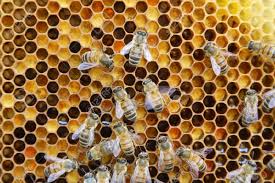
I believe we are just learning to become human. We’re like bees just figuring out how to build a hive.

I believe in the beauty of all that is, the far-flung stars and all the life that ever was or will be.

I hope we can figure out how to be human in time to survive.

I believe we already know what we have to do. I believe we are doing it.

Questions for a Dark Time

What if you wake up one morning
and peace is outside your window
walking, speaking, running
like a river,
what will you do?
Will you go out and kiss its feet,
which are working feet,
will you stand and watch
or will you join it
in your own time, like a duck
meeting other ducks in a river

What if you wake up one morning
and peace is inside your heart
Will you call the papers
Will you have a cigarette
How will you say hello to
the first person you see

What if you wake up one morning
and war is outside your window
hurting and killing the way it does,
racing like a forest fire,
what will you do?
Will you join it like
a stick of kindling
Will you watch
like the eye of a potato
Will you get dressed and
go to work with
peace in your heart
like a duck
meeting other ducks in the river

Guru Blues

As I wander through this valley of disaster and ennui,
I keep looking for a teacher with a clue on how to be.
Sometimes a fellow seeker sends the message, “This is it!”
But I haven’t met a swami yet who wasn’t full of shit.
Some are into ice cream sundaes. Some are into Cadillacs.
Some are into all the groupies they can charm onto their backs.
Some can monologue for hours on their detailed talks with God,
Some can doodle on a zither with their eyes rolled up like cod.
They’re exotic and mysterious, and they know just how to please
the petitioner for glory who approaches on his knees.
But they rarely stop to listen, and they never pause to doubt,
and they can’t agree among themselves what life is all about.
They won’t sleep in someone’s hovel if the palace has a room.
They expect surroundings tidy, but they won’t pick up a broom.
So if I find a teacher with the word on how to be,
I will pour us both a whiskey and go sit upon his knee.
But until the day I find the way and all my wandering ends,
I’ll put my faith in kindness, and seek wisdom from my friends.

Gentle Spirits

Gentle spirits, sisters and brothers of the dream,
keepers of the light of loving-kindness, you who are
soft-hearted, open-minded, amazed to be here,
whom this world fills with delight and horror,
living hearts, tender spirits
I conjure thee, I seek thee, I implore thee
Arise, awake, shake off despair, remember
how many times has the Mysterious entered our lives,
how many times have we felt and seen the rush of great
winds around and through us
Remember how little we know ourselves, and take comfort
Remember from what vast sources loving springs,
and seek ye one another.

More is happening than we see on the six o’clock news.
They haven’t pinned it down, this slippery Tao. No one
owns it, no one controls it, but something big is
happening and it happens in small ways
(every wall you break) (every mind you shake)
Come out, come out, wherever you are
Remember the waves of hope that lifted our hearts above the
bloody tides of other days, remember when you think that
evil has won, how many hearts refuse it
Or will you believe those who say we do not exist?
Be of good courage, rejoice, lift up your voices, call out
in the darkness, we are here, we live, we believe in
the power of loving
Speak, shine, arise and listen
In many voices, hearts are crying to one another.

Gentle spirits, have you noticed
how zoos are different now? And safaris, and whaling?
Some old hard things are dying; and how new things are
tender, how when a seed sprouts it’s awhile before
coming to light
There are cracks in this concrete civilization, there is
full sunlight before us, though we are yet in the dark,
there is a path for the heart to follow
Arise, awake, when we have grown big enough we shall find one another,
We are scattered by God’s hand, we are watered by the
tears of all who suffer, we take strength from Earth our mother
Though you no longer believe in the possibility of humans
learning to care for one another, when you care you move
closer to the light
In the dark, alone, growing,
Speak
I can feel the earth tremble around the seeking crown of your head

The love we depend on is common as air, mysterious as light
Brothers and sisters
I look forward to seeing you again.

Flying Monkey Song

Once were some critters came from the sea
Thought they’d see what they could see
Climbed up in the nearest tree
Said, Hey mama, won’t you look at me

Unidentified flying monkeys.
Fly, fly, fly, monkey, fly

Tree to tree to tree they swung
Grew themselves an opposable thumb
Climbed back down to get them some
Watch out, sabretooth, here they come

Race around like a forest fire
Chasing every new desire
Always tryin’ to get a little bit higher –

Kinda funky
flying monkeys
fly, fly, fly, monkey, fly

Field Report from Alice T4

These human beings have donned thick hulls.
Within memory they came out raw and slow, and stayed long in the sun.
Now they are visible from time to time
scurrying between their burrows and their borrowed shells
on their way to or from their holes in the main hive.

They still war. There are spotty mass die-outs.
They leave large areas barren and desolate.
From their nests emerge mighty songs.
The rest of us are compelled to listen;
there is no place far away from them.

But their children, and certain mutant colonies,
show that they possess an innate sense of harmony
along with the five senses that they recognize;
that they can function in and help maintain
green heavily specied areas.
They are beginning to mind their manners at watering places.

Their population curve has rounded a corner;
the dizzying rate of climb is bending
toward a plateau on which others might live.

They seem to do everything they need to do
by the skin of their teeth,
the nails on the tips of their fingers, and tails
they don’t even have.
I am amused and horrified,
wheeling hysterically among them,
along for the ride.

Dolphin Song

I want to be a dolphin, that is what I want to be
I won’t have to work all day in that land beneath the sea
I won’t be called by creditors where everything is free
And you can have my furniture, my clothes, and my TV

I will not vote for president, I will not care who wins
Won’t have to hit a keyboard with my flippers or my fins
Won’t care what’s in my bank account, I’ll never pay a fee
When I’ve given up my arms to swim the freedom of the sea

Won’t listen to commercials, won’t be buying any junk
No storm will ever sink me, ’cause I’ll already be sunk
I’m going to join the dolphins now if I can find a way
‘Cause all I want to do in life is sing and fuck and play

I’ll learn to live on sushi, give up chocolate and caffeine
and pass up every chance to interface with a machine
Don’t try to send me e-mail, ’cause I won’t be found online
Don’t set up an appointment ’cause I sure won’t know the time

We’ve been told the hills won’t hide us, so why bother with the hills
Let’s run into the ocean and then try to grow some gills
It’s dolphins, and not humans, who live naked, wild, and free
It’s dolphins who put down their arms, so they’re the folks for me

The Dark Years

Thomas Smith, accompanied by pianist/composer Leonard Lehrman

My mind was going a mile a minute
but I didn’t say a word
Everything that I was thinking about
started seeming so absurd
Every day I was filled with outrage
till it almost made me cry
Didn’t seem I could do much about it
but to watch it all go by

None of my friends are sleeping well
The pills don’t work any more
It feels like we’ve drifted out to sea
and we can’t get back to shore
Where are the superheroes
who will come to save the day
Nothing we do is working
and it does no good to pray

The dark years are upon us
Hold on

I went to some demonstrations
and I saved them on my phone
We felt so strong together
then we all went home alone
I want that beautiful feeling
when the people speak as one
telling the dreadful powers
that we see what they have done

The dark years are upon us (etc)

We can shout online, we can make some noise
but the ones in power won’t hear
They will threaten our lives and freedom
They will punish us with fear
But we never will let them stop us
from trying to make things right
We are magical, we are many,
and we know we are the light
We are magical, we are many,
and we’ve just begun to fight
We are magical, we are many
We are all of us the light

Though the dark years are upon us

Hold on

Bad Behavior

We worry a lot about bad behavior. Kids ignoring social distancing during a pandemic. White cops killing unarmed black people; people frying their brains on drugs or alcohol; families torn apart by domestic violence; destruction of the environment by greed-driven corporations: we have no end of bad behavior to concern us. But is there a common thread?

Until the pandemic began, people gathered in the streets to protest historic levels of economic inequality, or catastrophic climate change. People demonstrated against killings motivated by racism or fanaticism, the surveillance state, cuts to poor people’s programs, or bombing campaigns in countries we can barely find on a map. Were these protests connected?

Something is brewing beneath the surface of our society. We have spent too many years on a path toward self-destruction, sometimes making progress but more often sliding backwards. Racism still hurts and kills people of color every day. Poverty makes hellish the lives of billions. Male aggression wounds and kills women. Our news media tell us lies or partial truths, and all our media conspire to distract us with trivia. And we continue to pollute our air and water, level forests, and strangle fellow-species with our trash, in spite of all our green intentions. Is it any wonder so many people are angry?

Is this the way we are doomed to behave? Do we have any other options? Or are we just greedy, curious, violent primates who will soon poison ourselves with our own waste? Many voices tell us that war is inevitable. They tell us that big corporations and rich people get their own way, that’s just how it is. But is that how it has to be?

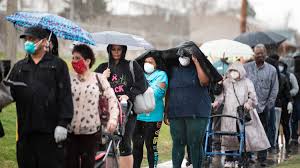
We need to look around for examples of people doing things right. If we look, we will find them. In fact most people, most of the time, are doing things as right as our culture will let them. They work. In a lock-down, they stay home. They pay their bills. They wait patiently in line. They try to meet their responsibilities. They are kind. You can think they are suckers. Or maybe they are the meek who are supposed to inherit the earth.

If it were not for other people’s good behavior, meaning decent, helpful behavior, none of us would survive infancy. Good behavior is the ground against which bad behavior stands out. We take it for granted, just as we used to take our health for granted unless we got sick. For most of us, if we know the right thing to do, we will try to do it.

The problem with most people, the problem with the meek, is that we think we have no power. If we don’t have money or celebrity, we think we’re nobody. Yet most of the people in the world want only to be able to live life in peace. What if all of us nobodies decided to act together to make that possible?

But before we can even think about what we have to do to survive, we have to believe that humanity deserves to survive. We have reason to think otherwise — far too many reasons to think we are only a plague on the planet. Give the earth a few million years without us and she will generate millions of new life forms, every bit as marvelous and exuberant and weird as the life forms we are annihilating today. We will be gone, and no one will miss us. Why fight it?

Because the majority of us, the meek, deserve better than to go extinct. Our monstrous world system is run by a cynical few who refuse to allow any changes that would threaten their power, even if we need to make those changes in order for the species to survive. The idea that humanity is not worth saving is the most dangerous weapon in their arsenal. This is a sword that strikes down many good people, strikes them so they choose to sit and watch the carnage, strikes them so they choose not to intervene. They are among the walking wounded of this civilization. Their hearts have been crippled.

There are many reasons to feel the earth would be better off without us. They are all reasons to make peace with Apocalypse, the end of all human hopes. But spend some time around very young humans, and all those reasons come to nothing. We are born beautiful. We are as innocent and as lovely as any species on the planet. It is the culture based on greed and violence that is ugly and deserves to die.

Almost Exactly the Same

People are all almost exactly the same. I say almost because, even though we are 99.9% alike, that one-tenth of one percent difference is very important to us. That’s how we tell one another apart. Since we’re social animals, we depend on knowing exactly who another person is, even though she is almost exactly the same as we are. So we make a big deal out of that one-tenth of one percent difference.

Race, gender, class: these things help us tell one from another, along with details like body shape and facial features. But the differences are tiny. If you’ve ever seen a montage of many diverse faces, you have seen what Human looks like. In the same way, if you read the literature of any language or time, you know what Human behaves like.  We are fascinated by our tiny differences; we obsess about them. But they remain tiny.

If you doubt how much we are the same, remember what it is like to go to a movie in a theater. You laugh and gasp in the same places as everyone else there. You like the same characters and have no trouble identifying the bad guys. Also consider the fact that a good actor can play almost any role and make us believe it. How is that possible, unless we each contain in ourselves the whole range of human behavior?

There are other ways to tell how small our differences are. We think race, gender, and class are very important, and in some ways of course they are. Yet when you know someone’s race, gender, and class, you still know almost nothing about them that really matters. You don’t know if they’re kind, for example. You don’t know if they’re funny.

We will always be fascinated by the details of how each of us is unique and different from all the rest. We will always be interested in the soap opera of our secret, special, individual lives. But there come times when we have to look up from these details. We have to look at our civilization as a whole. We have to look not at personal behavior but at the behavior of our society.

When civilization has behaved so badly that we have begun to threaten our own survival, it’s time to think about what we can do differently.

Because each of us can be anybody. Each of us is capable, under the right circumstances, of every kind of human behavior. We contain in our own secret selves the complete spectrum of human behaviors. Which of the many possible behaviors we enact in our own lives is decided by our imagination of ourselves and of our circumstances.

Our imagination is tremendously powerful, though we often discount it, and even refuse to believe it affects anything. In our urban world where everything except the sky is a product of people’s imagination, maybe the power of imagination is so obvious that we take it for granted and so fail to see it. Yet imagination is the key to our future. How can we imagine ourselves saving the world?

Instead of thinking about how to change individuals, we should think about how to change culture so as to encourage the creation of healthy, sane, loving, humorous, careful human beings; how to change people’s environments so as to encourage healthy habits; how to create the people humanity needs to become.

How to make it easier to be creative, and not kill imagination first thing in school. How to make it easier to raise a family, to learn new things, to grow old. Movies, tv, video games: what do we need to teach, show, tell one another? What message are we broadcasting? What will it do to the people it reaches?

False optimism is not going to work. We can’t slap a happy face on things: life is too awful for too many. We can’t keep distracting ourselves from what we can see happening more and more clearly: the poisoning of the planet, the whirlwind we have reaped through our bad behavior. The longer we ignore the consequences of our greed, the harder they will be to make right.

If the species is going to survive, it’s time to get serious about it, and figure out how to save ourselves from this mess we have created. We have to look at exactly what our culture is: what we glorify, what we despise, whom we imitate, what values we adopt. This is crisis time. We need to pull an intervention on ourselves.

Anyone who has spent time with babies knows how smart we are and how much we can learn. Our bodies stop growing but our minds never stop. We can learn new ways of doing everything. That’s culture; we do it all the time. Every day we sing a new song.

Until recently, most of us have appeared to be frozen. We’re so used to watching life instead of living it, we’ve become passive. We have forgotten that everything around us has been formed from the action of human imagination upon the materials of the earth. We, ordinary humans, have invented it all. Our power is tremendous when we agree on something to do.

Some events in recent years indicate that we might be waking up to the crisis, and responding appropriately. Our most powerful moments have been singular and quite spontaneous. Look at how we’re self-distancing, in the complete absence of national leadership. The Arab Spring, undermined by the usual gangs of thugs though it was; the Occupy movement; the Women’s March; the appearance at U.S. airports of tens of thousands of people to support Muslims when Trump announced his travel ban; these are symptoms of a vital resilience, a resistance to the forces of death.

If we can ever convene the species and discuss the situation with everyone at the table, it is entirely possible that we can agree on our mission and our direction. We will understand one another. Because in spite of our splendidly elaborated cultures, our fascinating personal uniqueness, our endless variety of experience, we are all, finally, almost exactly the same.

Neo-Optimism

Anyone who pays attention to the world has got to despair.  Our dominant culture admires violence and promotes greed. We see where these values have gotten us.

I wouldn’t trust anybody who hasn’t felt that despair. Hope comes later, if it comes at all. If the world has not struck you with horror, you haven’t looked at the way it is.

If we continue on our path of greed and violence, our species clearly will not survive. The imbalance of power between the few who benefit and the many who suffer seems overwhelming. No hero has arisen who can bring about real change. We have plenty of information, but no answers.

In our greed and short-sightedness, we have used the resources of earth as though they are infinite. Our species devours everything in its path. We destroy the wild creatures and flora of the earth. We suck the earth’s juices and then crunch its bones. The losses mount exponentially.

If all we ever did was destroy, our species would not deserve to survive. In fact we could not have survived this far.  Without kindness and caring, no human would live past infancy. Loving is so much in the background of our lives that we hardly even notice it. We must remember that love – or perhaps we should think of it as common decency – is also part of ordinary human behavior, and, even in our current diseased society, it is the largest part.

We should also remember that we have changed our paths countless times, all over the world and in every era. We are finding our way through a wilderness of the spirit, and no one has been this way before.

We have always used our ingenuity to cope with changing environments. We can live under the sea and in outer space. We share ways to cope. We invent. We imagine. We merge our individual imaginings with others and make them reality.

This is the challenge: to imagine a world in which humanity can thrive, and to make it happen. We don’t seem likely to rise to this challenge. Yet the unlikely often happens.

Fresh currents continue to bubble up through the festering swamp of our culture. In recent years there have been the Occupy movement, climate change marches, peace vigils, “Black Lives Matter” die-ins, rallies for democracy and free speech. The organizers think they are fighting separate battles. But when we begin to recognize that our battlefields may be separate but our war is the same, we will find allies we never expected. We will find that we are much stronger than we thought.

That is when we will begin to be dangerous. That is why the dominant culture insists that we compete with one another, each cause fighting all the others for members, media attention, and money. Once we begin to cooperate instead, the powers that be will become the powers that used to be.

The only possible real revolution is nonviolent revolution. No other kind of movement can bring real change. Violence isn’t change. Violence is just more of the same damned thing. Nor can revolution bring change if it harms the innocent, because injustice is also more of the same damned thing. Peace and justice: now that would be a true revolution.

So go ahead and despair. Things are pretty dark right now.  Just try not to take it so personally. It isn’t you. It’s all of us. Your despair is a sign that deep inside you, a hero is waiting to be born.

The despair you feel is only natural, and you have a right to feel it, for exactly as long as you need to. Then get over it. Look for reasons to keep going and you will find them, in art, in nature, in children, in the people you love. Don’t turn away from the world because it is ugly and cruel. Keep moving, because it is also beautiful, and everything we love is in danger.

We have a lot of work to do. You have a part in this work, a part no one else can play.  We need you, exactly you, with your terrible history and your broken heart. Despair is one step on the path forward. You will like the next one better. Stick around, so you can take it.

After you realize the odds are against our survival, and after you give up hope that we can beat the forces that keep us on the path to destruction, you might one day realize that the game is not over yet. You will no longer be an optimist who thinks all will be well. You will be a neo-optimist, who has gone through despair and come out the other side understanding that all will most likely be lost. You will know this species is the darkest of dark horses. And you will bet on that horse to win.

Neighbors bringing food

We see feel-good stories at the end of our news broadcasts, right after they have scared the crap out of us. But the news has come home, good as well as bad.

We have neighbors and friends who are sick. When we leave our home, we walk large circles around other people, hoping we don’t get sick too. We use Zoom instead of hugging. We lay in supplies, trying not to be piggy about it.

And the friend down the street who has gotten the virus? We make soup and use our gloved hands to drop a container of it on her porch. We made enough to freeze, just in case.

Where we are

Are you a “non-essential worker”? Then slow down. Give yourself a break. Unless you’re a healthcare professional, now is not a time to rush.

For the worst reason, we have a chance to stop what we’ve been doing. We needed to stop doing some things anyway. Let’s take advantage of this opportunity.

We’ve stopped doing work that did not need to be done. We’ve stopped driving to jobs we can do at home. We’ve stopped hopping all over the planet like fleas on a dog. We’ve stopped thinking money is the most important thing.

Once we make ourselves and loved ones as safe as possible, let’s try to get over the panic. We stay at home. We wait. We are, as the Buddhists say, sitting with our fear.

When we sit with our fear long enough, it will begin to fade. Then we will be able to think.