
Race is an illusion. Hardly anybody is as black or as white as they think they are. Of course racism is all too real. It’s just one of the many ways we have been taught to hate and fear other ordinary people, instead of our actual oppressors. But the “race” it targets is a product of the human imagination.

Gender is an illusion. Nobody is as male or as female as they think they are. Human sexuality is not specific about its targets. If something has a bump or a hole, somebody will want to make love to it. Sex is real, and we can talk about it forever. But if we’re not actually part of somebody else’s sex life, it’s none of our business and talking about it is just gossip.
As for religion, we’ve been arguing over those questions for tens of thousands of years. We have lately learned some tolerance for other people’s beliefs, but we don’t seem any closer to agreeing on answers. So, can we please take religion off the main agenda? It’s a side issue. We have to hang on to the Golden Rule, which is the foundation on which all religions are built. But the rest of every religion is testament to the fact that people will believe just about anything. Nobody knows whether there is a god or an afterlife. Everybody is guessing. Let’s move on.
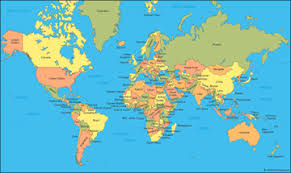
Nations are just as made-up as those other fantasies. We draw imaginary lines on the earth’s surface, placed according to power plays, stories, and rivalries local or distant, and behave as though they made people on one side of them different from people on the other. Languages are real. Nations are collaborative fictions.
Money is also fictional. Worldwide, if everybody at once wanted to trade their money for real things, the real things would vanish long before the numbers on the balance sheets. There is nothing real behind the numbers. They don’t add up. The global economic crisis of a decade ago should have taught us that. Rich people are rich because we choose to believe the numbers. If we ceased to believe, they would just be naked primates surrounded by a bunch of mostly useless stuff, exactly like everyone else, though perhaps lacking in some basic survival skills.
All these imaginary boundaries between people have claimed multitudes of victims. The damage is real and ongoing. It is not enough to heal wounds. More damage will be inflicted until we realize that the boundaries, the categories, the divisions, are all products of our collective imaginations and we are free to stop believing in them.
Maybe then we can begin to pay attention to the real world, and how we can survive the damage we have done to it.
Every holiday season, the New York City Macy’s department store covers its block-long front with a huge neon sign saying “Believe.” This is a good way to sell unnecessary goods. Believe you need them. Believe you can afford them. Believe other people will love you more if you buy them things.
I wish someone would put up an equally huge sign across the street. This sign would read: “Doubt.”
The Occupy movement did our culture a great favor by highlighting income inequality, an issue that illuminates the tremendous imbalances we have to resolve. Occupy did not go far enough, however. The movement we need will not be about the one percent, or the 99 percent. It will be about the 100 percent – about everybody. Because either we figure out how to live sustainably together on the only world we have, or our species goes the way of the dinosaurs, without even a comet strike for an excuse. And once we’re extinct, there won’t be anybody left to care what color or gender or religion we were. So maybe we could try caring a little less about all that before it’s too late.
 Alice T4